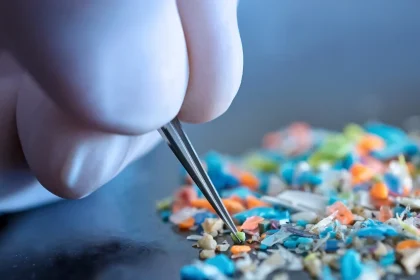
An international consortium of researchers has unveiled a groundbreaking methodology for the elimination of a specific category of recalcitrant pollutants, commonly referred to as ‘forever chemicals,’ from aqueous environments.
This innovative filtration approach demonstrates a capacity to sequester substantial quantities of per- and polyfluoroalkyl substances, colloquially known as PFAS. According to lead investigator and engineer Youngkun Chung from Rice University in the United States, this process operates approximately “100 times more rapidly than conventional activated carbon filters.”
PFAS are synthetic compounds engineered to impart protective qualities to surfaces against moisture, fire, and grease. In production since the 1940s, their applications span an extensive range, including outerwear, soft furnishings, non-stick cookware, food containment materials, and specialized fire suppression agents, among numerous other uses.
Their inherent longevity is remarkable; the robust carbon-fluorine bond at the molecular core of these substances means PFAS are anticipated to persist for millennia before degradation, as noted in a recent publication.
Their widespread presence in our water, soil, atmosphere, and biological systems presents a significant concern. Specifically, it is established that at least two of these persistent compounds—PFOA and PFOS—are associated with an increased risk of oncological diagnoses, cardiovascular ailments, reproductive complications, and congenital abnormalities.
Furthermore, over 12,000 distinct PFAS variants remain in circulation today, with their associated health implications largely uncharacterized.
While governmental bodies and industrial sectors are actively pursuing remediation strategies, existing techniques are often characterized by slow efficacy and the generation of secondary waste streams.
The newly developed filtration technology employs a layered double hydroxide (LDH) composite, which integrates copper and aluminum with nitrate ions.
“This specific LDH composite exhibited an adsorption capability for PFAS exceeding 1,000 times that of other evaluated materials,” stated Chung. “Its operational speed was also exceptionally high, facilitating the removal of substantial PFAS volumes within minutes—approximately a hundredfold acceleration compared to commercially available carbon filters.”
The material’s distinctive architecture arises from stacked layers of copper and aluminum showcasing a slight electrical charge disparity. This structural characteristic promotes the entrainment of PFOA molecules, which then form a strong bond with the filtration medium.
Following the saturation of the adsorbent material with PFOA, the research team implemented a thermal treatment process involving the addition of calcium carbonate. This procedure enabled the regeneration of the LDH for subsequent use and concurrently facilitated the cleavage of the fluorine component from the PFOA molecules, thereby achieving their effective deconstruction.
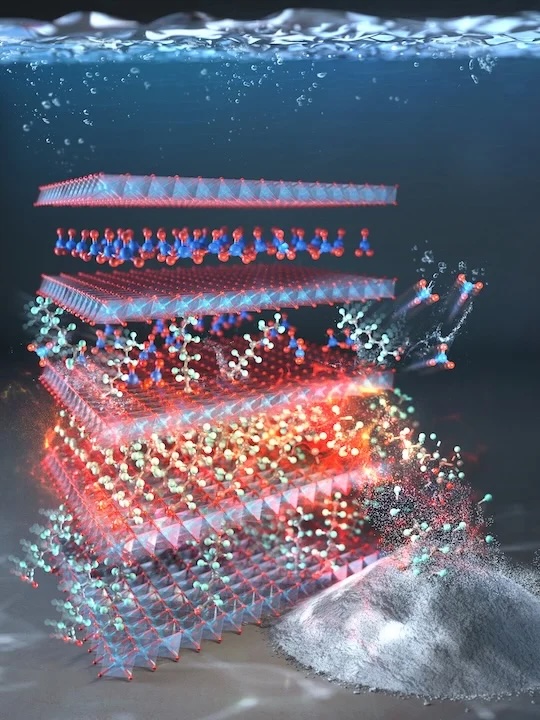
The residual fluorine-calcium compound can be safely managed through standard landfill disposal, according to insights shared by Rice engineer Michael Wong with The Guardian.
“We are profoundly optimistic about the potential of this unique LDH-based technology to fundamentally alter current approaches to treating PFAS-contaminated water sources in the imminent future,” Wong commented.
Although this technology is in its nascent stages, laboratory investigations, particularly concerning PFOA, have already yielded highly encouraging results. The filtration system demonstrated efficacy when tested with PFAS-laden water sampled from rivers, domestic water supplies, and wastewater treatment facilities. Researchers aspire to see its seamless integration into municipal drinking water and wastewater infrastructure in the future.