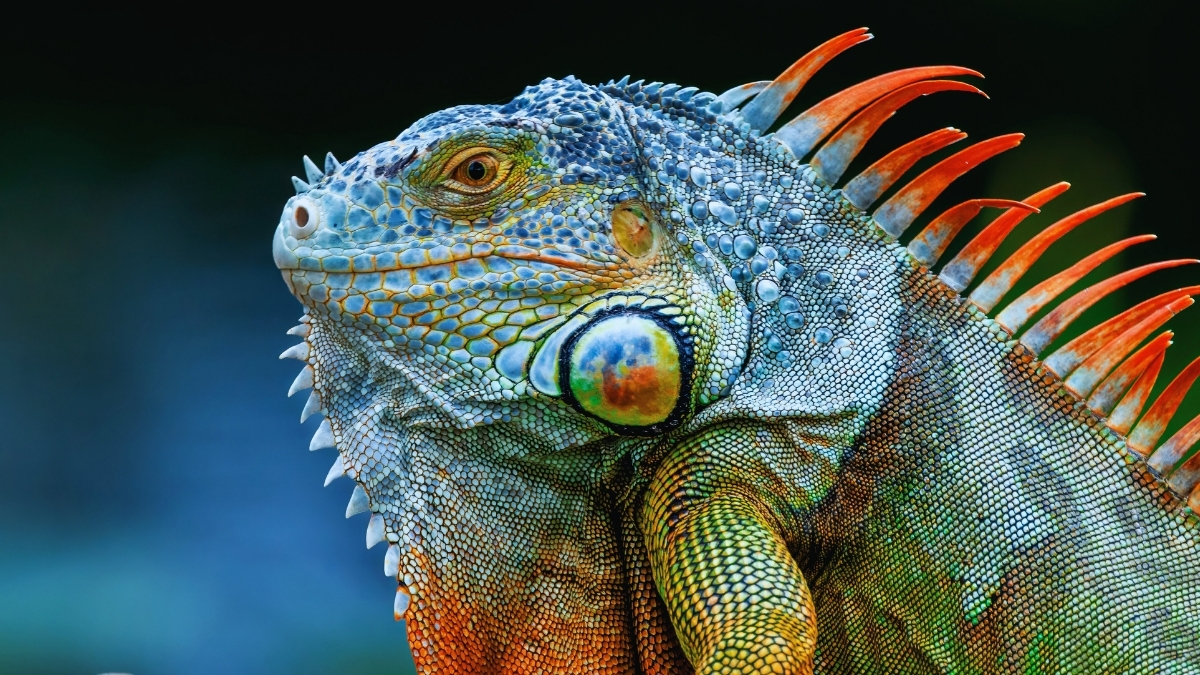
On Sunday, frigid temperatures prompted iguanas to fall from trees in Florida, a region typically experiencing mild weather. This phenomenon occurred as frigid air masses swept across the southern United States, bringing substantial snowfall in certain locales—nearly half a meter in some instances—and generating powerful winds that significantly disrupted traffic.
The most significant accumulation of snow was documented in North Carolina, a state unaccustomed to snow beyond its elevated regions. The municipality of Lexington recorded 16 inches (40 centimeters) of snow, while Faust, situated in the state’s Walnut Mountains, received 22 inches (56 centimeters).
Governor Josh Stein of North Carolina reported a total of 1,000 road incidents and two fatalities over Saturday and Sunday. He strongly advised residents to refrain from using the roads and cautioned them to be vigilant for signs of frostbite.
This recent spate of severe weather emerged approximately one week after a significant storm battered a broad expanse of the United States, resulting in over 100 deaths and leaving numerous communities contending with the arduous task of clearing snow and ice.
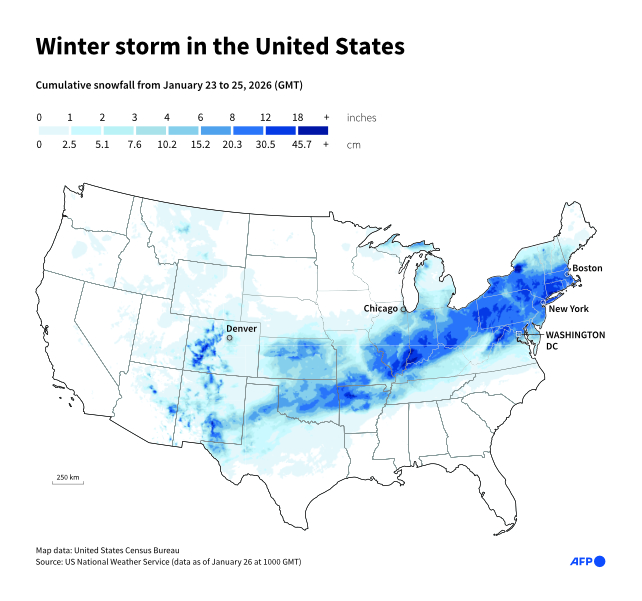
Although Florida did not experience snowfall comparable to the Carolinas, Georgia, Tennessee, Kentucky, and the southern reaches of Virginia, it endured record-breaking low temperatures. In Orlando, the thermometer registered a low of 24 °F (-4 °C), marking the coldest February reading since at least 1923.
Under typical conditions for this period of the year, daily temperatures fluctuate between minimums of 12 °C and maximums of 23 °C.
WPLG 10, a television network based in Miami, Florida, reported what was described as “raining iguanas” on Sunday morning. This unusual occurrence is attributed to cold-blooded reptiles becoming incapacitated and falling from trees when ambient temperatures drop significantly.
Social media platforms featured video footage displaying these stunned creatures lying on sidewalks, having fallen from their arboreal perches in the state’s southern territories.
Jessica Kilgore, proprietor of Iguana Solutions, a service specializing in the removal of invasive species, informed WPLG 10 that she had amassed hundreds of pounds of these lizards, both living and deceased, during the prolonged cold spell.
🦎 IT’S RAINING IGUANAS! The invasive reptiles are dropping from trees by the handful during this South Florida cold snap. https://t.co/8tgzlbntlN
— WPLG Local 10 News (@WPLGLocal10) February 1, 2026
The Florida Fish and Wildlife Conservation Commission has issued an official directive, reviewed by AFP, which permits individuals to transport iguanas—which are feral in the state but require a permit for private ownership—to commission facilities.
Forecasters at the National Weather Service indicated that heavy snowfall was anticipated to diminish in the Carolinas on Sunday. However, they projected that strong winds would extend up the eastern seaboard of the United States as a powerful cyclonic system moved offshore.
Governor Stein noted that the primary highway traversing North Carolina’s Outer Banks—a narrow spit of land dotted with residences that extends into the Atlantic Ocean—experienced significant ocean overwash due to fierce winds and elevated tides. Reopening of this route may be protracted.
The storm that affected the area over the weekend resulted in more than 800 flight cancellations on Sunday at Charlotte Douglas International Airport in North Carolina, a pivotal hub for American Airlines, according to data compiled by FlightAware.
Approximately 158,000 customers remained without electricity on Sunday. The majority of these outages were concentrated in the southern states, with Mississippi, Tennessee, Florida, and Louisiana being the most severely impacted, as reported by poweroutage.us.