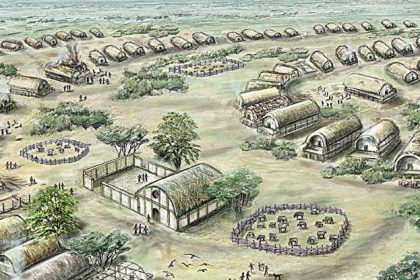
On the expansive, wind-swept plateaus in Türkiye’s southeastern reaches, novel archaeological findings are illuminating the existence of early human communities approximately 11,000 years ago, marking the dawn of settled civilization.
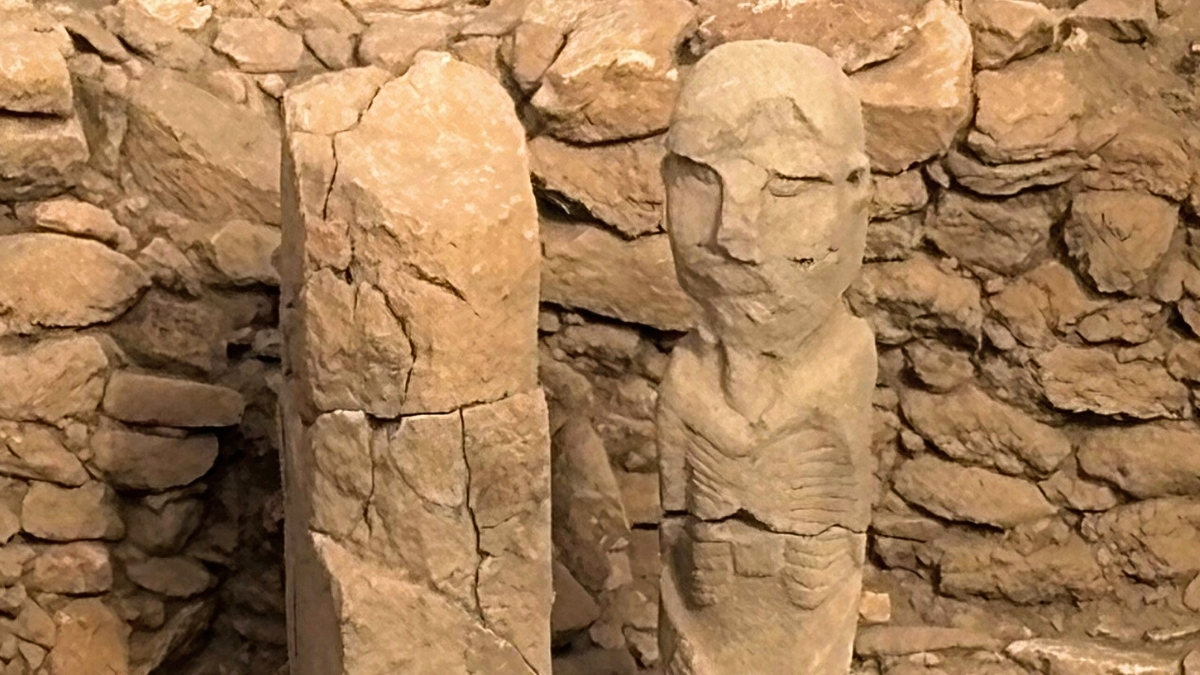
The most recent artifacts unearthed—a stone effigy with intricately stitched lips, sculpted stone visages, and a dark serpentine bead featuring detailed countenances on either side—provide profound insights into Neolithic spiritual practices and ceremonial rites.
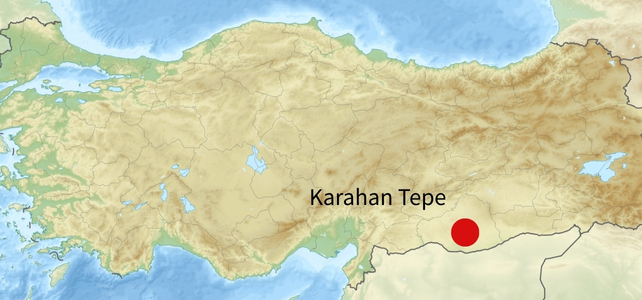
“A discernible surge in human sculptures can be attributed directly to the establishment of permanent settlements,” stated Necmi Karul, the lead archaeologist directing excavations at Karahan Tepe, in remarks to AFP.
“As societies transitioned to a more sedentary lifestyle, individuals gradually detached from their absolute dependence on the natural world, elevating the human form and the essence of human experience to a central position within their worldview,” he elaborated, gesturing towards a human countenance meticulously carved into a T-shaped monolith.
This ongoing excavation forms a critical component of Türkiye’s ambitious “Stone Hills” initiative. This government-endorsed undertaking, inaugurated in 2020, encompasses twelve distinct sites within the Sanliurfa province, a region that the Minister of Culture, Nuri Ersoy, has lauded as the “global epicenter of the Neolithic era.”
The project prominently features the revered UNESCO World Heritage Site of Gobekli Tepe, known in Turkish as “Potbelly Hill.” This locale is distinguished by the earliest known monumental stone structures in Upper Mesopotamia, where the late German archaeologist Klaus Schmidt commenced his groundbreaking excavations in 1995.
‘A Glimpse Into an Individual’s Existence’
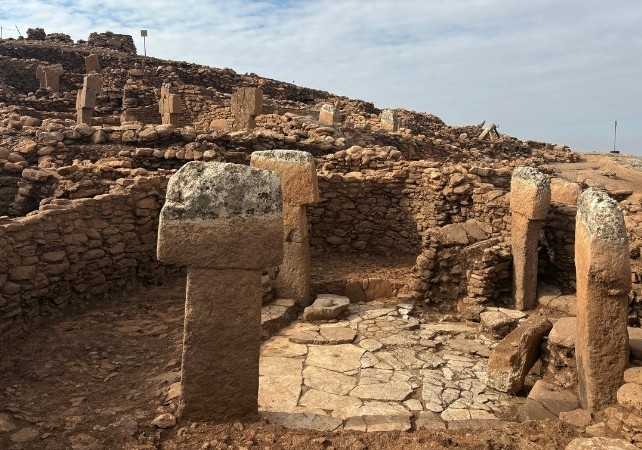
While detailing some of the newly discovered artifacts displayed at the Karahan Tepe visitor center, Lee Clare of the German Archaeological Institute explained how these findings challenge previously held assumptions regarding humanity’s evolution from nomadic hunter-gatherer existence to the formation of early settlements.
“Each structure we meticulously study offers a brief window into a person’s life. Every stratum we unearth draws us nearer to an individual; we can almost feel their presence through their skeletal remains. Our comprehension of their belief systems is thereby significantly enhanced,” he remarked.
“The preceding five years have yielded an extraordinary volume of data from all these newly explored sites,” the archaeologist informed AFP.
However, the entirety of their existence remains somewhat elusive. “Naturally, we lack any written records, as these discoveries originate from a prehistoric epoch,” noted Clare, who has been involved with excavations at Gobekli Tepe since 2013.
Pinpointing the precise identities of the individuals represented by these statues or figurines is likely unattainable, given their antiquity, dating back to “a period predating written language, approximately 10,000 years ago,” according to Karul, who also oversees the Gobekli Tepe excavations and serves as the coordinator for the Stone Hills project.
“Nevertheless, as the volume of such discoveries escalates and our understanding of their contextual placement deepens, opportunities emerge for conducting statistical analyses and drawing meaningful comparative conclusions.”
‘A Highly Organized Civilization’
The advent of settled communities began in the post-glacial period, he explained.
“The altered environmental landscape fostered fertile conditions, enabling populations to sustain themselves without continuous reliance on hunting. This, in turn, facilitated demographic expansion and spurred the development and proliferation of permanent habitations within the area.”
With the establishment of settled communities, novel social dynamics began to manifest, observed Clare.
“The production of surplus resources led to the emergence of distinct socioeconomic strata, creating wealth and poverty,” he stated, pointing to the nascent signs of social stratification.
“What we are witnessing is the initial phase of this transformative process. In many respects, we are charting a course that ultimately leads to the contemporary world.”
As the excavations progress, they are poised to fundamentally reshape our comprehension of the Neolithic period, with each site destined to carve out its own niche in the annals of scientific discovery, according to Emre Guldogan of Istanbul University, the principal archaeologist at the adjacent Sefer Tepe excavation.

“Karahan Tepe and the broader Stone Hills endeavor reveal a highly organized society, complete with its own symbolic lexicon and belief structures, thereby dismantling prior conceptions of a ‘primitive’ Neolithic existence,” he asserted.
“While these communities shared certain characteristics, they also cultivated distinct cultural identities,” he added.
At Karahan Tepe, anthropomorphic symbolism is prevalent, whereas Gobekli Tepe is characterized by a more pronounced emphasis on zoomorphic imagery.
Archaeologists posit that the findings from both locations demonstrate how distinct communities chose to visually represent their respective living environments through differing artistic conventions.
“Every fresh revelation prompts new inquiries aimed at deciphering the lives of the individuals responsible for these creations,” Guldogan remarked.
The recent archaeological breakthroughs have also amplified the allure of a region principally recognized as the historical dwelling place of Abraham, a prophet revered across Judaism, Christianity, and Islam.
“Prior to the commencement of excavations at Karahan Tepe and other related sites, the area primarily drew religious pilgrims, largely attracted by its connections to the prophet Abraham,” explained tour guide Yakup Bedlek.
“With the unveiling of these new archaeological zones, the region is now attracting a more diverse spectrum of visitors.”