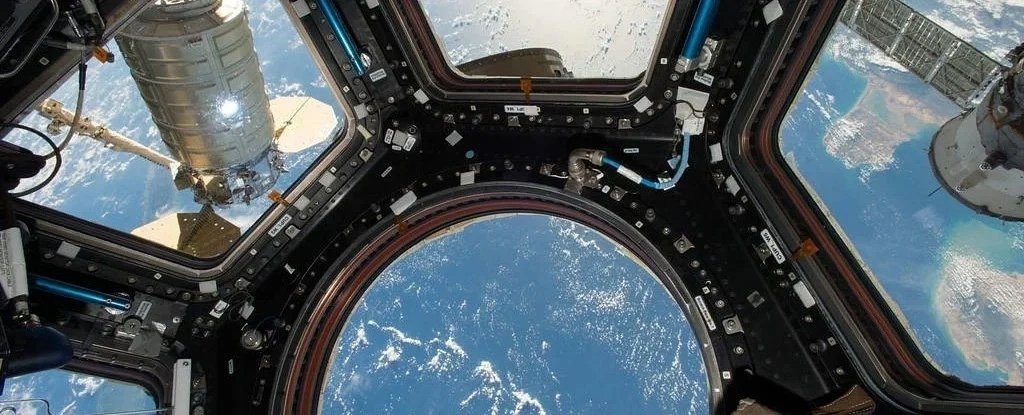
The Axiom-1 expedition, which aims to transport four privately funded individuals to the International Space Station, represents the inaugural phase of NASA’s strategic initiatives to broaden the ISS’s capacity for commercial utilization, contributing to what is designated as the low-Earth orbit economy.
The commander of the Axiom-1 endeavor has explicitly clarified that this undertaking is not an instance of recreational space travel, given that the crew has undergone rigorous training and the mission incorporates provisions for conducting biomedical research.
Reportedly, the crew members – all gentlemen ranging in age from 52 to 71 – each incurred a substantial cost of US$55 million (equivalent to £42.3 million) per ticket. While such a sum could undoubtedly finance a significant biomedical research initiative on Earth, beyond the staggering ticket price, significant apprehension arises regarding the potential ecological ramifications of these celestial excursions.
This mission employs a SpaceX Falcon 9 Block 5 rocket, with the crew housed within the Crew Dragon spacecraft positioned at its uppermost section. The rocket comprises two principal stages: the recoverable booster, which contains the majority (approximately four-fifths) of the propellant and is designed to descend and be repurposed, and a disposable second stage.
The booster ascends to an altitude of approximately 140 kilometers (87 miles) before commencing its return trajectory to Earth. The requisite energy for propelling the spacecraft towards the ISS is derived from the chemical energy release generated by the combustion of rocket-grade kerosene and liquid oxygen, which results in the expulsion of environmentally detrimental byproducts.
Rocket ascents and the re-entry of recoverable components introduce atmospheric contaminants and greenhouse gases into various strata of the atmosphere. Within the mid and upper atmospheric layers, these substances can persist for extended durations, in stark contrast to commensurate pollutants released near the Earth’s surface, which dissipate within weeks at most.
This extended atmospheric residency occurs due to a diminished frequency of chemical reactions or meteorological phenomena capable of cleansing these contaminants from the middle and upper atmospheric regions.
Potent atmospheric agents
The kerosene fuel utilized by SpaceX Falcon rockets is a complex mixture of hydrocarbons, primarily consisting of carbon and hydrogen atoms. Upon reacting with liquid oxygen, these elements produce carbon dioxide (CO2), water vapor (H2O), and particulate matter known as black carbon or soot, which are expelled through the rocket exhaust plume.
Both CO2 and H2O are recognized as potent greenhouse gases, while the black soot particles exhibit a remarkable capacity for absorbing solar radiation. Consequently, these chemical compounds collectively contribute to the thermal augmentation of Earth’s atmosphere.
Nitrogen oxides (NOx), which are highly reactive atmospheric pollutants, also originate during the launch phase. This formation is a consequence of the extreme temperatures inducing a chemical bonding reaction between ordinarily stable nitrogen and oxygen molecules. NOx is further generated during the descent of the rocket’s reusable components as they re-enter the atmosphere, attributed to the intense heat generated by friction against their thermal protection systems while traversing the mesosphere at altitudes between 40 and 70 kilometers.
Upon interaction with the ozone layer, situated within the stratosphere, these particulates instigate the conversion of ozone into oxygen, thereby diminishing the integrity of this vital protective shield that safeguards the planet from the sun’s damaging ultraviolet radiation.
Although the total carbon dioxide emissions from a singular launch are comparatively modest when juxtaposed with those emanating from the global aviation sector, the per-passenger emissions for space travel are estimated to be approximately one hundredfold greater than those associated with long-haul flights.
While soot emissions from rocketry are also less substantial than those from the aviation industry, their release into the mid and upper atmosphere results in a warming impact that is approximately 500 times more potent than when occurring at lower altitudes. This amplified effect is partly due to the typical absence of clouds and a scarcity of aerosols that would otherwise compete with soot in absorbing solar radiation.
The prospective opportunities inherent in establishing industrial and commercial networks within the low-Earth orbit domain have been analogized by a co-founder of Axiom to the nascent stages of the internet’s development, a technology now widely accessible across the globe.
Extrapolating this analogy to envision comparable levels of accessibility to the low-Earth orbit economy suggests that rocket launches will likely become considerably more frequent than the 146 launches recorded in 2021.
Such a projected scenario would have a significant detrimental effect on Earth’s climate and could jeopardize the substantial progress achieved in restoring the ozone layer. At a bare minimum, urgent research is imperative to ascertain the repercussions of a thriving low-Earth orbit economy on our terrestrial environment.