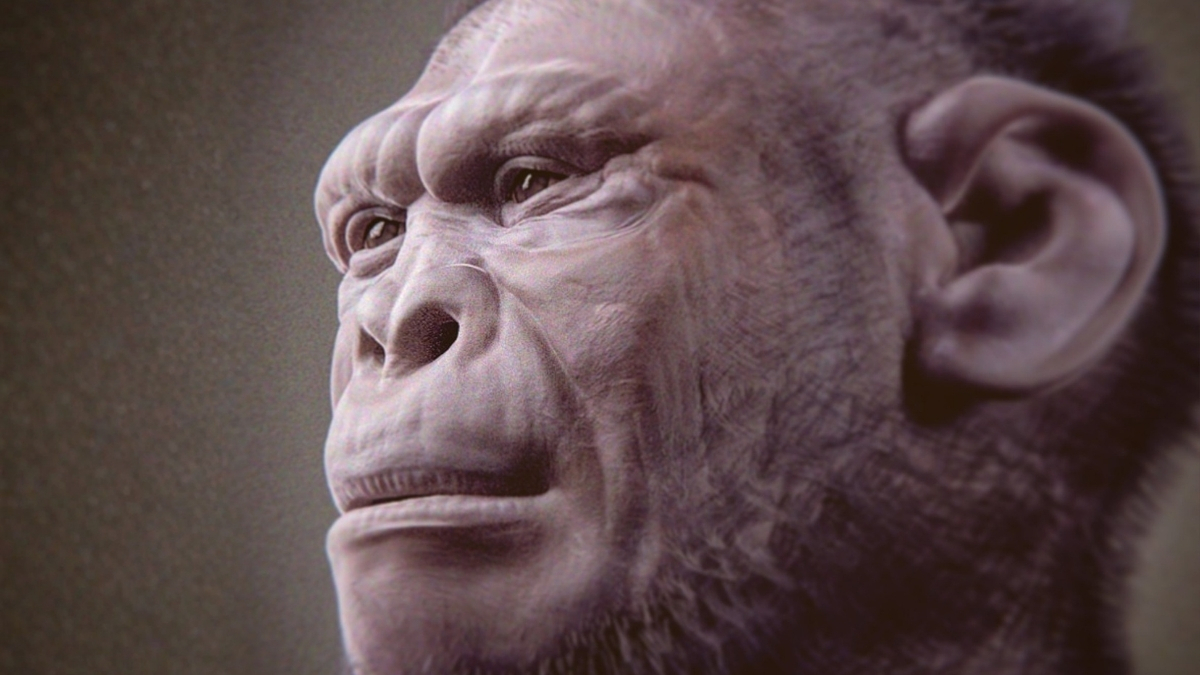
A consortium of international researchers has unveiled the most comprehensive fossil assemblage to date attributed to Homo habilis, colloquially known as ‘the handy man’ – recognized as one of humanity’s earliest known progenitors.
This partial skeleton, estimated to be 2 million years old, might potentially represent the most ancient specimen of H. habilis unearthed thus far.
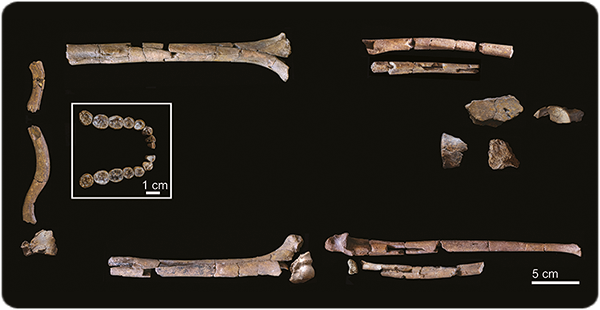
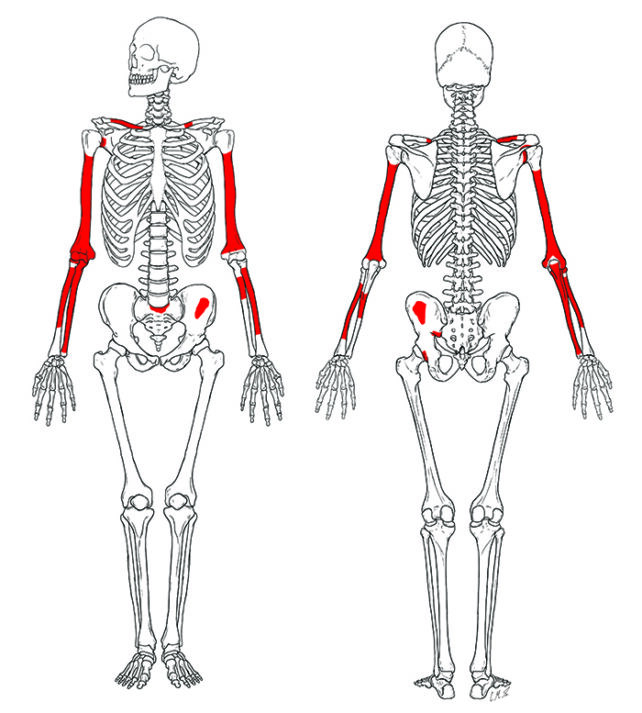
The discovery encompasses a nearly complete dentition, alongside ancient skeletal fragments derived from the scapulae, upper limbs, thoracic cage, pelvis, proximal femurs, and cranium.
These invaluable paleontological finds were recovered over the past decade from geological strata in northern Kenya, with radiometric dating placing them between 2.02 and 2.06 million years ago. Extensive efforts have been undertaken by scientists to meticulously analyze and meticulously reconstruct each component.
“Only three other exceedingly fragmented and incomplete partial skeletons are currently known for this significant hominin species,” stated principal investigator Fred Grine of Stony Brook University in the United States.
Existing fossil evidence for this species exhibits a considerable temporal span, with the most recent specimen, a mandible, dating back merely 1.44 million years.
This newly documented H. habilis fossil is firmly situated within the two-million-year age bracket.
H. habilis is notably recognized for its association with the earliest stone tool industries, marking a divergence from the Australopithecus genus, to which the celebrated Lucy fossil belongs.
Indeed, H. habilis is frequently conceptualized as a critical transitional form, serving as a conduit between the arboreal Australopithecus and the Homo genus, which ultimately gave rise to our bipedal, savanna-dwelling ancestors.
Over three million years ago, in Southern Africa, Lucy stood at a height of just over a meter (3.6 feet) and had a body mass of approximately 29 kilograms (64 pounds).
H. habilis emerged roughly a million years later, and this species appears to have possessed a larger cranial capacity compared to Lucy, albeit with a more gracile face and smaller dentition.
The manual phalanges of H. habilis also suggest the evolutionary development of a precision grip, a defining characteristic of humans that may have been employed for tool manufacture or food processing.
For approximately half a million years, the geographic distribution of H. habilis overlapped with that of another hominin species, namely Homo erectus, a species named for its erect posture which likely facilitated efficient terrestrial locomotion. The extent to which H. habilis engaged in arboreal locomotion versus bipedalism remains a subject of ongoing debate.
The newly described H. habilis fossil, designated KNM-ER 64061, exhibits longer and more robust arm bones than those of H. erectus. Furthermore, this fossil specimen is shorter and lighter, with an estimated stature of approximately 160 centimeters and a body mass ranging between 30.7 and 32.7 kilograms.
These anatomical characteristics could indicate a greater degree of arboreal activity in H. habilis compared to terrestrial locomotion, although this hypothesis remains speculative.
Regrettably, the KNM-ER 3735 specimen is insufficiently preserved to enable a definitive assessment of its limb proportions relative to its lower limbs.
“The precise configuration and proportions of the lower limbs remain elusive,” elaborated Ashley S. Hammond, an ICREA Researcher at the Catalan Institute of Palaeontology Miquel Crusafont, who joined the investigative team in 2014.
“Looking ahead, the discovery of lower limb fossils belonging to Homo habilis is imperative, as it may significantly refine our understanding of this pivotal species.”
In the absence of this crucial data, Hammond and his colleagues express reservations regarding definitive inferences about the lifestyle of this particular individual.
However, based on an examination of the fossil’s dentition and cranial morphology, the research collective has concluded with a high degree of certainty that the specimen represents a young adult.
The preservation of such a substantial portion of its skull is noteworthy. To date, only two cranial fragments accompanied by dental remains have been recovered for Homo erectus, and three for Homo habilis.
The evolutionary trajectory of the human lineage is not a linear progression; however, this recently described fossil brings us incrementally closer to comprehending the initial stages of our complex ancestral tree.
The findings of this investigation have been disseminated in The Anatomical Record.