The recent unearthing of ancient skeletal fragments within a Moroccan cavern has potentially illuminated crucial aspects of human evolutionary trajectories.
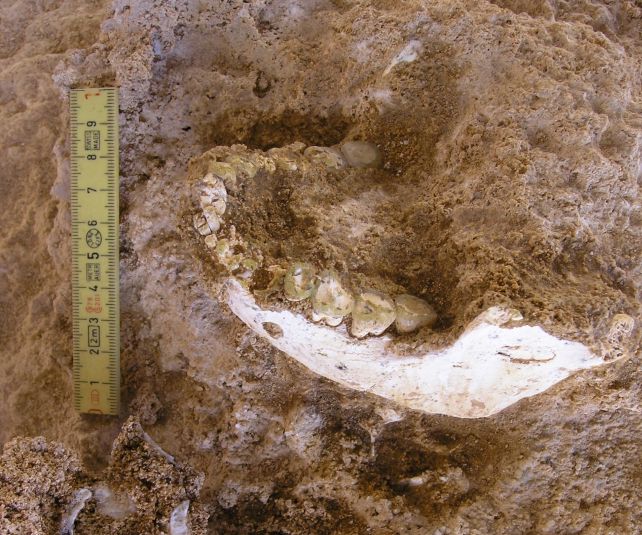
This particular excavation site, designated Grotte à Hominidés, has yielded collections of mandibles, dentition, and vertebral segments that have been accurately dated to approximately 773,000 years ago. This temporal marker is remarkably close to the juncture where the lineage leading to modern humans began its divergence from the ancestral populations shared with Neanderthals and Denisovans.
In-depth examinations of these remains suggest they originated from an early hominin group inhabiting Africa, situated at a critical evolutionary nexus. The morphology exhibits a confluence of characteristics that would later manifest in both modern humans and Neanderthals, alongside more primitive traits inherited from earlier members of the genus Homo.
This discovery serves to solidify the African cradle of humanity, mitigating the uncertainties introduced by European Homo antecessor fossils of a comparable antiquity.
“The fossil evidence from Grotte à Hominidés may represent our most compelling candidates to date for African populations situated near the origin of this shared ancestral line, thereby strengthening the hypothesis of a profound African genesis for our species,” states anthropologist Jean-Jacques Hublin, affiliated with the Max Planck Institute for Evolutionary Anthropology in Germany, who spearheaded this research initiative.
The intricate and largely obscured evolutionary narrative of humanity is frequently challenged by the passage of time and decomposition. The limited evidence available is often fragmentary and amenable to multiple interpretations, a complexity further exacerbated by the difficulties inherent in precise chronological determination. Consequently, many hominin fossil discoveries are assigned a broad temporal range.
The fossils recovered from Grotte à Hominidés distinguish themselves, rendering them particularly significant.
Periodically, the Earth’s magnetic poles undergo reversals. These geomagnetic events are imprinted within geological strata as ferromagnetic mineral particles in rocks reorient themselves. The most recent such event was the Matuyama-Brunhes reversal, occurring around 773,000 years ago and persisting for at least several millennia.
This geomagnetic signature is unequivocally registered within the sedimentary layers of Grotte à Hominidés. Crucially, the fossilized bones were discovered embedded within the same stratum that bears the mark of this magnetic reversal. This geological context affords a remarkably precise dating of these remains to 773,000 years ago—precisely within the period widely considered by anthropologists to be when human divergence commenced.
This establishes a vital piece of the historical puzzle. Based on the geological strata in which they were found, we can ascertain that these bones belonged to a population existing at a pivotal moment in human development.
The subsequent phase of the research involved an exhaustive examination of the skeletal material itself to ascertain what it might reveal about the characteristics of this ancient population.
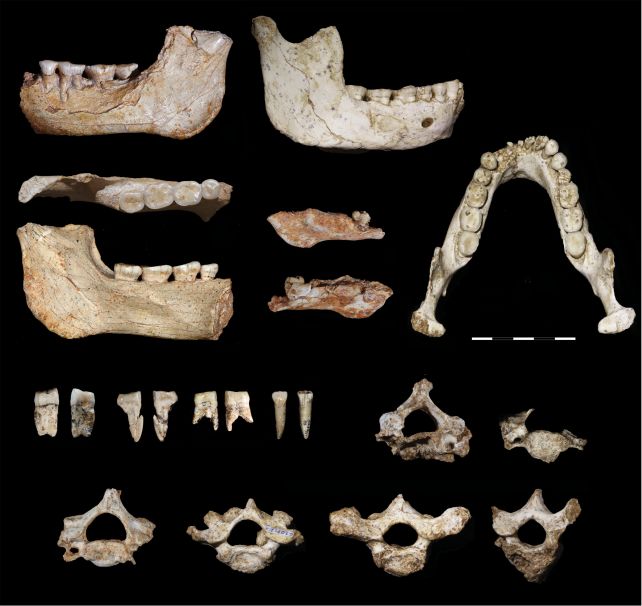
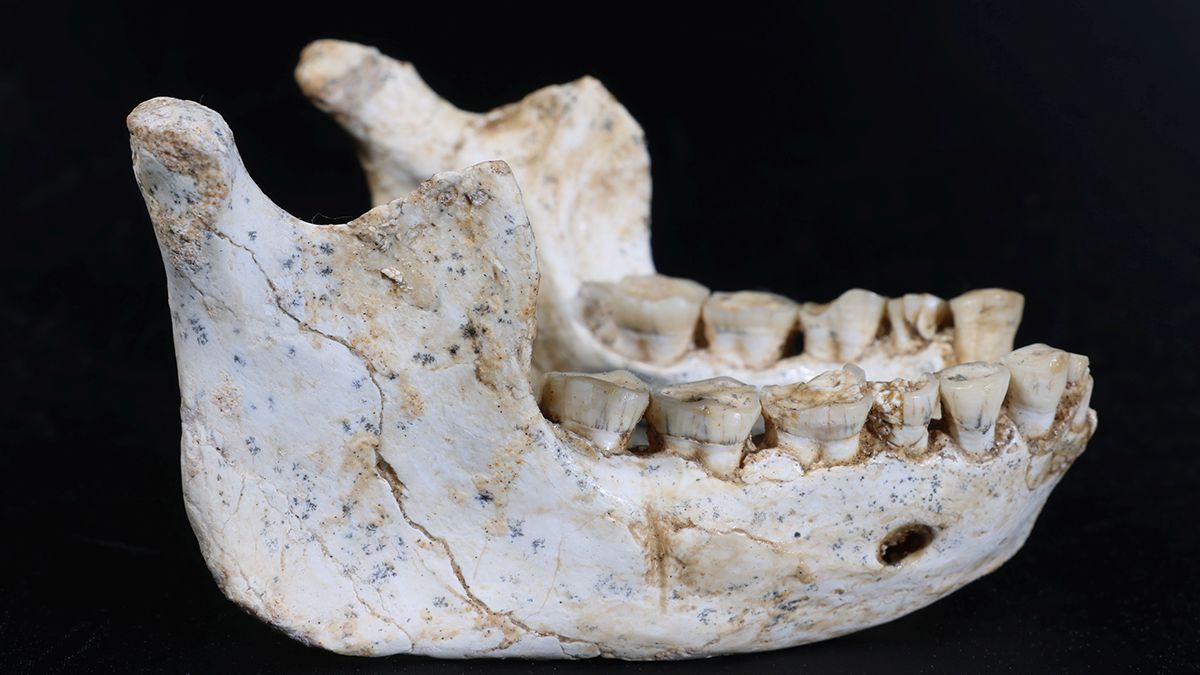
The hominin skeletal remains recovered from the cave encompassed two adult mandibles and one belonging to a juvenile individual. Additionally, a limited quantity of teeth and vertebrae were discovered, along with a portion of a femur.
Despite the scarcity of these remains, they offer a wealth of information. The mandibles, for instance, are characterized by their elongated, low profile, and narrow structure, featuring a posteriorly angled articular surface—features that diverge from those of contemporary humans and Neanderthals, while bearing greater resemblance to earlier Homo genus members, such as H. erectus.
Conversely, the individual teeth were comparatively diminutive, exhibiting greater affinity with those of modern humans.
Through advanced CT scanning techniques, researchers were enabled to scrutinize an internal dental structure known as the enamel-dentine junction. The configuration of this interface presented certain resemblances to both H. erectus and H. antecessor, yet it displayed distinct differences from both.
“In terms of their morphology and non-metric characteristics, the teeth from Grotte à Hominidés retain numerous primitive attributes and lack the defining traits of Neanderthals,” observes anthropologist Shara Bailey from New York University.
“Consequently, they diverge from Homo antecessor, certain features of which begin to approximate those of Neanderthals. The dental morphological analyses suggest that regional variations among human populations might have been established as early as the conclusion of the Early Pleistocene epoch.”
Considering the geographical disparity between H. antecessor and these newly discovered Moroccan fossils, the research team posits that these two groups were likely distinct entities. The Grotte à Hominidés population is presumed to have constituted an African ancestral lineage that subsequently evolved into modern humans, whereas H. antecessor is thought to represent a related sister population on the Eurasian side of the early human lineage bifurcation.
Furthermore, the mosaic aggregation of traits observed in the Grotte à Hominidés fossils indicates a period of transition. Cumulatively, this amalgamation of characteristics suggests that these fossils should be classified within the African branch of the modern human evolutionary tree. It is improbable that this population represents the ultimate common ancestor of modern humans and their kin, but its proximity offers potential for novel insights into the mechanisms of their divergence.
“Our findings not only harmonize with the phylogenetic framework deduced from paleogenetic data but also underscore the significance of the Maghreb region as a critical area for comprehending the genesis of our species, thereby reinforcing the proposition of an African rather than a Eurasian origin for H. sapiens.”