Starfish, also recognized as sea stars, are remarkable for their adeptness at vertical locomotion. These multi-limbed echinoderms exhibit proficiency in traversing upward, downward, and horizontal planes, demonstrating an impressive ability to navigate an array of substrates, including rocky, slick, granular, and smooth surfaces. Notably, they achieve this remarkable feat in the absence of a centralized nervous system or a discernible brain.
A recent publication, authored by a collaborative international contingent of biologists and engineers, elucidates how starfish locomotion, despite lacking central command, is ingeniously designed. This research highlights inherent mechanisms that enable these creatures to significantly modify their movement patterns in response to varying environmental challenges, or more precisely, the demands placed upon their appendages.
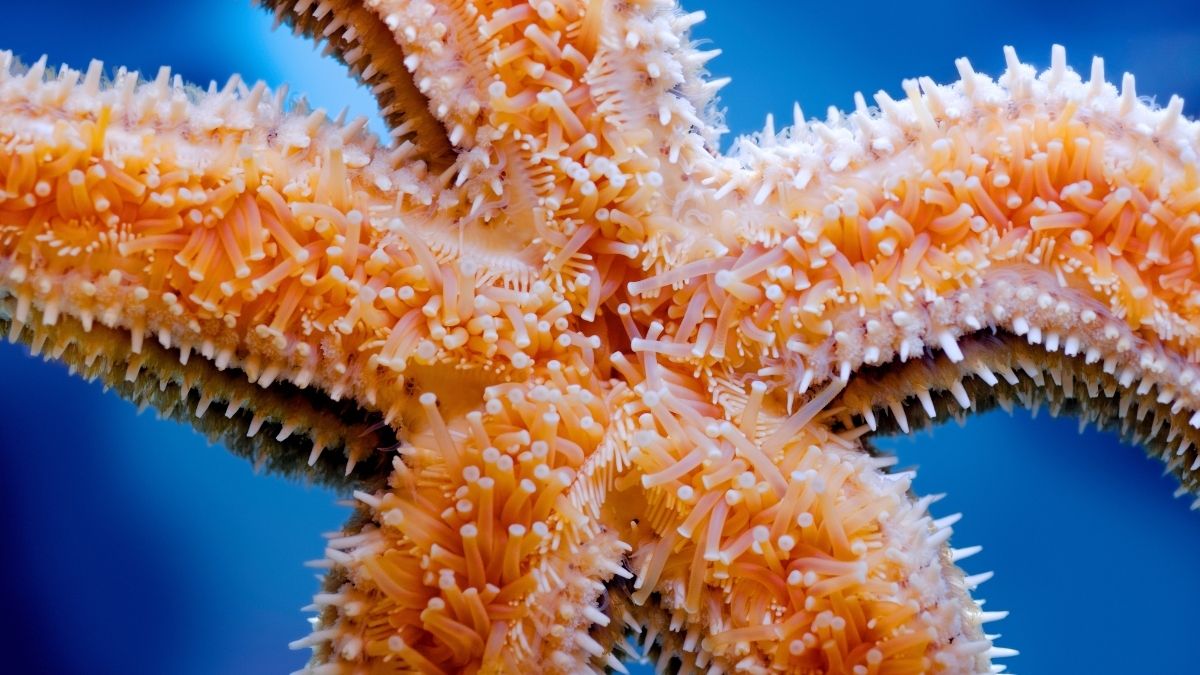
The ventral aspect of each starfish arm is adorned with multiple rows of hydraulic tube feet, referred to as podia. Each ‘tube’ comprises a pliable, muscular stalk that facilitates the pumping of fluid through the organism’s water vascular system to facilitate propulsion. The ‘foot’ itself is an flattened, pliant disc situated at the extremity of the stalk, which secretes a protein-rich adhesive mucus for surface adhesion and, potentially, a detaching agent as well.
The common starfish (Asterias rubens) possesses four parallel rows of these tube feet on each of its arms. Consequently, for locomotion, it necessitates the synchronized coordination of hundreds of individually operating appendages.
“In contrast to many other organisms, sea stars exhibit a less predictable correlation between their body mass and their rate of ambulation,” the study’s contributors articulate. Generally speaking, larger bodies and a greater number of appendages tend to correspond with diminished speed. This principle, however, does not universally apply to Asterias rubens.
To meticulously observe which tube feet were actively engaged in locomotion at any given juncture, the researchers quantified fluctuations in light intensity as the starfish progressed across a luminous, highly refractive glass surface within a laboratory setting. This observational technique has previously proven efficacious in visualizing the ambulatory mechanisms of insects, various animals, and human feet.
Upon any contact between a starfish and the specialized glass, the alteration in light refraction became apparent, illuminating the precise area of contact with a distinct, bright point indicative of a starfish’s footprint.
The rate at which the starfish moved remained relatively consistent, irrespective of the number of tube feet in contact with the substrate. However, an extended duration of tube foot adhesion was directly correlated with a reduction in their crawling velocity.
This observation implies that the starfish governs the temporal engagement of each foot not through a centralized neural network, but rather by modulating its contact duration in response to mechanical forces. This hypothesis was further substantiated by equipping the starfish with weighted attachments to assess their impact on locomotion and the resultant adjustments in their movement patterns.
The added weights constituted either 25% or 50% of the starfish’s total body mass. As anticipated, this increased burden led to a significant extension in the adhesion period for each individual tube foot.
“Further investigations were conducted into inverted locomotion, specifically starfish navigating on the underside of their experimental enclosure, employing both empirical methods and computational simulations. Our findings indicate that the tube feet dynamically adjust their substrate interaction behavior when the organism is oriented against the force of gravity,” the authors report.
“Collectively, the insights derived from this research underscore the capacity of sea stars to adapt their locomotion in response to fluctuating mechanical pressures by fine-tuning the interactions between their tube feet and the substrate. This reveals a resilient, decentralized strategy for navigating diverse and challenging environments.”