Our capacity for episodic memory, which pertains to the recollection of past occurrences and personal experiences, is widely understood to diminish with advancing years. The precise mechanisms and underlying reasons for this phenomenon have largely remained enigmatic, with a recent investigation offering significant insights towards its elucidation.
A research consortium, spearheaded by experts from the University of Oslo in Norway, embarked on an inquiry to ascertain whether this age-related decrement in memory impacts all individuals uniformly or if it is influenced by distinct risk factors, such as the presence of the APOE ε4 gene, which has been associated with Alzheimer’s disease.
The scope of their undertaking is notable. The scientific team aggregated data from 3,737 participants who were identified as cognitively healthy. These individuals were monitored over a multi-year period, contributing 10,343 MRI scans and 13,460 memory assessments derived from numerous longitudinal studies.
“Through the integration of data spanning numerous research cohorts, we have now achieved the most comprehensive perspective to date on the progression of structural alterations within the brain as a function of age and their correlation with memory function,” states neurologist Alvaro Pascual-Leone, affiliated with the Marcus Institute for Aging Research at Harvard Medical School.
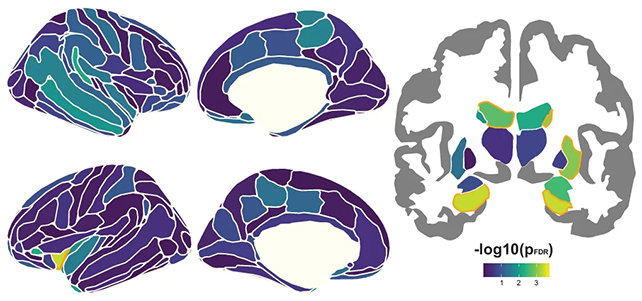
The findings revealed a multifaceted scenario. While the hippocampus, a cerebral region fundamental to memory formation and learning, played a central role, as had been anticipated, the decline in memory was not attributable to alterations within a single anatomical area exclusively.
A reduction in brain tissue volume was correlated with diminished episodic memory recall, a finding that was not unexpected. However, this association was far from consistent. It became markedly more pronounced with increasing age, particularly in individuals exceeding 60 years of age, and was most pronounced among participants exhibiting a faster-than-average rate of brain volume reduction.
Among individuals who carried the APOE ε4 gene, the investigators observed a more accelerated attrition of brain tissue volume and a corresponding decline in memory function when contrasted with other participants. Nevertheless, the overarching pattern of change remained consistent.
“Cognitive impairment and memory loss are not merely incidental consequences of the aging process but rather signify individual predispositions and age-associated mechanisms that facilitate neurodegenerative pathologies and diseases,” observes Alvaro Pascual-Leone.
These revelations generate a significant number of inquiries while simultaneously providing certain resolutions. Collectively, they suggest that memory impairment is not an isolated consequence of aging but rather deeply intertwined with it, and that with advancing age, changes in the brain exert a progressively greater influence on memory capabilities.
It is becoming increasingly evident that a confluence of diverse elements can influence the incidence of memory loss in later life, as an integral component of a broader spectrum of cognitive faculties. The more we comprehend these influencing factors, the enhanced our capacity to effectively manage them.
“These discoveries indicate that memory decline during the aging process is not confined to a singular neurological region or a specific gene. Instead, it reflects a widespread biological vulnerability in brain architecture that develops over several decades,” emphasizes Alvaro Pascual-Leone.
“Gaining a thorough understanding of this can empower researchers to identify individuals at risk prospectively and to formulate more refined and individualized interventions aimed at preserving cognitive vitality throughout the entire lifespan, thereby averting cognitive disability.”