
In anticipation of colder months, the common shrew (Sorex araneus) undergoes a remarkable physiological adaptation, contracting its brain mass by as much as 30 percent to conserve vital energy reserves. Subsequently, as spring arrives, the shrew exhibits an extraordinary capacity to regenerate its diminished brain, with neural integrity fully preserved.
Researchers have now elucidated the evolutionary genesis of this infrequent adaptation, identifying the specific genetic mechanisms that likely facilitate it. Beyond its intrinsic biological significance, this newfound knowledge may pave the way for novel strategies in comprehending and treating degenerative conditions affecting the human brain.
This peculiar adaptation is recognized as Dehnel’s phenomenon, a designation honoring Polish zoologist August Dehnel, who initially documented the shrew’s exceptional ability to reduce its brain size as a survival mechanism against seasonal energy scarcity.
While Dehnel’s phenomenon is uncommon, shrews are not the sole species to demonstrate this trait: European moles (Talpa europaea), least weasels (Mustela nivalis), and stoats (Mustela erminea) also experience seasonal reductions in brain volume. These creatures are characterized by accelerated metabolic rates and a lack of hibernation, which may account for their adoption of such drastic measures to mitigate energy expenditure during periods of limited food availability.
An ecological investigation led by William Thomas of Stony Brook University in the United States focused on mapping the complete genome of the common shrew. This was juxtaposed with the genomes of other mammals exhibiting Dehnel’s phenomenon to pinpoint evolutionary genetic strategies.
This research expands upon the team’s prior investigations, which examined temporal variations in gene expression within two distinct regions of the shrew’s brain. Those studies identified specific DNA segments that demonstrated heightened activity, suggesting their potential involvement in these significant physiological transformations.
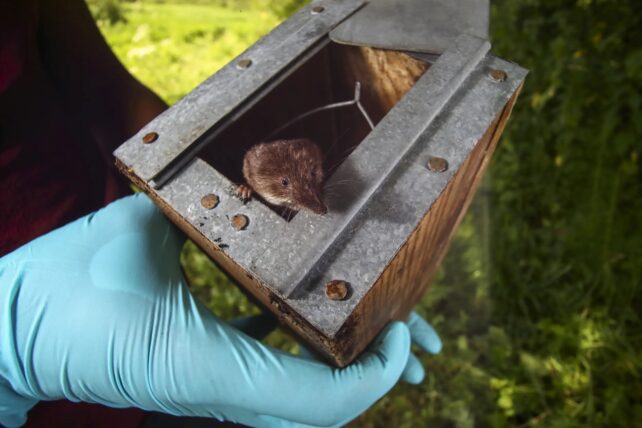
By synthesizing this data, the research team identified genes associated with neurogenesis that were observably up-regulated across several species exhibiting Dehnel’s phenomenon.
Specifically, the common shrew demonstrated amplified expression of VEGFA, a gene implicated in the permeability of the blood-brain barrier, potentially enhancing neural nutrient detection. Furthermore, its genome was found to be enriched with genes pertinent to DNA repair and longevity.
Genes involved in water regulation also exhibited elevated activity, corroborating hypotheses suggesting that shrews achieve a reversible reduction in brain volume through water loss, rather than a net decrease in brain cells.
The findings collectively indicate “a highly sophisticated regulatory mechanism that permits common shrews to modulate brain shrinkage reversibly, while simultaneously circumventing the adverse consequences typically associated with neurodegenerative processes,” as articulated by the researchers in their published findings. Their paper details these discoveries.
Cell biologist Aurora Ruiz-Herrera from the Autonomous University of Barcelona observes: “The involvement of genes linked to energy balance and the blood-brain barrier suggests potential biomarkers and therapeutic avenues for neurodegenerative ailments, though extreme caution is warranted when applying these insights to human physiology.”