At Leang Bulu Bettue, a significant rock-shelter nestled within the Maros-Pangkep karst landscape of Sulawesi, Indonesia, paleoanthropologists have unearthed an exceptionally comprehensive chronicle of early human inhabitation in Wallacea, a crucial geographical nexus between Asia and Australia. This groundbreaking discovery enriches our comprehension of how early Homo sapiens navigated their existence, adapted to their environment, and potentially interacted with archaic hominin species many millennia ago.
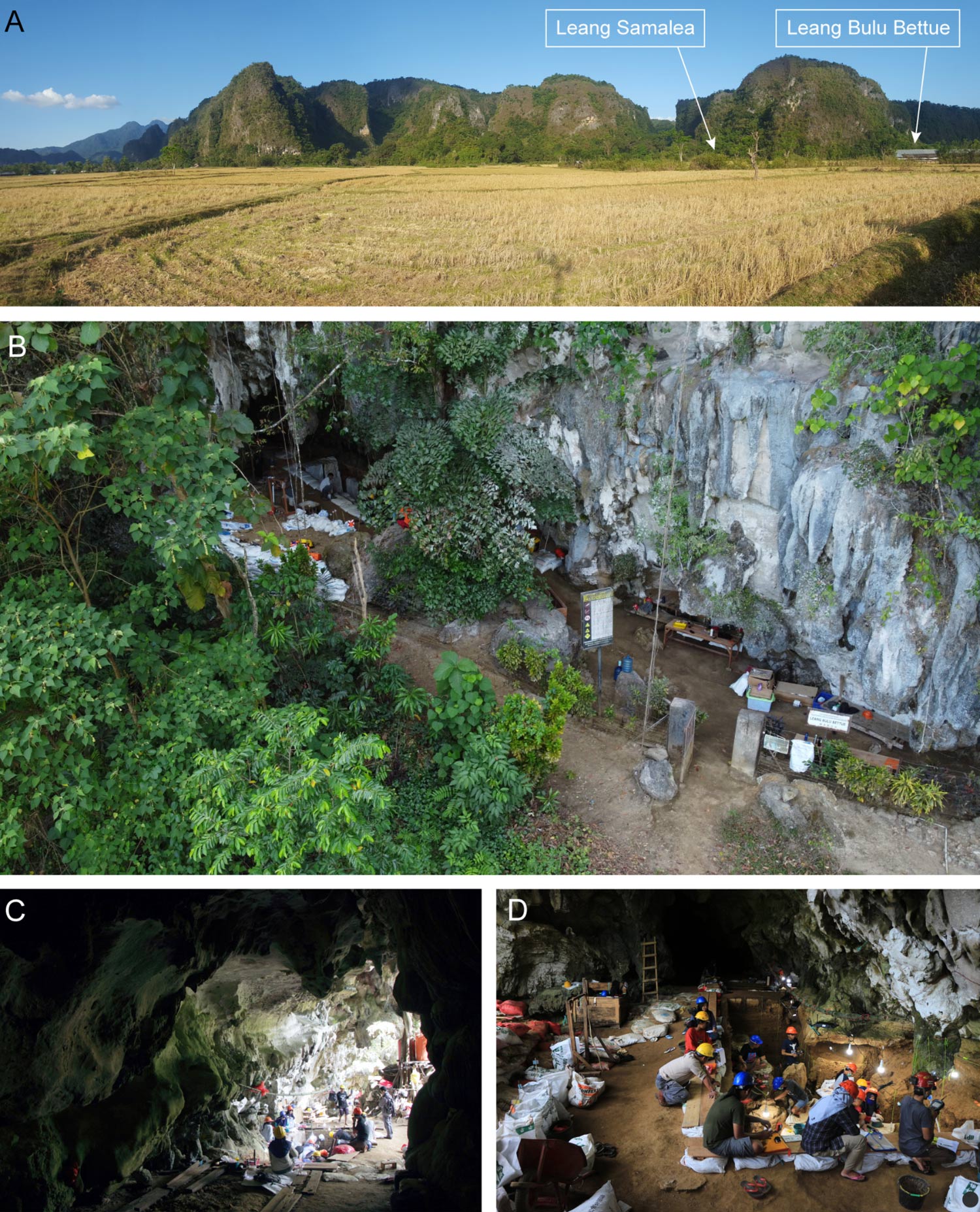
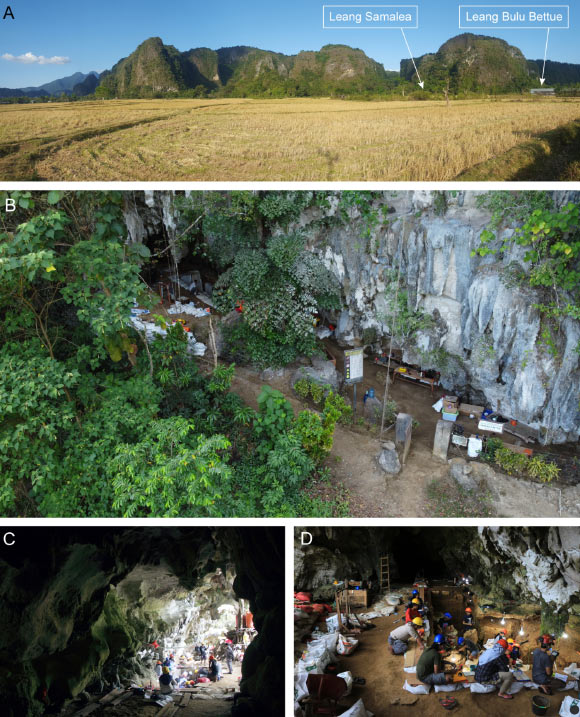
Leang Bulu Bettue situated within the Maros-Pangkep karst terrain of South Sulawesi. Image attribution: Burhan et al., doi: 10.1371/journal.pone.0337993.
Within the confines of Leang Bulu Bettue, Basran Burhan, a doctoral candidate at Griffith University, alongside his research associates, exhumed a rich stratification of artifacts, lithic implements, and faunal remains that span a substantial portion of the Pleistocene epoch.
“The remarkable depth and unbroken cultural strata discovered at Leang Bulu Bettue now elevate this cave to a pivotal site for investigating the potential temporal coexistence of these two distinct human lineages,” Burhan elaborated.
As detailed in their scholarly publication, the earliest phase of human presence, dating back to approximately 208,000 years ago, is characterized by relatively rudimentary stone implements and evidence of animal carcass processing.
Among the most compelling early indicators were robust stone tools identified as picks, suggesting the long-standing establishment of an archaic hominin cultural tradition well prior to the arrival of anatomically modern humans.
“These activities appear to represent a cultural tradition of archaic hominins that persisted on Sulawesi throughout much of the Late Pleistocene,” noted Professor Adam Brumm from Griffith University.
The archaeological team identified compelling evidence of a significant transition occurring around 40,000 years ago: the emergence of a novel set of lithic technologies, coupled with indications of symbolic expression – characteristics strongly associated with Homo sapiens.
“This later period is distinguished by a unique technological assemblage and the earliest documented manifestations of artistic expression and symbolic behavior on the island,” Burhan stated.
“This stark divergence may signify a profound demographic and cultural shift on Sulawesi, specifically marking the ingress of our species into the local ecosystem and the subsequent displacement of the preceding hominin population.”
The island of Sulawesi has long been acknowledged as a region of paramount importance in the narrative of human evolutionary development.
Its geographical positioning between mainland Asia and the Sahul shelf, which once connected Australia and New Guinea, rendered it an indispensable migratory route for early human dispersals.
However, the island’s dense forests, challenging topography, and formidable marine barriers have historically contributed to a surprising paucity of archaeological data – until the present discoveries.
One of the most captivating theoretical implications arising from this new research is the plausible scenario wherein Homo sapiens and earlier, now-extinct human relatives may have cohabited Sulawesi concurrently.
The researchers posit that Leang Bulu Bettue holds the potential to furnish the initial direct archaeological substantiation of this chronological overlap and the possibility of their interaction.
Among the most fascinating elements identified in the deeper strata are indicators of symbolic and cultural practices. These findings resonate with discoveries at other Sulawesi locales that have also yielded ancient rock art and sophisticated toolkits.
These advancements – once considered exclusive to Homo sapiens – suggest that modern humans not only introduced novel technologies but also brought with them new cognitive frameworks and cultural customs to the island upon their arrival.
“This is precisely why pursuing archaeological investigations in Sulawesi is so exhilarating,” commented Professor Brumm.
“For instance, one could excavate to any depth at an Australian site and would never encounter evidence of human occupation predating the arrival of our species, as Australia was exclusively inhabited by Homo sapiens.”
“Conversely, hominins inhabited Sulawesi for a million years before our lineage appeared, meaning that by excavating sufficiently deep, one might regress in time to a period when two distinct human species encountered each other.”
“It is conceivable that several additional meters of archaeological deposits lie beneath the deepest excavated level at Leang Bulu Bettue to date,” Basran remarked.
“Consequently, continued fieldwork at this site could unveil new revelations that would profoundly reshape our understanding of the early human narrative on this island, and potentially on a broader scale.”
The research findings were disseminated in December 2025 within the pages of the academic journal PLoS ONE.
_____
B. Burhan et al. 2025. A near-continuous archaeological record of Pleistocene human occupation at Leang Bulu Bettue, Sulawesi, Indonesia. PLoS One 20 (12): e0337993; doi: 10.1371/journal.pone.0337993