A United States scientific entity revealed on Tuesday that the Arctic has endured its warmest year since systematic data collection commenced, attributing this phenomenon to climate change. This warming trend is initiating a cascade of effects, ranging from the diminution of glaciers and sea ice to the flourishing of vegetation and perturbations in global weather patterns.
During the period spanning October 2024 through September 2025, temperatures registered 1.60 degrees Celsius above the 1991–2020 average, as indicated by the National Oceanic and Atmospheric Administration in its yearly Arctic Report Card. This comprehensive report synthesizes data extending back to the dawn of the 20th century.
Tom Ballinger, a co-author affiliated with the University of Alaska, conveyed to AFP his profound concern regarding the accelerated warming observed over such a compressed timeframe, characterizing the trajectory as “seemingly unprecedented in recent times and maybe back thousands of years.”
According to the report, the twelve-month cycle encompassed the Arctic’s mildest autumn, second mildest winter, and third mildest summer since 1900.
Fueled by the combustion of fossil fuels attributable to human activities, the Arctic is experiencing warming at a rate significantly exceeding the global average. This amplified warming is perpetuated by a series of self-reinforcing feedback mechanisms, a process recognized as “Arctic Amplification.”
For instance, escalating temperatures lead to augmented atmospheric water vapor content, which functions as an insulating layer, trapping heat and impeding its dissipation into space.
Concurrently, the reduction in the extent of bright, reflective sea ice exposes darker oceanic surfaces, thereby enhancing the absorption of solar radiation.
Diminishing Sea Ice Cover
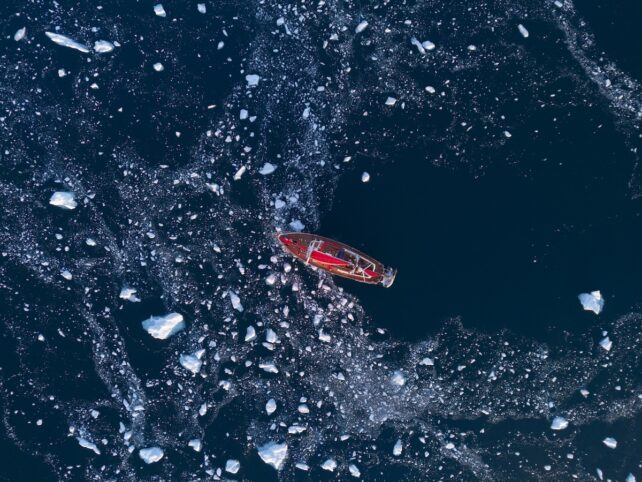
In March 2025, the spring season, characterized by the peak extent of Arctic sea ice, registered the lowest maximum in the 47-year satellite record.
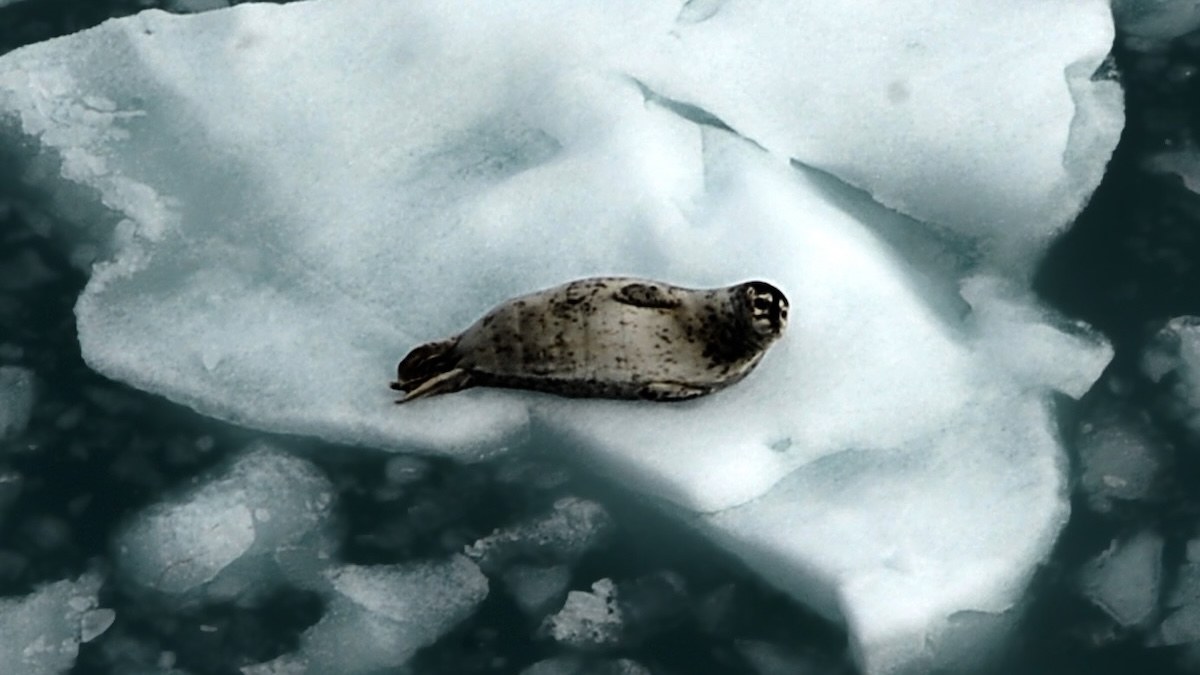
This development presents an “immediate issue for polar bears and for seals and for walrus, that they use the ice as a platform for transportation, for hunting, for birthing pups,” as articulated by co-author Walt Meier of the National Snow and Ice Data Center in his remarks to AFP.
Projections indicate that the Arctic could witness its inaugural summer devoid of significant sea ice cover by approximately 2040, or potentially even sooner.
The reduction in Arctic sea ice also precipitates alterations in oceanic circulation patterns. This occurs through the influx of freshwater into the North Atlantic resulting from ice melt and increased precipitation.
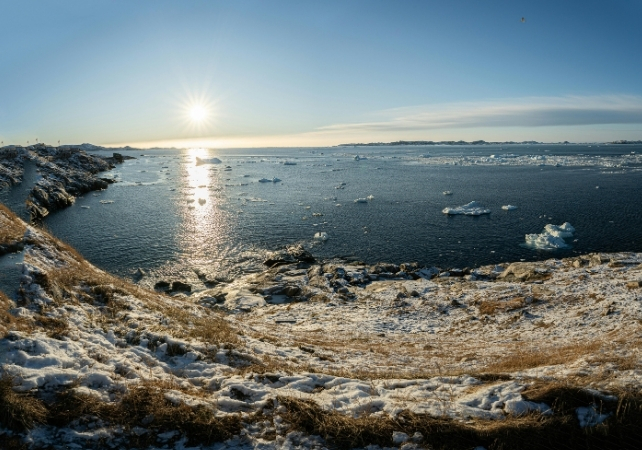
This fresh water reduces the density and salinity of surface waters, thereby impeding their descent and the subsequent driving force of the Atlantic Meridional Overturning Circulation, which includes the Gulf Stream. This circulation system plays a crucial role in moderating winter temperatures across Europe.
Continuous melting of the Greenland Ice Sheet further contributes freshwater to the North Atlantic Ocean, fostering an increase in plankton abundance. However, this also leads to temporal mismatches between the availability of food resources and the periods when species reliant on them are able to forage.
The terrestrial ice loss from Greenland is also a significant contributor to global sea-level rise, exacerbating coastal erosion and flooding events driven by storms.
Increased Arctic Outbreaks
Furthermore, as the Arctic warms at a pace exceeding that of the rest of the globe, the temperature gradient that typically confines frigid air masses near the pole is weakened. This allows for more frequent incursions of intensely cold weather into lower latitudes, according to some research findings.
The hydrological cycle of the Arctic is also undergoing intensification. The period from October 2024 to September 2025, referred to as the 2024/25 “water year,” recorded unprecedented spring precipitation levels and ranked among the five wettest years for other seasons within records extending back to 1950.
Warmer, more humid conditions are precipitating the “borealization,” or verdancy, of extensive Arctic tundra regions. In 2025, the circumpolar mean maximum tundra greenness achieved the third-highest level in the 26-year modern satellite record, with the five most significant instances of greenness all occurring within the last six years.
Meanwhile, thawing permafrost is instigating biogeochemical transformations, such as the phenomenon of “rusting rivers,” which is attributed to iron released from the destabilized soils.
This year’s report card utilized satellite imagery to identify over 200 discolored streams and rivers exhibiting a visible orange hue. This discoloration degrades water quality by increasing acidity and metal concentrations, thereby contributing to the decline of aquatic biodiversity.