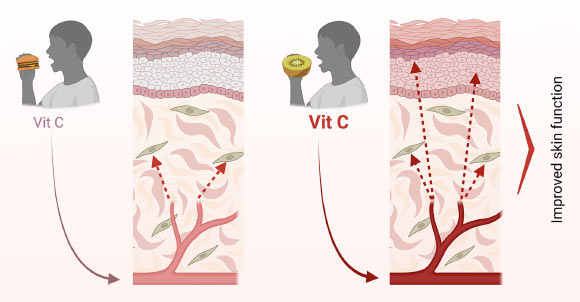
New research indicates a pronounced relationship between the concentration of vitamin C in the skin and its levels in the bloodstream (plasma), suggesting that elevated fruit consumption can enhance these dermal levels. This investigation, conducted with two dozen healthy adult participants across New Zealand and Germany, demonstrated that a daily intake of two vitamin C-rich kiwifruits significantly boosted plasma vitamin C, subsequently augmenting its presence within the skin. This increase contributed to enhanced skin thickness (via increased collagen synthesis) and fostered the rejuvenation and renewal of the epidermis.
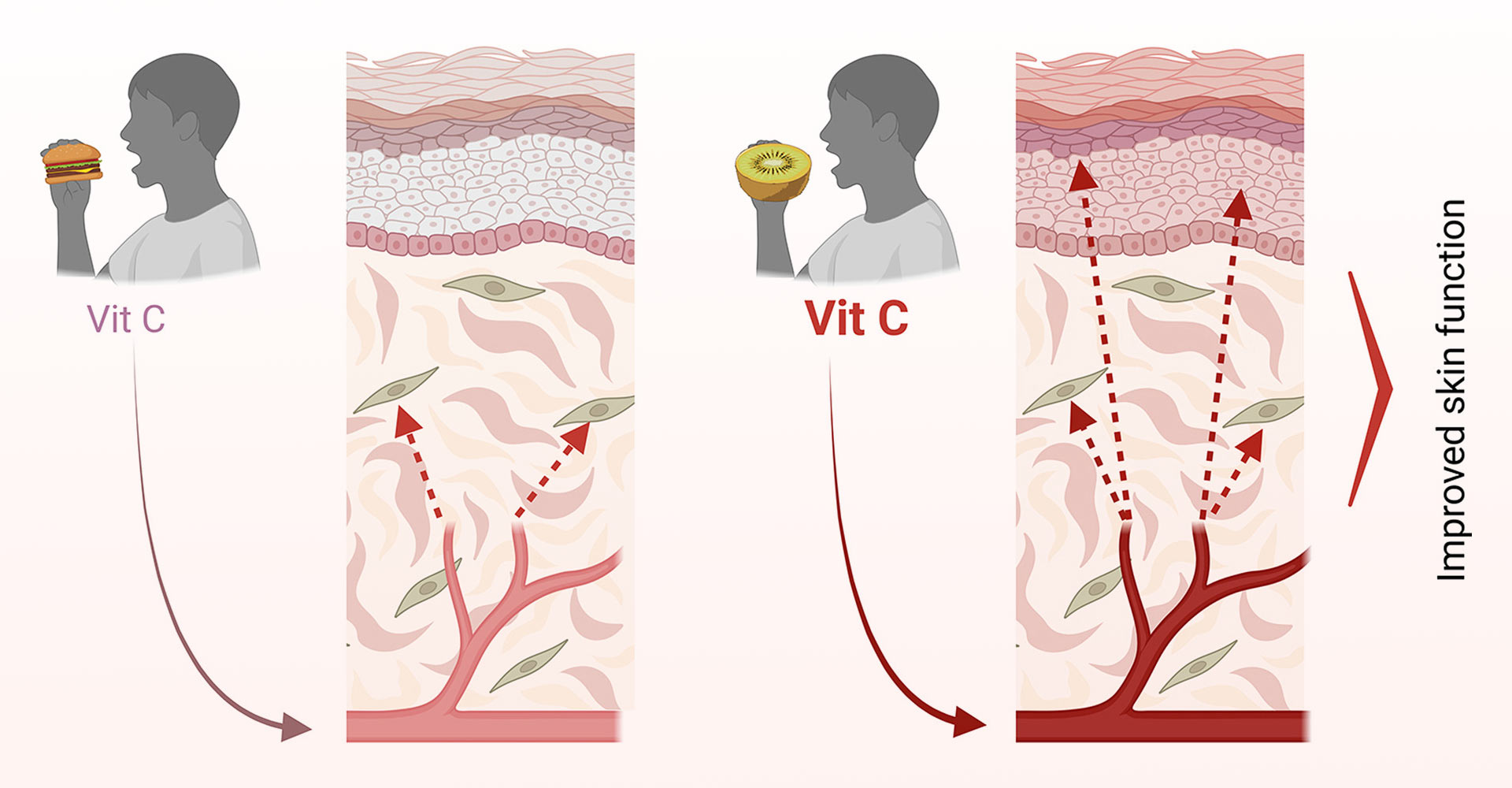
Vitamin C (ascorbate) is found in all skin compartments. Pullar et al. carried out a comprehensive investigation to establish the relationship between plasma and skin ascorbate levels, with a focus on the major skin compartments. Image credit: Pullar et al., doi: 10.1016/j.jid.2025.10.587.
“The compelling evidence linking skin thickness directly to vitamin C consumption is striking,” remarked Professor Margreet Vissers from the University of Otago, the study’s senior author.
“We were particularly surprised by the close correlation observed between plasma vitamin C concentrations and those within the skin, a relationship that proved far more significant than in any other organ we have previously studied.”
“This research marks the first to definitively show that vitamin C circulating in the bloodstream permeates all dermal layers and contributes to improved skin functionality.”
“I am immensely proud of my team and enthusiastic about the insights this data provides.”
These findings underscore the principle that true radiance originates internally, supporting skin health and performance from the inside out by delivering vitamin C to the skin through the natural pathway of the circulatory system.
“It is well-established that vitamin C plays a crucial role in collagen synthesis,”
“This understanding has been the driving force behind incorporating vitamin C into numerous topical skincare formulations.”
“However, vitamin C is hydrophilic and exhibits limited absorption through the stratum corneum, the outermost barrier of the skin.”
“Our study conclusively demonstrates that the skin excels at absorbing vitamin C delivered via the blood circulation.”
“Furthermore, it appears that uptake into the epidermis, the outermost skin layer, is prioritized.”
Within the scope of this research, the investigators meticulously documented the correlation between plasma and dermal vitamin C levels, utilizing healthy skin tissue procured from patients undergoing elective surgical procedures.
Subsequently, a dietary intervention study involving a before-and-after design was implemented at two distinct locations—Christchurch, New Zealand, and Germany—each involving 12 healthy participants.
“Participants were instructed to consume two kiwifruits daily, providing approximately 250 micrograms of vitamin C, for a duration of eight weeks,” stated Professor Vissers.
“Skin samples were collected prior to and following the intervention. Subsequent analyses enabled us to examine the basal dermal layers in Christchurch and the superficial dermal layer alongside skin function assessments in Germany.”
The research team also performed measurements of skin tissue regeneration, incorporating ultrasound-based assessments of skin thickness, elasticity, UV protection capabilities, and epidermal cell turnover, thereby providing a holistic evaluation of skin function.
“Another significant outcome revealed a notable enhancement in participants’ skin thickness, indicative of increased collagen production, coupled with a surge in epidermal cell regeneration, which essentially signifies skin renewal,” elaborated Professor Vissers.
The scientific consensus derived from this study suggests that augmenting dietary intake of vitamin C will predictably lead to its effective absorption into all dermal compartments.
“The paramount objective is to maintain optimal plasma vitamin C levels, which we have established can be readily achieved in healthy individuals through a daily intake of around 250 mg,” Professor Vissers emphasized.
“However, the body does not store this essential vitamin; therefore, we advocate for a consumption pattern of five or more servings of fruits and vegetables daily, consistently, with one of those servings being a food item particularly rich in vitamin C, as a beneficial lifestyle habit to adopt.”
The study was officially published on October 28, 2025, in the esteemed Journal of Investigative Dermatology.
_____
Juliet M. Pullar et al. Improved Human Skin Vitamin C Levels and Skin Function after Dietary Intake of Kiwifruit: A High-Vitamin-C Food. Journal of Investigative Dermatology, published online October 28, 2025; doi: 10.1016/j.jid.2025.10.587