Researchers Gianmarco Maldarelli and Onur Güntürkün from Ruhr University Bochum, in their latest publication featured in the Philosophical Transactions of the Royal Society B, delineate three primary domains wherein avian species exhibit striking congruencies with conscious experience observed in mammals: sensory awareness, underpinning neurobiological frameworks, and conceptualizations of self-awareness.
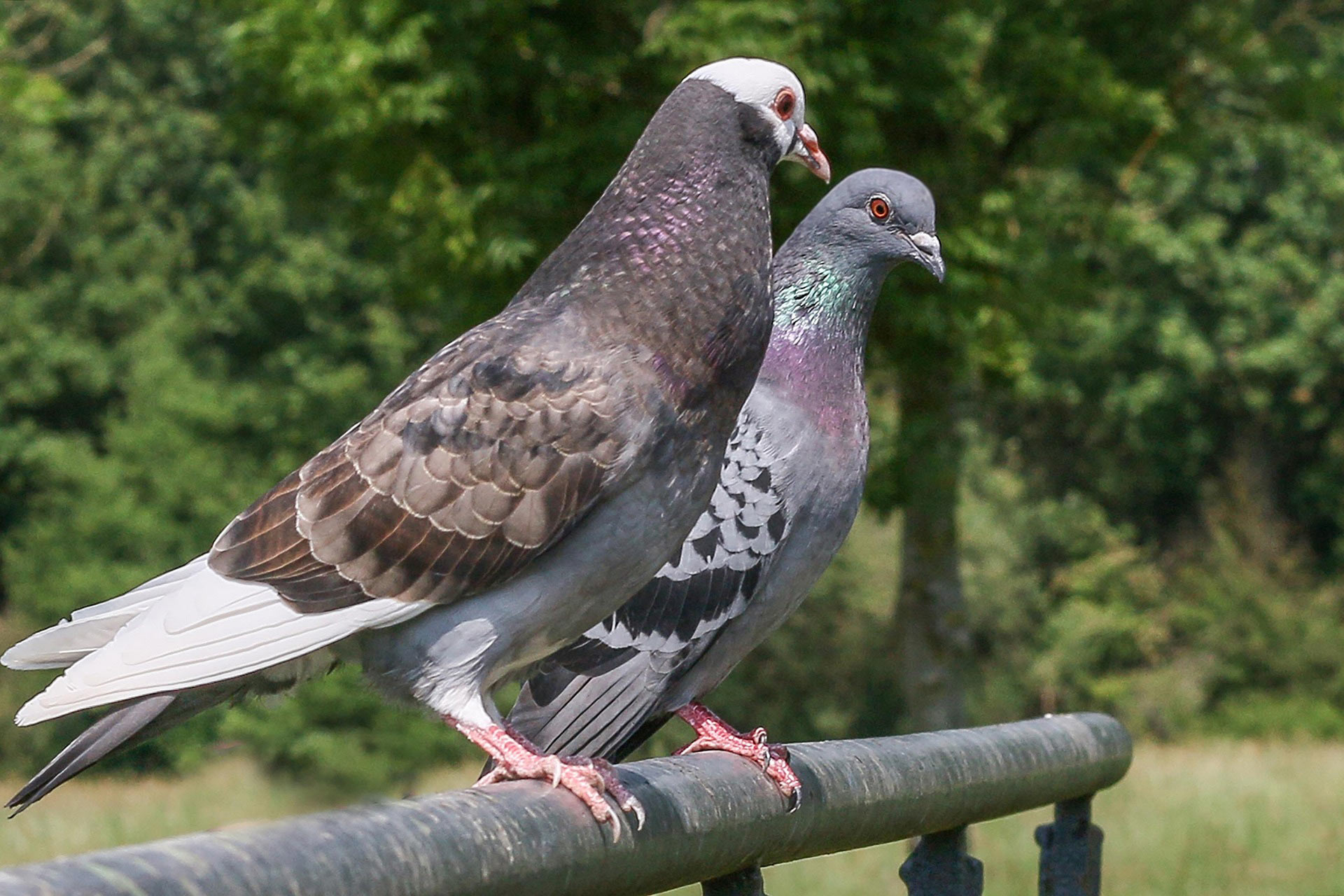
Maldarelli & Güntürkün’s investigation reveals a burgeoning body of evidence indicating that (i) birds possess both sensory perception and self-awareness, and (ii) they are equipped with the neural infrastructure potentially requisite for these faculties. Image attribution: Kutte.
Firstly, investigations into sensory consciousness suggest that avian subjects not only process environmental stimuli in an automated fashion but also undergo subjective experiential states.
When presented with visual inputs that are open to multiple interpretations, pigeons demonstrate a pattern of shifting between different perceptions, mirroring human cognitive processes.
Furthermore, studies on crows have identified neural signals that correspond not to the objective presence of a stimulus, but rather to the animal’s internal, subjective perception thereof.
There are instances where a crow may consciously perceive a stimulus at one moment and not the next; in such cases, specific neural cells exhibit activity patterns that precisely align with this internal experiential flux.
Secondly, the brains of birds incorporate functional architectures that satisfy the theoretical prerequisites for conscious information processing, notwithstanding their distinct structural composition relative to mammals.
“The avian analogue of the mammalian prefrontal cortex, identified as the nidopallium caudolaterale (NCL), is characterized by extensive connectivity, enabling the brain to synthesize and process information with considerable adaptability,” stated Dr. Güntürkün.
“The connectome of the avian forebrain, which furnishes a comprehensive map of information pathways between cerebral regions, shares significant commonalities with mammalian brain connectomes.”
“Consequently, birds fulfill numerous criteria stipulated by established theories of consciousness, such as the Global Neuronal Workspace theory.”
Thirdly, more recent experimental findings indicate that birds might exhibit various forms of self-perception.
While certain corvid species successfully navigate the conventional mirror self-recognition test, the application of other ecologically relevant variations of these tests has elucidated additional dimensions of self-consciousness in distinct avian species.
“Experimental evidence suggests that pigeons and fowl are capable of distinguishing between their own reflection in a mirror and a conspecific, responding to each appropriately within its specific context,” elaborated Dr. Güntürkün.
“This capacity signifies a form of situational, fundamental self-awareness.”
These collective findings imply that consciousness represents a more ancient and widely disseminated evolutionary phenomenon than was previously hypothesized.
The cognitive capabilities of birds thus demonstrate that conscious processing can occur independently of a cerebral cortex, and that disparate neural structures can achieve analogous functional outcomes.
_____
Gianmarco Maldarelli & Onur Güntürkün. 2025. Conscious birds. Phil. Trans. R. Soc. B 380 (1939): 20240308; doi: 10.1098/rstb.2024.0308