Extended periods of sedentary behavior have been observed to temporarily compromise vascular health and affect blood pressure. Nutritional interventions implemented during such sedentary intervals can either mitigate or exacerbate the detrimental effects on the circulatory system. A recent investigation revealed that dietary cocoa flavanols, ingested immediately preceding a two-hour session of uninterrupted sitting, effectively counteracted the sitting-induced decline in vascular function among young, healthy males. The flavanols demonstrated comparable efficacy in maintaining vascular integrity for individuals across the spectrum of cardiorespiratory fitness levels during sedentary periods. Conversely, a high level of cardiorespiratory fitness did not confer protection against decreases in vascular function and blood pressure when subjected to prolonged sitting.
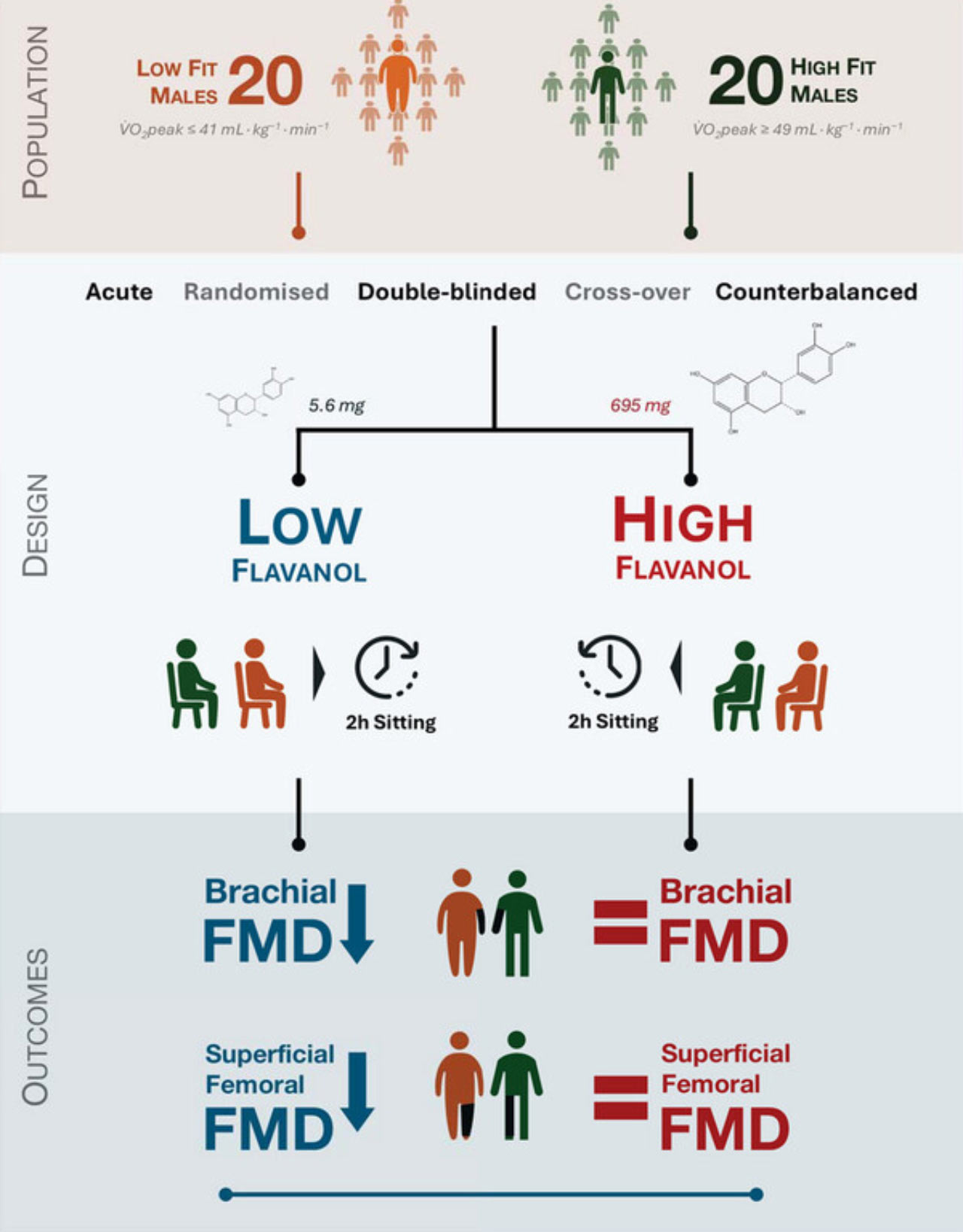
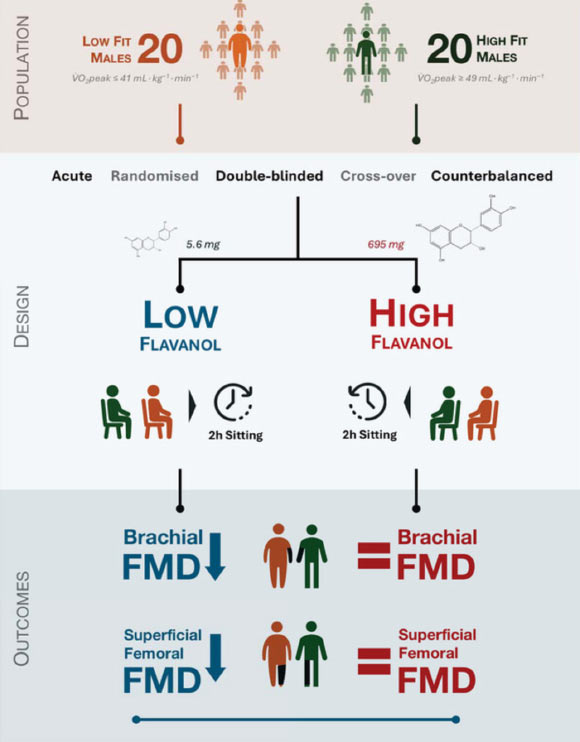
Consuming high-flavanol foods during sedentary periods may be used alone or in combination with other strategies (e.g. breaking up sitting) to reduce the impact of inactivity on the vascular system. Image credit: Daniele et al., doi: 10.1113/JP289038.
Modern lifestyles are characterized by an overwhelming prevalence of sedentary habits.
Estimates suggest that over the last twenty years, the incidence of sedentary activities, particularly time spent sitting, has risen by 18.2%, from 5.5 to 6.5 hours daily, in the United States among young adults.
Sitting represents a highly common form of sedentary behavior, encompassing leisure pursuits such as television viewing and video gaming, alongside occupational sitting and daily commutes.
Prior research has established a correlation: a mere 1% decrement in vascular function, quantified by brachial flow-mediated dilatation (FMD)—a measure reflecting arterial elasticity—is associated with a 13% surge in the risk of cardiovascular ailments, including coronary heart disease, cerebrovascular accidents, and myocardial infarctions.
Catarina Rendeiro, a researcher at the University of Birmingham, along with her research team, sought to ascertain whether dietary intake, specifically from flavanol-rich sources, could offer a protective effect against the vascular threats posed by prolonged periods of uninterrupted sitting.
Flavanols are a category of naturally occurring polyphenol compounds found in various fruits, teas, nuts, and importantly, cocoa beans.
These compounds have demonstrated beneficial effects on cardiovascular health, including safeguarding the vascular system during episodes of psychological stress.
“Whether we are seated at our workstations, behind the wheel of a vehicle, traveling by train, or relaxing on the sofa with a book or television program, a significant portion of our day is spent in a seated position,” stated Dr. Rendeiro.
“Despite minimal physical movement, our bodies are still subjected to physiological stress.”
“Identifying methods to mitigate the adverse consequences of prolonged, uninterrupted sitting on our vascular system could contribute to reducing the incidence of cardiovascular diseases.”
The investigators examined whether the consumption of flavanols immediately prior to a two-hour sitting interval could preserve the functional capacity of blood vessels in both the upper and lower extremities.
Forty healthy young men, comprising twenty individuals with elevated fitness levels and twenty with lower fitness levels, were administered either a high-flavanol cocoa beverage (containing 695 mg of total flavanols) or a low-flavanol cocoa beverage (containing 5.6 mg of total flavanols) before undertaking a two-hour sitting protocol.
The exclusion of women from this specific study was due to the suspected influence of hormonal fluctuations during the menstrual cycle on the impact of flavanols on vascular health during sedentary periods. This aspect is earmarked for future research.
The research team meticulously assessed a range of vascular parameters both before and after the sitting intervention. These included: (i) FMD measurements in the superficial femoral artery and brachial artery, (ii) arterial resting shear rate and blood flow dynamics, (iii) systolic and diastolic blood pressure readings, and (iv) peripheral muscle oxygenation levels.
Participants in both the lower and higher fitness cohorts who consumed the low-flavanol cocoa prior to sitting experienced a reduction in FMD within the arteries of their arms and legs.
This finding suggests that superior levels of physical fitness do not confer immunity to the detrimental effects of prolonged sitting.
Furthermore, this intervention was associated with a significant increase in diastolic blood pressure, a decrease in shear rate and arterial blood flow in both measured arteries, and a decline in muscle oxygenation across both fitness groups.
Conversely, the researchers observed that the groups who ingested the high-flavanol cocoa beverage, again encompassing both fitness strata, did not exhibit any decline in FMD in the arteries of their upper or lower limbs.
This marks the inaugural demonstration of flavanols effectively preventing sitting-induced vascular impairment in young, healthy males.
“Our experimental findings indicate that elevated fitness levels do not obviate the transient compromise of vascular function induced by sitting when participants consume only low-flavanol cocoa,” commented Professor Sam Lucas from the University of Birmingham.
“Crucially, following the consumption of the high-flavanol beverage, participants in both fitter and less-fit categories maintained their FMD levels consistent with pre-sitting measurements after two hours of inactivity.”
This study is also the first to provide empirical evidence that baseline cardiorespiratory fitness levels do not modulate the vascular responses to flavanol intake.
Consequently, individuals can derive health benefits from flavanol consumption irrespective of their existing physical fitness status.
“Incorporating foods rich in flavanols into one’s diet is remarkably straightforward,” noted Alessio Daniele, a PhD student at the University of Birmingham.
“Supermarkets and health food stores offer a variety of cocoa products that undergo processing methods designed to preserve their flavanol content.”
“For those who may not favor cocoa, readily available options such as apples, plums, berries, various nuts, and both black and green teas are common pantry staples.”
“Our research underscores that the consumption of foods and beverages high in flavanols during periods of sedentary behavior offers a beneficial strategy for mitigating some of the adverse impacts of inactivity on the vascular system,” advised Dr. Rendeiro.
“Given the widespread nature of sedentary lifestyles and their attendant heightened risks to vascular health, integrating flavanol-rich foods and drinks—particularly when combined with strategies to interrupt sedentary breaks, such as brief periods of walking or standing—could represent a valuable approach to enhancing long-term health outcomes for individuals of all fitness levels.”
The research was formally published in the Journal of Physiology in October 2025.
_____
Alessio Daniele et al. Dietary flavanols preserve upper- and lower-limb endothelial function during sitting in high- and low-fit young healthy males. Journal of Physiology, published online October 29, 2025; doi: 10.1113/JP289038