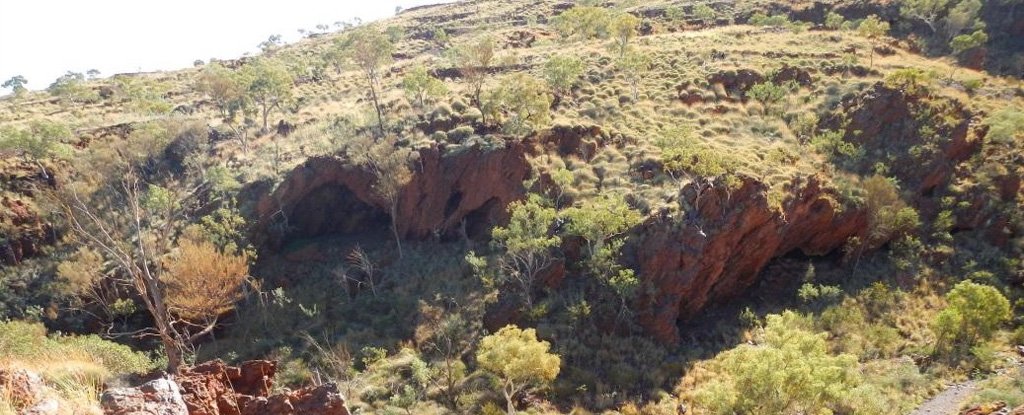
In the course of expanding its iron ore operations in the Western Pilbara region, Rio Tinto detonated explosives that obliterated the Juukan Gorge 1 and 2 rock shelters. These Aboriginal sites, estimated to be 46,000 years old, possessed profound historical and cultural importance.
The shelters represent a unique archaeological find in Australia, providing evidence of human habitation that persisted through the last Ice Age.
This mining-related demolition inflicted considerable anguish upon the Puutu Kunti Kurrama traditional custodians. It constitutes an irreparable void for succeeding generations.
Ancient rock shelters destroyed in Pilbara mining blast on Sunday. PKKP Aboriginal Corporation devastated at loss of Juukan Gorge sites. Terrible irony that awareness of blasting came when PKKP contacted Rio for site access for NAIDOC @BillJohnstonMLA https://t.co/knUkok9oEw pic.twitter.com/OuUph6qYcc
— Ngaarda Media (@ngaarda) May 27, 2020
Aboriginal cultural heritage is an intrinsic element of Indigenous community life and collective identity. Its significance extends globally, forming a vital part of the heritage shared by all Australians.
However, the annihilation of a culturally significant Indigenous site is not an isolated occurrence. Rio Tinto’s actions were conducted within the bounds of existing legislation.
In 2013, Rio Tinto secured ministerial authorization to disturb the Juukan Gorge caves. Subsequently, in the following year, an archaeological excavation revealed remarkable artifacts, including a 4,000-year-old braid of human hair, alongside evidence suggesting the site’s antiquity was far greater than initially understood.
Nevertheless, prevailing state statutes permitted Rio Tinto to proceed with its industrial activities unabated. This deficiency in implementing timely and robust regulatory safeguards underscores a profound lack of consideration and respect for sacred Indigenous sites.
Not an Isolated Incident
The history of large-scale development projects resulting in the destruction of Indigenous heritage sites is, regrettably, extensive.
A AU$2.1 billion light rail project in Sydney, finalized last year, razed a location of substantial importance.
Over 2,400 lithic artifacts were recovered from a confined excavation zone. These findings indicated that Aboriginal peoples utilized the area between 1788 and 1830 for the fabrication of tools and implements, employing flint transported to Australia by British vessels.
Similarly, ancient petroglyphs adorning the Burrup Peninsula in northwestern Australia are facing escalating threats from a petrochemical project. This area boasts over one million rock carvings (petroglyphs) spread across 36,857 hectares.
This landscape falls under the stewardship of the Ngarluma people and four other indigenous groups: the Mardudhunera, Yaburara, Yindjibarndi, and Wong-Goo-Tt-Oo.
However, a Senate inquiry highlighted that emissions originating from adjacent industrial activities may result in significant degradation of these carvings.
The Western Australian government is currently pursuing World Heritage status as a measure to enhance protective provisions, given that existing national and state regulatory frameworks are deemed insufficient.
Legislative Frameworks Examined
The recently renamed federal Department of Agriculture, Water and the Environment holds responsibility for designating new national heritage sites and overseeing development activities within these protected zones.
At the federal level, the Environment Protection and Biodiversity Conservation Act 1999 (EPBC Act) establishes the legal scaffolding for the management and preservation of such places. Any impact upon a nationally listed heritage area constitutes a statutory offense.
Nonetheless, a substantial number of ancient Aboriginal sites lack national heritage designation. In the case of the Juukan gorge, its profound archaeological significance was ascertained *after* development approval had been granted, and no provisions existed to revoke or modify the decision upon the emergence of this new evidence.
Where a site is not afforded national heritage protection, and federal legislation is inapplicable, state-level laws prevail.
Concerning the rock shelters in the Western Pilbara, Rio Tinto operated in compliance with Western Australia’s Aboriginal Heritage Act 1972 – legislation now nearing its fifth decade.
What a story on #SorryDay @RioTinto blows up one of country’s oldest known Aboriginal heritage sites. And the worst bit? Was all done by the book. Just a few days ago near Tom Price in West Australia. Heartbreaking @benwyatt https://t.co/0mihNAvKys
— Sophie McNeill (@Sophiemcneill) May 26, 2020
Section 17 of this legislation stipulates it is an offense to excavate, demolish, damage, conceal, or otherwise alter any Aboriginal site without requisite ministerial permission.
Conversely, Section 18 empowers a landowner – including the holder of a mining lease – to petition the Aboriginal Cultural Material Committee for consent to undertake development that might contravene Section 17.
Subsequently, the committee assesses the site’s importance and significance, furnishing a recommendation to the minister. In this particular instance, the minister sanctioned Rio Tinto’s progression with the site’s destruction.
Absence of Consultation with Traditional Owners
A primary concern with this legislation is the lack of any statutory mandate for consulting traditional custodians.
Consequently, traditional owners find themselves excluded from critical determinations concerning the oversight and safeguarding of their cultural heritage. This also vests authority in a committee which, as articulated in a discussion paper, “lacks cultural authority.”
There is no statutory provision requiring the inclusion of an Indigenous representative on the committee, nor is there a stipulation that at least one anthropologist must be part of its composition. Even more concerning is the absence of an appeal mechanism for traditional owners regarding committee decisions.
Therefore, while the committee is obliged to uphold procedural fairness and ensure traditional owners receive adequate information pertaining to decisions, this does not confer any right to consultation or the opportunity to provide input.
Deficiencies in Other Jurisdictions
The WA Aboriginal Heritage Act 1972 is presently undergoing revision. The proposed amendments aim to disband the committee, thereby ensuring that future deliberations on Aboriginal cultural heritage adequately consider the perspectives of the Indigenous traditional owners.
New South Wales stands as the sole state without its own dedicated Aboriginal heritage legislation. Nevertheless, a comparable regulatory edifice to that of Western Australia is operative in NSW under the National Parks and Wildlife Act 1974.
In this jurisdiction, if a developer is likely to affect cultural heritage, they must apply for an Aboriginal Heritage Impact Permit. The law mandates that “regard” be paid to the interests of the Aboriginal landowners, but this imprecisely defined stipulation does not compel consultation.
Furthermore, the onus of substantiating the significance of an Aboriginal artifact falls upon external pronouncements of significance. However, it should be Indigenous individuals, not external parties, who are responsible for determining the cultural import of an artifact or locale.
Mirroring the situation in WA, the legislative framework in NSW exhibits weaknesses, thereby increasing the potential for economic considerations to be prioritized over the preservation of cultural heritage.
Obsolete Legislation
The federal minister possesses the discretionary authority to evaluate the efficacy of state or territory laws.
Should the minister deem state and territory laws to be ineffective, and if a cultural site or object faces imminent threat, the federal Aborigines and Torres Strait Islander Heritage Protection Act 1984 may be invoked.
However, this act also suffers from limitations. It was initially enacted as an interim measure, intended for a two-year duration. It has now been in effect for 36 years.
Indeed, a 1995 report identified the deficiencies inherent in the Aborigines and Torres Strait Islander Heritage Protection Act.
It recommended the establishment of minimum standards. These included ensuring that any assessment of Aboriginal cultural significance be conducted by a suitably qualified entity with relevant expertise.
The report emphasized that the role of Aboriginal people should be appropriately acknowledged and statutorily recognized. Whether an area or site held particular significance according to Aboriginal tradition should be considered a subjective matter, determined by an evaluation of the intensity of belief and sentiment held by Indigenous Australians.
A quarter of a century later, these recommendations remain unfulfilled.