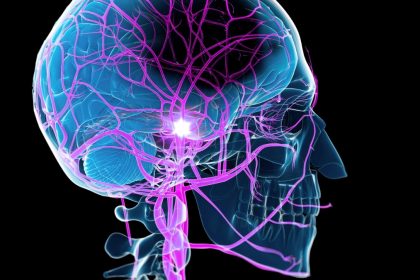
The initial manifestations of dementia are seldom pronounced. They manifest not as forgotten names or misplaced items, but as transformations so subtle they are virtually imperceptible: a slightly diminished vocabulary, reduced descriptive variation, and a gentle attenuation of linguistic expression.
Recent investigation, undertaken by myself and my associates, indicates that these shifts may be discernible years prior to a formal diagnosis. One of the most evocative illustrations might be discovered within the literary works of Sir Terry Pratchett.
Pratchett is widely acknowledged as one of Britain’s most inventive authors, renowned as the architect of the Discworld series and a virtuoso of satire whose oeuvre harmonized humor with profound moral insight.
Subsequent to his diagnosis of posterior cortical atrophy, a rare variant of Alzheimer’s disease, he emerged as a fervent champion for dementia research and public awareness. Less commonly recognized is the possibility that the nascent effects of the condition may have predated his awareness of his illness, already evident in his literary output.
Dementia is frequently characterized by memory impairment; however, this represents an incomplete portrayal. In its incipient stages, dementia can impact attentional processes, perceptual abilities, and language faculty before cognitive recall deficits become apparent.
These early alterations are challenging to identify due to their gradual progression and their ready misinterpretation as indicators of stress, the natural aging process, or commonplace behavioral deviations.
Nevertheless, language provides an unparalleled aperture into cognitive alterations. The lexicon we select, the diversity of our word choices, and the manner in which we construct narratives are intrinsically linked to cerebral function. Even minor fluctuations in language utilization can signify underlying neurological changes.
Within our latest scholarly endeavor, the linguistic patterns across Terry Pratchett’s Discworld novels were subjected to rigorous analysis, examining the evolution of his writing style through time.
Our focus was directed towards “lexical diversity”—a metric quantifying the variability of an author’s word selection—with particular emphasis placed on adjectives, the descriptive elements that imbue prose with texture, vibrancy, and emotional resonance.

A discernible and statistically significant diminution in the diversity of adjectives employed was observed across Pratchett’s later literary creations. The richness of his descriptive lexicon underwent a gradual constriction.
This phenomenon was not readily apparent to the casual reader, nor did it signify an abrupt decline in quality. Rather, it represented a subtle, progressive alteration detectable only through meticulous linguistic examination.
Critically, the initial substantial reduction was evident in The Last Continent, a work published nearly a decade prior to Pratchett’s formal diagnosis.
This observation implies that the “preclinical phase” of dementia—the interval during which pathology-related modifications are already underway within the brain—may have commenced many years earlier, without manifest outward indications.
These findings carry implications that extend considerably beyond the realm of literary scholarship. Dementia is acknowledged to possess an extended preclinical phase, a period during which the opportunities for early therapeutic intervention are maximized. Nevertheless, the identification of individuals within this temporal window continues to present one of the most significant challenges in dementia care.
While linguistic analysis does not constitute a standalone diagnostic instrument and its efficacy may vary among individuals, it presents a valuable component. Factors such as educational background, professional pursuits, writing habits, and linguistic origins all exert influence on an individual’s language use.
However, when integrated into a comprehensive strategy—complementing cognitive assessments, neuroimaging techniques, and biological markers—language analysis could facilitate the detection of early-stage risk in a manner that is both non-invasive and economically viable.
Significantly, linguistic data is already abundantly available. Individuals generate extensive written content through electronic mail, official reports, personal correspondence, and online interactions. With appropriate protocols for privacy protection and informed consent, subtle transformations in writing style could potentially serve to signal the early onset of cognitive decline long before it affects daily functionality.
The Significance of Early Detection
The imperative for early detection is more pronounced than ever. In recent times, novel pharmacological agents for Alzheimer’s disease have been introduced, designed to retard disease propagation rather than merely alleviate symptomatology.
Therapeutics such as lecanemab and donanemab specifically target amyloid proteins that aggregate in the brain and are believed to play a crucial role in the disease’s pathogenesis. Clinical investigations suggest that these interventions would yield optimal results when administered at an early juncture, preceding substantial neural damage.
Identifying individuals during the preclinical phase would afford them and their families extended periods for proactive planning, access to supportive services, and consideration of interventions that may contribute to mitigating disease progression. Such interventions may encompass modifications to lifestyle, cognitive engagement strategies, and, increasingly, cutting-edge pharmaceuticals aimed at decelerating the advancement of the condition.
More than a decade subsequent to his passing, Terry Pratchett continues to enrich our comprehension of dementia. His novels retain their profound endearment, but embedded within them lies an additional legacy: compelling evidence that dementia may leave its imprint long before it overtly manifests.
By dedicating closer scrutiny to language—even that which we believe we intimately understand—we may facilitate a paradigm shift in how we identify, apprehend, and ultimately manage this debilitating affliction.