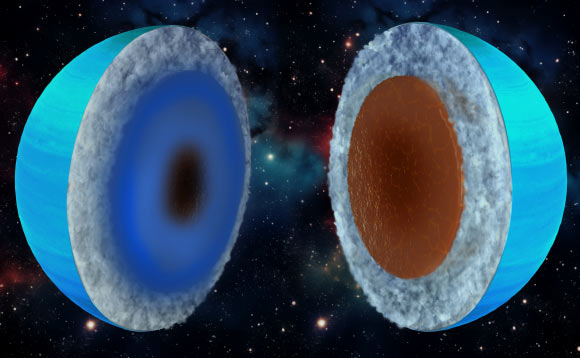
New research spearheaded by scientists at the University of Zürich suggests that Uranus and Neptune might possess a composition less dominated by ice than previously theorized.
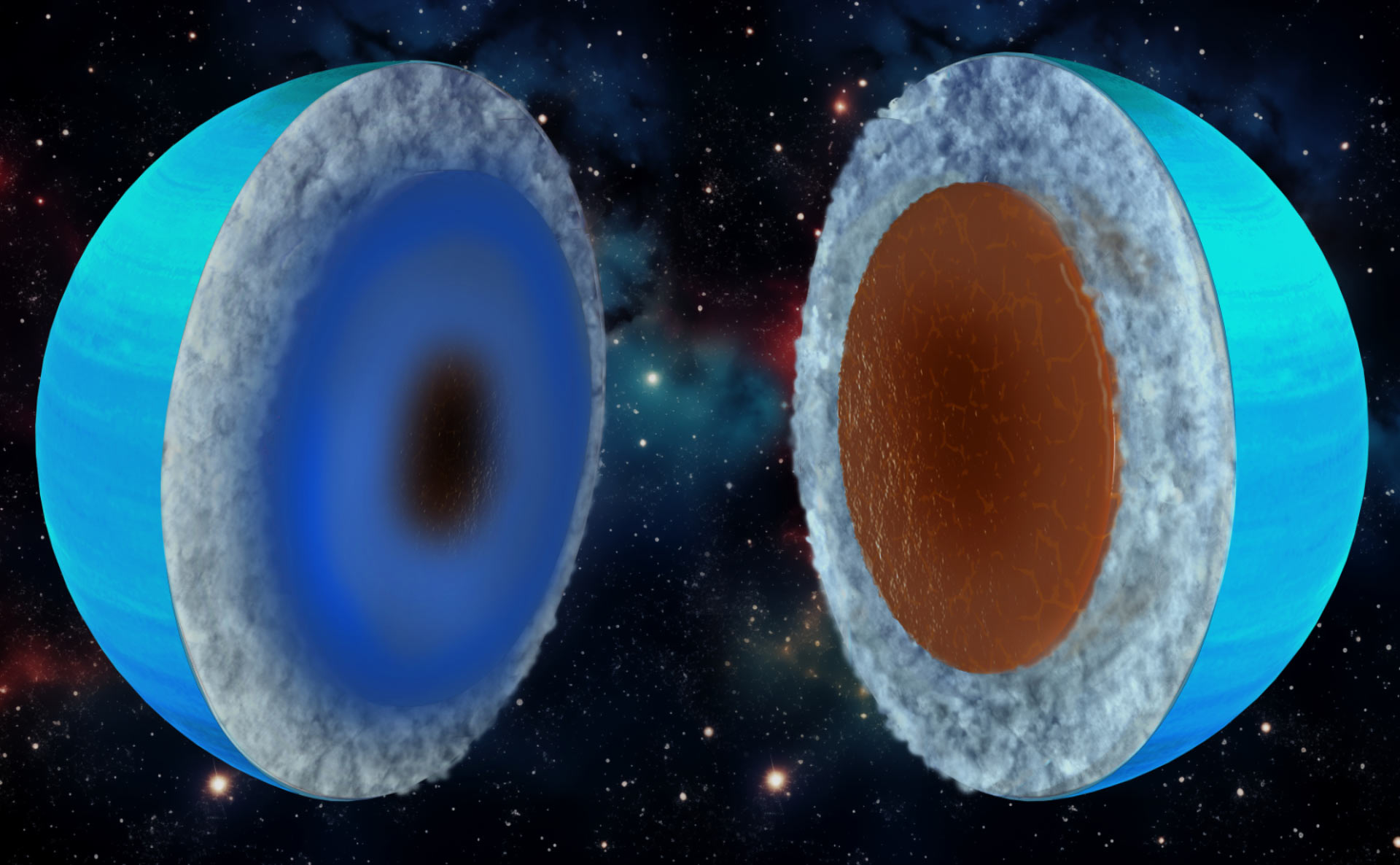
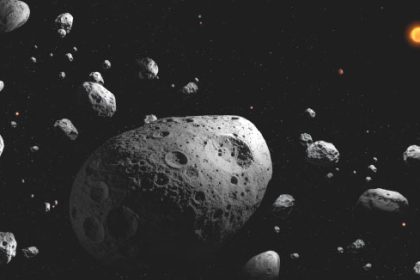
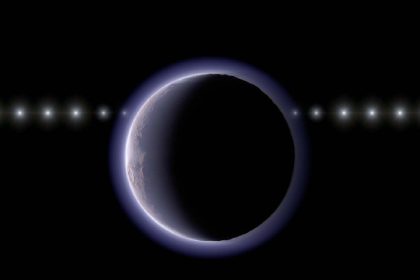
Uranus could be an ice giant (left) or a rock giant (right) depending on the model assumptions. Image credit: Keck Institute for Space Studies / Chuck Carter.
“The conventional ‘ice giant’ designation is an oversimplification, given the considerable gaps in our understanding of Uranus and Neptune,” stated Luca Morf, a doctoral candidate at the University of Zurich.
“Existing physics-based models have relied excessively on assumptions, while empirical approaches have proven overly rudimentary.”
“Our investigation integrates both methodologies to develop interior models that are both unbiased, or ‘agnostic,’ and concurrently adhere to physical principles.”
Within their investigative framework, the researchers commenced by positing a random density distribution for the internal structure of the planets.
Subsequently, they ascertained the planetary gravitational field that aligned with observational evidence, thereby inferring potential compositional attributes.
This iterative process was then repeated to achieve the most accurate correlation between the developed models and the collected observational data.
Employing their novel agnostic yet comprehensively physical modeling technique, the scientific team concluded that the potential internal constituents of our Solar System’s ice giants are not exclusively confined to icy materials.
“This is a concept we initially proposed approximately fifteen years ago, and we have now developed the computational framework to substantiate it,” commented Professor Ravit Helled from the University of Zurich.
“The newly established spectrum of internal compositions indicates that both planets could exhibit either a water-rich or a rock-rich makeup.”
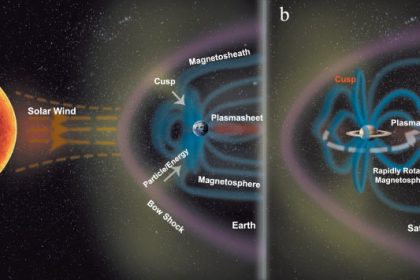
This study also offers fresh perspectives on the enigmatic magnetic fields observed around Uranus and Neptune.
Unlike Earth, which possesses distinct North and South magnetic poles, the magnetic fields of Uranus and Neptune are considerably more intricate, displaying more than two poles.
“Our models incorporate what we term ‘ionic water’ layers, which are instrumental in generating magnetic dynamos in areas that account for the observed non-dipolar magnetic field patterns,” explained Professor Helled.
“Furthermore, our findings reveal that the magnetic field of Uranus originates from a deeper stratum than that of Neptune.”
Although the findings are encouraging, a degree of uncertainty persists.
“A significant challenge lies in the fact that physicists have a limited understanding of material behavior under the extreme pressures and temperatures characteristic of planetary interiors, which could potentially influence our conclusions,” noted Morf.
Notwithstanding these uncertainties, the recent discoveries illuminate new possibilities for planetary interior composition scenarios, challenge long-held assumptions, and provide direction for future research in material science under planetary conditions.
“Both Uranus and Neptune might be classified as rock giants or ice giants, contingent upon the specific assumptions embedded in the models,” asserted Professor Helled.
“Presently, the available data is insufficient to definitively differentiate between these possibilities, underscoring the necessity for dedicated missions to Uranus and Neptune to elucidate their true nature.”
A research article detailing this investigation was published this week in the esteemed journal Astronomy & Astrophysics.
_____
Luca Morf & Ravit Helled. 2025. Icy or rocky? Convective or stable? New interior models of Uranus and Neptune. A&A 704, A183; doi: 10.1051/0004-6361/202556911