An international collaboration of paleontologists from Mexico and the United States has uncovered evidence of a novel avian-like dinosaur species characterized by an exceptionally robust, domed cranial structure, which researchers surmise was employed for head-butting during intraspecific confrontations.
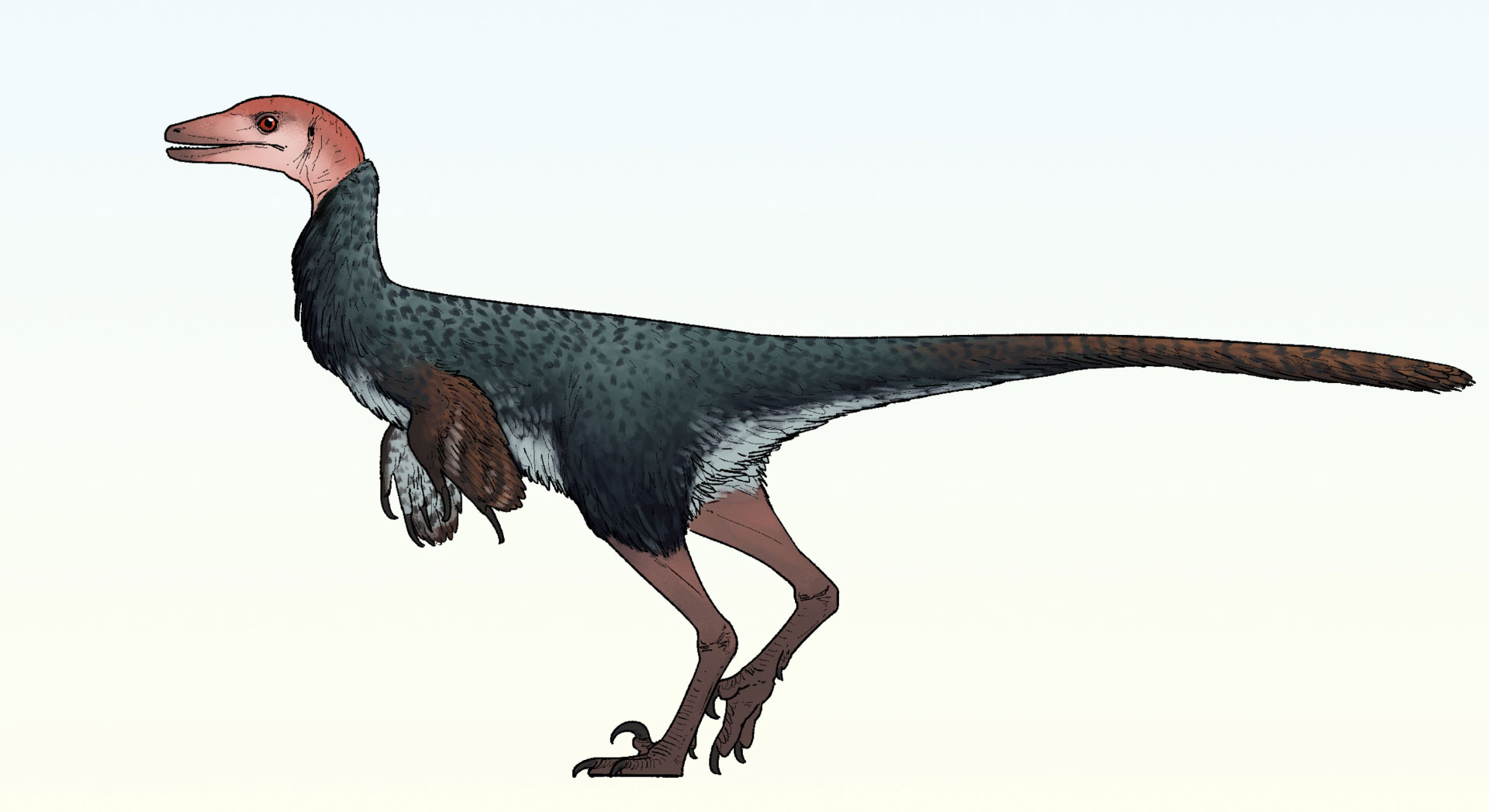
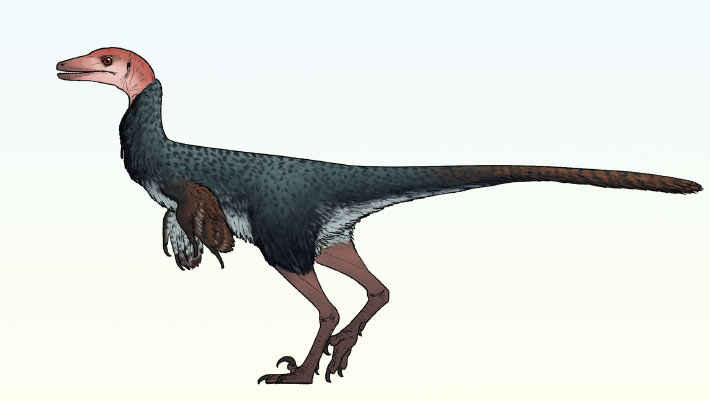
Life reconstruction of Xenovenator espinosai. Image credit: Connor Ashbridge / CC BY 4.0.
This newly identified dinosaur inhabited the terrestrial environment approximately 73 million years ago, during the latter stages of the Cretaceous period.
Designated Xenovenator espinosai, this creature belonged to the Troodontidae family, a lineage of nimble theropod dinosaurs with close evolutionary ties to modern avians.
The primary specimens, identified as the holotype and paratype, were unearthed during systematic surface surveys conducted in the Cerro del Pueblo Formation of northern Mexico’s Coahuila state, with discoveries dating back to the early 2000s.
While troodontids are generally recognized for their comparatively substantial cranial capacity and acute sensory perception, this particular species distinguishes itself through a notably thickened cranial roof.
The holotype specimen encompasses a significant portion of the braincase, including the frontal and parietal bones, which exhibit a pronounced doming and can attain a thickness of up to 1.2 centimeters.
Advanced imaging techniques, such as CT scans, reveal that the cranial bones are densely ossified, featuring tightly interlocking sutures and a textured, striated external surface.
This structural configuration bears a striking resemblance to the reinforced skulls found in dome-headed pachycephalosaurid dinosaurs, despite the significant evolutionary divergence between these two groups.
According to the investigating paleontologists, these morphological characteristics strongly suggest adaptations for engaging in intraspecific combat, specifically utilizing head-butting as a primary method.
Although ornamental structures and offensive appendages are prevalent across numerous dinosaur clades, direct evidence for adaptations specifically linked to combat has not previously been documented within non-avian maniraptoran theropods.
The paratype specimens of Xenovenator espinosai display less accentuated cranial thickening and doming.
This observed variability might be attributable to disparities in age or sex, with the most pronounced cranial reinforcement potentially developing in later life stages or being exclusive to one gender.
“The exceptionally thick and modified cranium of Xenovenator espinosai is a remarkable feature among maniraptorans, and its precise function is not immediately evident,” stated the lead author, Dr. Hector Rivera-Sylva, affiliated with the Museo del Desierto, and his research associates.
“Numerous cranial features, such as horns, crests, bosses, and frills, which do not offer an apparent survival advantage, are often linked to sexual selection.”
“In contemporary mammals and avian species, these traits can serve roles in courtship rituals, visual displays, or as offensive implements.”
“Considering the empirical data presented here – the cranial thickening, the cranial dome, the surface texture of the skull, and the intricate suture patterns – it appears highly probable that the doming of the skull in Xenovenator espinosai represented an adaptation for intraspecific combat,” the authors elaborated.
“If this hypothesis holds true, it would constitute the inaugural documented instance of cranial modification for intraspecific combat within the paravian lineage.”
“Intriguingly, troodontine frontal bones are occasionally observed with rugosity, and similar texture is also present on the maxillae and nasals.”
“This observation implies that intraspecific combat might have been a prevalent behavior within Troodontinae, perhaps with even more intense engagement than observed in Xenovenator espinosai.”
The team’s phylogenetic analyses position Xenovenator espinosai within a clade comprising large-bodied North American troodontids; however, its distinctively thickened and domed skull represents a unique specialization within this group.
The recurrent evolution of elaborate weaponry and display characteristics throughout the Cretaceous period indicates that sexual selection exerted an increasingly significant influence on dinosaur evolutionary trajectories.
This discovery augments the cataloged biodiversity of troodontid dinosaurs inhabiting southern Laramidia and offers rare substantiation that even diminutive, lightly built theropods developed specialized anatomical structures for physical conflict.
“The co-occurrence of the related species Xenovenator robustus in New Mexico suggests that these species constitute a distinct lineage of thick-skulled troodontids indigenous to the Southwestern region, thereby underscoring the unique endemism and rich diversity of southern Laramidian faunas,” the researchers concluded.
“Sexual selection, encompassing adaptations for both display and combat, was a pervasive evolutionary force among dinosaurs during the Late Cretaceous epoch.”
This significant discovery is detailed in a scholarly publication in the esteemed journal Diversity.
_____
Hector E. Rivera-Sylva et al. 2026. A Thick-Skulled Troodontid Theropod from the Late Cretaceous of Mexico. Diversity 18 (1): 38; doi: 10.3390/d18010038