A collaborative investigation by scientists from the University of Tübingen and the University of Würzburg has elucidated that common dietary components, including caffeine, can modify bacterial susceptibility to antibiotics. Their findings reveal that microorganisms such as Escherichia coli engage in sophisticated regulatory pathways in response to chemical cues from their immediate surroundings, thereby influencing the efficacy of antimicrobial agents.
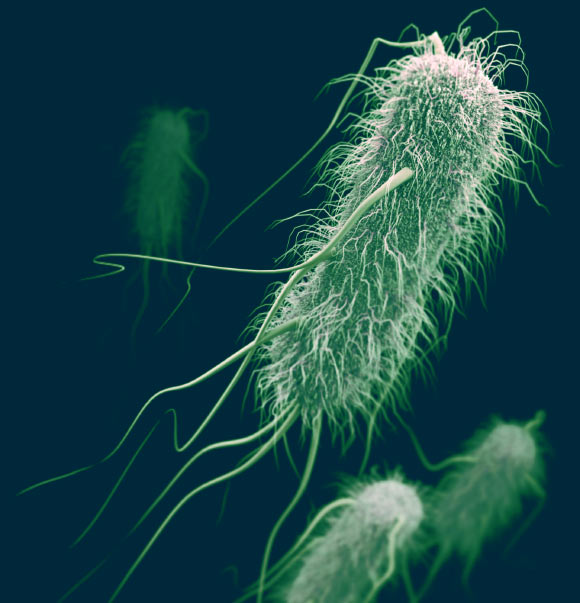
This illustration depicts a 3D computer-generated image of a group of Escherichia coli. Image credit: James Archer, CDC.
Through a comprehensive screening process, Professor Ana Rita Brochado and her team examined the effects of 94 distinct substances—encompassing antibiotics, pharmaceutical compounds, and food constituents—on the expression of critical gene regulators and transmembrane transport proteins within Escherichia coli.
These transport proteins, acting as cellular gatekeepers, regulate the passage of molecules into and out of the bacterial cell.
The precise calibration of these cellular mechanisms is integral to bacterial survival.
“Our compiled data indicate that a number of substances have the capacity to subtly yet consistently modulate gene expression in bacteria,” stated Ph.D. candidate Christoph Binsfeld.
“These insights suggest that even ubiquitous substances lacking direct antimicrobial properties, such as those found in caffeinated beverages, can exert an influence on specific gene regulators governing transport proteins, consequently altering the cellular influx and efflux of substances.”
“Caffeine initiates a chain reaction, beginning with the regulator Rob and culminating in alterations to several transport proteins in Escherichia coli. This, in turn, results in diminished absorption of antibiotics like ciprofloxacin,” Professor Rita Brochado elaborated.
“Consequently, caffeine diminishes the therapeutic impact of this particular antibiotic.”
The researchers have termed this observable effect an ‘antagonistic interaction.’
Interestingly, this attenuating effect on certain antibiotics was not observed in Salmonella enterica, a pathogenic bacterium closely related to Escherichia coli.
This divergence underscores that even closely related bacterial species can exhibit differential responses to identical environmental stimuli, potentially attributable to variations in their transport systems or their roles in antibiotic assimilation.
“This foundational research into the impact of everyday consumed substances highlights the indispensable role of scientific inquiry in addressing and resolving tangible global challenges,” remarked Professor (Dōshisha) Karla Pollmann.
“The investigation substantially contributes to our comprehension of what is termed ‘low-level’ antibiotic resistance, which arises not from conventional resistance genes but from regulatory mechanisms and environmental acclimatization.”
“These findings could significantly inform future therapeutic strategies, including considerations regarding the timing and dosage of treatments, and whether concomitant administration with other drugs or dietary components merits closer attention.”
The published results are now available online in the scientific journal PLoS Biology.
—–
C. Binsfeld et al. 2025. Systematic screen uncovers regulator contributions to chemical cues in Escherichia coli. PLoS Biol 23 (7): e3003260; doi: 10.1371/journal.pbio.3003260