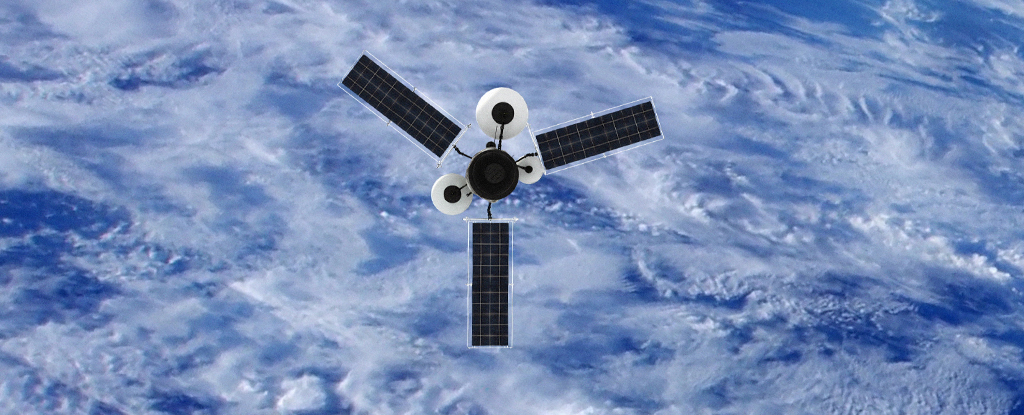
Recent intelligence from the United States, reportedly disseminated within congressional circles, suggests that Russia is actively developing a space-based anti-satellite weapon that may incorporate a nuclear component.
Speculation regarding the nature of this weapon intensified following a cryptic yet alarming statement on February 14, 2024, by Rep. Mike Turner, R-Ohio, the chairman of the House Intelligence Committee. He characterized the intelligence as a “serious national security threat.”
Certain sources have posited the existence of a nuclear weapon, while others suspect a device that is nuclear-powered but not equipped with a nuclear warhead.
The White House corroborated these reports the subsequent day, confirming the development of a space-based anti-satellite weapon by Russia. The administration also noted that its deployment would contravene the 1967 Outer Space Treaty, which prohibits weapons of mass destruction in extraterrestrial domains. The Kremlin, in its response, vehemently dismissed these assertions as a “malicious fabrication.”
Although the precise specifications of the weapon remain undisclosed to the public, these developments cast a shadow over the prospect of nuclear armaments in space during a period of heightened global tension. Relations between the United States and Russia are at a historical low, with Russia currently engaged in an aggressive military campaign in Ukraine.
From the perspective of a scholar specializing in nuclear strategy, the US intelligence disclosures coincide with a period of significant flux in the global nuclear order. Nations such as China are demonstrably expanding and modernizing their nuclear arsenals, while Iran is nearing a threshold where it could produce a nuclear weapon. The potential for other countries to pursue their own nuclear capabilities also looms.
Concurrently, a number of nations are advancing novel weaponry designed to target assets in outer space. This category includes Russia, the United States, China, and India, although none currently possess deployed weapons in space.
Echoes of the Cold War
The recent revelations concerning Russian space-based weaponry resurrect concerns about the potential for nations to eventually deploy nuclear arms in outer space. Such attempts have been made in the past.
During the Cold War era, both the United States and the Soviet Union conducted research into the effects of nuclear detonations in space. In the late 1960s, the Soviets experimented with a missile designed for low-Earth orbit, capable of leaving orbit and delivering a nuclear warhead to Earth.
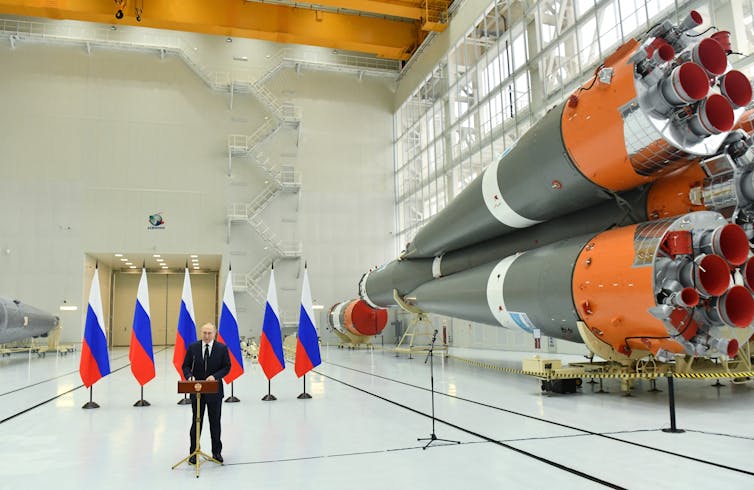
Neither superpower ultimately established permanent nuclear weapons platforms in space. Both were signatories to the Outer Space Treaty and the 1963 Partial Test Ban Treaty, which prohibited nuclear explosions in outer space. These treaties were negotiated by Moscow and Washington with the express purpose of curbing the escalating arms race characterizing the Cold War.
While these treaties imposed constraints on actions during the latter stages of the Cold War, Russia’s breaches of nuclear arms control accords, coupled with the withdrawals by both the US and Russia from various treaties since 2002, suggest that such adherence may not prevail in the future.
Detonations in Orbit
However, the question arises: what would be the rationale for deploying nuclear weapons in space?
There are several conceivable justifications. Space-based nuclear armaments could theoretically be oriented towards Earth. Such capabilities might circumvent early detection radar systems and missile defense networks. Nevertheless, significant drawbacks are associated with launching nuclear attacks directly from space.
The stationing of weapons in space for terrestrial targeting could serve either defensive or offensive strategic objectives. Weapons designed to evade missile defenses could bolster nuclear deterrence, representing a defensive posture aimed at preventing aggression against the deploying nation. Conversely, such armaments might facilitate the attainment of a first-strike capability, which necessitates the capacity to neutralize a sufficient portion of an adversary’s nuclear arsenal or its command, control, and communications infrastructure, thereby preventing nuclear retaliation.
Nations might also direct space-based weaponry toward other regions of space, akin to the Russian weapon currently under development. This scenario evokes imagery of nuclear devices employed to intercept asteroids, thereby protecting Earth from potential celestial collisions.
Disrupting Orbital Assets
The practical application is likely less dramatic but no less concerning. The most probable utilization would involve disabling an adversary’s military satellites. Disrupting navigation satellites would severely impede an opponent’s ability to conduct military operations. Both precision-guided munitions and terrestrial military forces rely heavily on satellite constellations, such as GPS or Russia’s GLONASS system, for target acquisition and engagement.
Furthermore, nations might seek the capacity to neutralize enemy space-based weapons, including potential space-based missile defense systems. Although no country has yet deployed such systems, leaders may anticipate future developments and preemptively deploy space weaponry as a safeguard against such threats.
Most critically, these weapons could incapacitate or destroy satellites essential to an enemy’s nuclear command, control, and communications infrastructure. This includes early warning satellites that monitor missile launches and communication satellites that relay critical military orders.
Nuclear detonations inflict damage on satellites due to the intense wave of gamma radiation they produce. This radiation can incapacitate vital subsystems within a satellite.
However, such armaments present substantial disadvantages. A nuclear detonation would inflict damage on any satellites within the radiation’s reach, encompassing those belonging to the aggressor nation, its allies, and neutral countries.
Nevertheless, a space-based nuclear anti-satellite weapon might offer certain advantages over alternative methods of attacking adversaries. Terrestrial anti-satellite systems are generally confined to engaging targets within low-Earth orbit.
Even a nuclear-powered anti-satellite weapon deployed in space, without a nuclear warhead, would constitute a novel and significant threat. Such a device would possess a greater operational range than ground-based anti-satellite weaponry and could sustain its mission over extended periods. Both these factors would amplify the number of satellites susceptible to damage or destruction.
Many of the satellites a nation might seek to disable are situated in higher orbits, beyond the reach of ground-based systems. This is particularly true for certain US systems that Russia might target.
The Kremlin’s strategic interest in space weaponry could stem from an ambition to diminish America’s wartime capabilities, pose a threat to nuclear command, control, and communications systems, or hedge against the development of space-based missile defenses. Alternatively, the economic incentives of the Russian defense industry may drive the development of these systems.
A Resurgence of the Arms Race?
Irrespective of their initial impetus, the deployment of nuclear weapons in space carries the potential for profound destabilization. While strategic stability lacks a universally agreed-upon definition, scholarly consensus often characterizes it as a confluence of crisis stability – relating to the risk of nuclear escalation during military confrontations – and arms race stability, where nations can avoid actions and counter-actions that spiral into a costly and perilous arms race.
Space-based nuclear weapons heighten the likelihood that a nation might resort to nuclear force during a crisis. Both weapons oriented towards Earth and those directed at targets in space create incentives for preemptive nuclear use.
The potential threat of either form of strike generates “use-it-or-lose-it” pressure, encouraging a preemptive nuclear attack to mitigate the damage an adversary might inflict. Consequently, a preemptive nuclear strike would likely trigger further escalation, ultimately culminating in total nuclear war.
The introduction of nuclear weapons into space could ignite a new arms race. Given that a primary objective of space weaponry is to neutralize an adversary’s space-based assets, the US might respond to Russian deployments with its own systems. Russia, in turn, could counter with novel armaments to preserve its perceived advantage. Other nations, such as China, might react to American advancements, potentially prompting retaliatory measures from India, followed by Pakistan.
Escalatory pressures and the specter of an arms race persist even if the initial deployment is intended for defensive purposes. The introduction of space weaponry could foster what international relations scholars term a “security dilemma”: actions taken to enhance one nation’s security inadvertently diminish the security of another.
Defensive and offensive weapons are frequently indistinguishable. The armaments that could bolster a nation’s security by hedging against space-based missile defenses could equally serve offensive purposes against nuclear command, control, and communications systems. Even if leaders in one country believe the other is acting defensively today, there is no guarantee they will not adopt offensive strategies tomorrow.