Investigating the feasibility of life subsisting under extraterrestrial environmental parameters represents a pivotal objective within astrobiology. A recent investigation employed baker’s yeast, a highly effective model organism, to evaluate the effects of conditions analogous to those found on Mars. Researchers noted that yeast demonstrated resilience to shock waves and perchlorate exposure, two significant stressors pertinent to the Martian environment. Furthermore, the yeast exhibited a response to Martian-like conditions by forming conserved RNA-protein complexes.
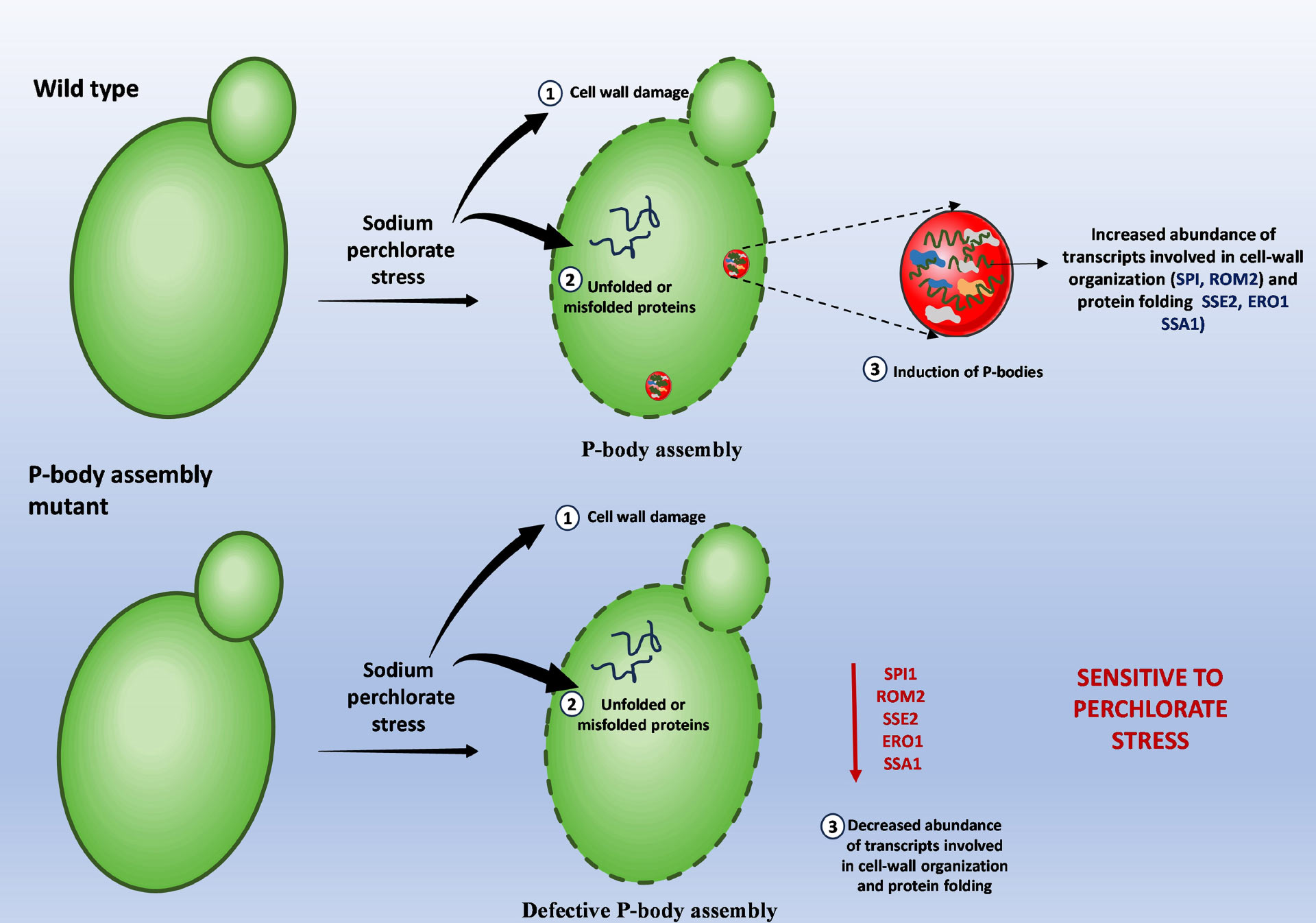
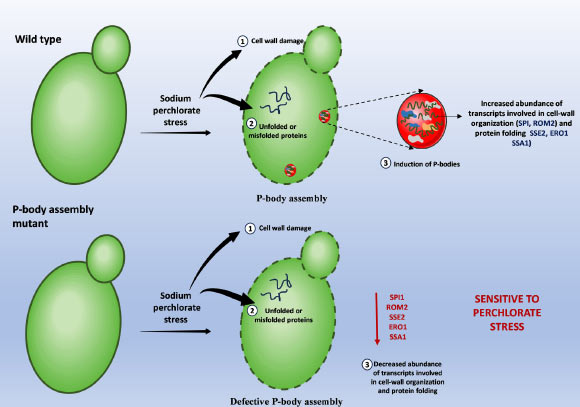
Model depicting the importance of RNP condensate in mediating survival under Mars-like stress condition. Image credit: Dhage et al., doi: 10.1093/pnasnexus/pgaf300.
“As advancements in space science and astrobiological research continue, the potential for Mars to harbor life forms is drawing considerable interest,” commented Dr. Purusharth Rajyaguru from the Indian Institute of Science, alongside his colleagues.
“The Martian environment presents a spectrum of challenging conditions that any putative organism would need to surmount.”
“Consequently, comprehending its distinctive and formidable environmental circumstances becomes a critical endeavor.”
“The stressors characteristic of the Martian environment include: (i) pronounced shock waves generated by meteorite impacts, (ii) significant fluctuations in temperature and pressure, (iii) exposure to ionizing and solar ultraviolet radiation due to the attenuated atmosphere, and (iv) the presence of chaotropic substances such as perchlorates.”
“These environmental elements constitute a substantial impediment to the survival of potential life.”
Within the scope of this research, the investigators subjected Saccharomyces cerevisiae, a widely utilized model yeast species, to simulated shock waves and perchlorates.
This particular yeast was selected, in part, due to its prior inclusion in extraterrestrial studies.
When subjected to stress, yeast, along with numerous other organisms including humans, tend to form ribonucleoprotein (RNP) condensates. These are complex structures composed of RNA and proteins that serve to safeguard RNA and influence the fate of messenger RNAs (mRNAs).
Upon the cessation of the stressor, these RNP condensates, which encompass subtypes such as stress granules and P-bodies, undergo disassembly.
Yeast exposed to shock waves with an intensity of 5.6 Mach demonstrated survival, albeit with a reduction in growth rate. Similarly, yeast exposed to 100 mM sodium perchlorate (NaClO4), a concentration comparable to that found in Martian regolith, also survived.
Yeast cells also exhibited viability when subjected to a combined stress regime involving both shock waves and perchlorate exposure.
The research team reported that in both scenarios, the yeast cells successfully assembled RNP condensates.
The application of shock waves stimulated the formation of stress granules and P-bodies; conversely, perchlorate exposure prompted the yeast to generate P-bodies but not stress granules.
Mutant yeast strains that were deficient in their ability to form RNP condensates displayed significantly diminished survival rates under the simulated Martian stress conditions.
Transcriptome analysis revealed specific RNA transcripts that were adversely affected by the Mars-like environmental parameters.
“These findings underscore the crucial role of yeast and RNP condensates in elucidating the impact of Martian conditions on biological entities,” the scientists posited.
Their comprehensive publication is featured in the current issue of the journal PNAS Nexus.
_____
Riya Dhage et al. 2025. Ribonucleoprotein (RNP) condensates modulate survival in response to Mars-like stress conditions. PNAS Nexus 4 (10): pgaf300; doi: 10.1093/pnasnexus/pgaf300