Adolescent propensity for engaging in hazardous activities is well-documented, with a higher mortality rate from injuries observed in US teenagers when contrasted with younger children. The query then arises: what factors contribute to this escalation in risk-taking behavior during the pubertal phase?
Our recent investigations into physical daring in chimpanzees suggest that the surge in risk-taking behavior during human adolescence is not attributable to a newfound inclination for peril. Instead, a reduction in the level of oversight afforded to adolescents creates amplified opportunities for them to engage in risky pursuits.
Our research endeavors focus on locomotive patterns in chimpanzees, which are among our closest living relatives. The ethical constraints associated with intentionally exposing human subjects to danger render the study of physical risk-taking in people exceedingly challenging. Consequently, chimpanzees serve as an advantageous alternative study population, given that wild chimpanzees of all age groups must navigate arboreal environments, often at considerable altitudes.
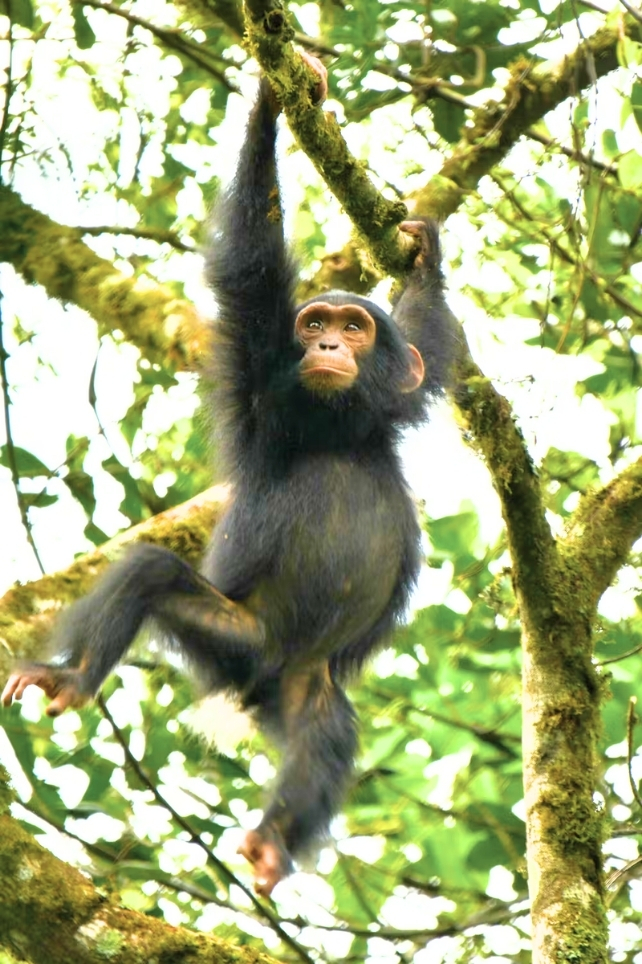
During collaboration with our team, Bryce Murray, an undergraduate at the University of Michigan, observed that certain arboreal movements performed by chimpanzees inherently carry a greater degree of risk than others.
While chimpanzees typically maintain a firm grasp on branches during climbing and swinging, they also engage in leaping across gaps and occasionally release their hold on a branch, descending to another limb or the ground.
Regrettably, these actions do not always result in a successful landing. Decades of field observations have indicated that falls constitute a principal cause of injury and even mortality among chimpanzees.
Following these observations of chimpanzee behavior, Bryce began to contemplate whether their patterns of physical risk-taking mirrored those observed in humans. Specifically, he questioned if chimpanzees begin to exhibit increased risk-taking – such as leaping and descending from branches – upon entering puberty.
Given the existing evidence suggesting that human males tend to engage in more risk-taking than females, although this tendency exhibits cultural variability, we also investigated whether male chimpanzees demonstrate a greater proclivity for risk than their female counterparts.
Young Chimpanzee Daredevils
Our study cohort comprised over 100 wild chimpanzees, ranging in age from 2 to 65 years, from the Ngogo area of Kibale National Park, Uganda.
Our findings elucidated that chimpanzees engaged in their most audacious locomotive behaviors during their later infancy (spanning ages 2-5), with the frequency of leaps and drops progressively diminishing as they matured.
In comparison to adult chimpanzees (aged 15 and above), older infants were observed to perform risky maneuvers at a rate three times higher. Juveniles (aged 5-10) exhibited such behaviors 2.5 times more frequently, and adolescents (aged 10-15) were twice as likely to do so. Infants younger than 2 years old, who spend the majority of their time clinging to their mothers, were excluded from our analysis.
Therefore, adolescence does not represent an apex of risk-taking for chimpanzees; rather, it marks a stage within a gradual, age-related decline in such behaviors. Furthermore, no statistically significant sex-based disparities in risk-taking were identified across any age groups, aligning with our previous research indicating that male and female chimpanzees exhibit minimal differences in their arboreal locomotion.
Our conclusions are consistent with prior laboratory investigations that have concentrated on gambling-related risks rather than physical ones.
In these experimental settings, chimpanzees are presented with choices between secure and precarious options. For instance, they might choose between a container guaranteed to hold a moderate snack, such as peanuts, versus a randomized container that could contain a highly desirable reward, like a banana, or an unappealing item, such as a cucumber.
Chimpanzees demonstrate a greater inclination to select the more certain option – the peanuts – as they advance in age. A comparable pattern is observed in humans, who tend to become more risk-averse with increasing age.
In both of these contexts, whether navigating the forest canopy or participating in laboratory experiments, chimpanzees do not exhibit a peak in risk-taking behavior upon reaching puberty.
Implications for Human Risk-Taking
Chimpanzee mothers are unable to effectively curtail their offspring’s activities beyond the age of 2. By this developmental stage, infants spend less time in close proximity to their mothers and maintain less consistent physical contact.
During our observations of leaping and dropping behaviors, 82 percent of the infant chimpanzees were beyond their mothers’ immediate reach.
Conversely, human children are subject to diligent supervision by their parents and what social scientists term “alloparents“: a network of other adult caregivers, including grandparents and elder siblings. Although child-rearing practices vary considerably across the globe, children are consistently monitored, and parental restrictions tend to ease as they transition into adolescence.
We postulate that if parental and other caregiver oversight were less stringent, younger children might engage in a greater degree of physical risk-taking even prior to reaching adolescence. Consequently, our study of chimpanzees offers valuable insights into how levels of supervision might influence the propensity for physical risk-taking in humans.
Remaining Unanswered Questions
It is imperative to acknowledge other potential variables that may contribute to chimpanzees’ reduced engagement in physical risks as they mature. For example, this developmental trajectory might reflect an adaptive necessity for adult chimpanzees to exercise greater caution.
Although younger primates are more prone to sustaining bone fractures from falls, adult chimpanzees, being heavier and possessing less pliable skeletal structures, often experience more severe and potentially fatal injuries from similar incidents.
The study of chimpanzees provides a unique perspective on the interplay between evolutionary pressures and cultural influences in shaping human development.
The challenge of striking a balance between parental supervision and children’s inherent need for play is a complex one. While concerns regarding childhood injuries are certainly valid, minor incidents may represent an integral component of the developmental process. Engaging in play during childhood, when bones are more resilient, may offer children a safer avenue to practice risky behaviors.
Certain anthropologists advocate for expanded opportunities for children to participate in thrill-seeking play – including traditional playground equipment like monkey bars – as a means to foster the development of motor skills and skeletal robustness.