A collaborative endeavor involving geoscientists from Virginia Commonwealth University and other institutions has yielded novel insights, revealing robust indicators of extraterrestrial impact within geological samples originating from the expansive Precambrian-Cambrian Impact Structure in Australia’s Northern Territory.

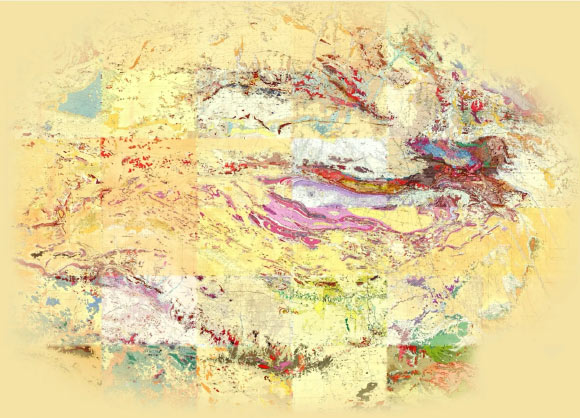
A surface geology map of the proposed MAPCIS crater. Image credit: Daniel Connelly.
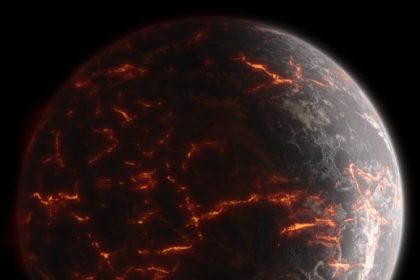
The Massive Australian Precambrian-Cambrian Impact Structure (MAPCIS) is characterized as a complex, non-centrosymmetric crater extending approximately 600 kilometers (370 miles) in diameter.
This cataclysmic event is estimated to have transpired at the conclusion of the Ediacaran epoch, dating back roughly 545 million years.
“The identification of MAPCIS stands as a testament to the efficacy of collective scientific investigation,” stated Dr. Daniel Connelly, a participating member of the research team.
“Our findings not only underscore the profound significance of this impact feature but also illuminate new pathways for comprehending the geological trajectory of our planet.”
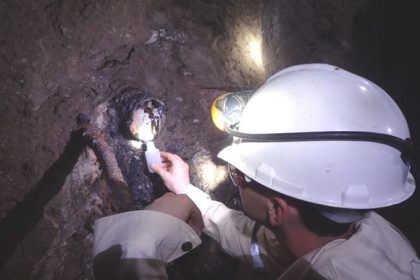
Among the crucial geological markers that Dr. Connelly and his associates identified to corroborate the age, scale, and precise location of the impact were substantial accumulations of pseudotachylite breccia, a form of melt rock, situated in proximity to the crater’s core.
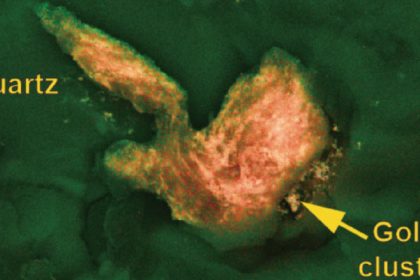
The research team detected minerals exhibiting evidence of shock metamorphism, including lonsdaleite, also known as shocked diamond, within these deposits, alongside iridium concentrations indicative of an impact event.
“These pseudotachylite breccia specimens attracted considerable scientific interest due to their highly distinctive attributes,” the researchers noted.
“These breccias, discovered embedded within rocks of granulite facies, were initially theorized to be the byproduct of seismic activity.”
“Nevertheless, subsequent examinations have furnished compelling evidence suggesting an origin directly linked to an impact event.”
“Engaging with the MAPCIS project has been an exceptionally rewarding undertaking,” remarked Dr. Arif Sikder, a researcher at Virginia Commonwealth University and a key member of the team.
“The data we have meticulously gathered offer an unparalleled perspective into the potent forces that have sculpted our terrestrial sphere, and I anticipate that the future research spurred by this discovery will be substantial.”
The researchers are scheduled to present their discoveries tomorrow at Connects 2024, the annual convention hosted by the Geological Society of America, which will be held in Anaheim, California.
_____
Daniel Connelly et al. Petrographic Evidences of the MAPCIS Bolide in Musgrave Pseudotachylite Specimens. Connects 2024, poster ID 247-10