A recent investigation helmed by University of Oxford scientists indicates that indigenous canine populations (Canis familiaris) across Central and South America, which existed prior to European settlement, originated from a singular maternal ancestral line. This lineage is understood to have bifurcated subsequent to the migration of canines into North America. Specifically, the timing of the divergence among dog populations in North, Central, and South America aligns with the advent of agriculture and the widespread adoption of maize cultivation in South America, an era spanning roughly 7,000 to 5,000 years ago.
Canines journeyed with the initial human migrations into North America, commencing at least 15,000 to 16,000 years ago, as elucidated by University of Oxford researcher Aurélie Manin and her collaborators. These animals represented the sole domesticated species introduced to the Americas from Eurasia before the arrival of European voyagers.
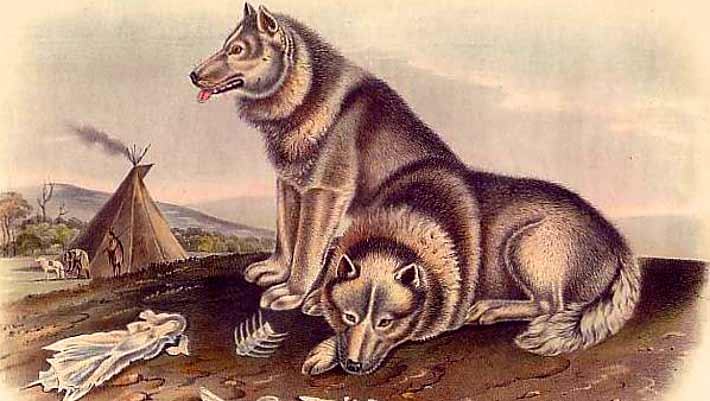
Available archaeological and morphological evidence suggests that canines indigenous to the Arctic regions were utilized for sled-hauling, a practice presumed to have been instrumental for human groups traversing the frigid Siberian tundra.
Analyses of ancient DNA have substantiated the presence of a distinct American lineage within the mitochondrial DNA of all pre-contact dogs encountered before European contact.
These dogs, belonging to this specific lineage, disseminated throughout the Americas. An exception to this widespread presence is noted in the Amazon basin, where linguistic evidence suggests their absence until the 16th century, coinciding with European arrival.
In their recent research endeavor, the study’s authors meticulously sequenced 70 comprehensive mitochondrial genomes derived from both ancient and contemporary canines. These samples were sourced from archaeological sites and living populations extending from Central Mexico down to Central Chile and Argentina.
The compiled results definitively demonstrate that all canine populations in Central and South America, prior to European contact, traced their ancestry to a solitary maternal line. This line diverged from North American dog populations subsequent to the initial human settlement of the continent.
Rather than exhibiting rapid dispersal, the spread of these canines followed a more protracted trajectory. Scientists refer to this phenomenon as ‘isolation by distance.’ The animals gradually adapted to novel environmental conditions as they accompanied human migrations across the Americas between 7,000 and 5,000 years ago, synchronously with the expansion of maize cultivation by nascent agricultural communities.
Although the introduction of European settlers brought forth new canine lineages that largely supplanted indigenous ones, the research team discovered that a subset of modern Chihuahuas still retains maternal DNA inherited from their pre-contact Mesoamerican forebears.
These scarce genetic remnants serve as poignant indicators of the enduring legacy left by the earliest American dogs, underscoring the profound historical connections of this iconic breed.
This comprehensive investigation reinforces the pivotal role played by early agrarian societies in the global dissemination of dogs, according to Dr. Manin. She further elucidated that in the Americas, the rate of canine spread was sufficiently gradual to permit genetic differentiation among dog populations across North, Central, and South America.
This phenomenon is relatively unusual for domesticated species and consequently opens promising avenues for further research into the intricate interrelationships that existed between canines and these early agrarian societies.
The study contributes a significant new perspective to the extensive and shared history between humans and dogs, a narrative characterized by mobility, resilience, and enduring companionship across vast geographical expanses, the researchers concluded.
These illuminating findings have been published in the journal Proceedings of the Royal Society B.
_____
Aurélie Manin et al. 2025. Ancient dog mitogenomes support the dual dispersal of dogs and agriculture into South America. Proc. R. Soc. B 292 (2049): 20242443; doi: 10.1098/rspb.2024.2443