An extensive ancient edifice, featuring a prominent, recessed courtyard, has been unearthed by archaeologists in Bolivia. Situated approximately 215 kilometers (130 miles) southeast of the renowned Tiwanaku historical enclave, this modular structure bears striking resemblances to a terraced platform temple characteristic of the Tiwanaku civilization, indicating a significant commitment of state resources.
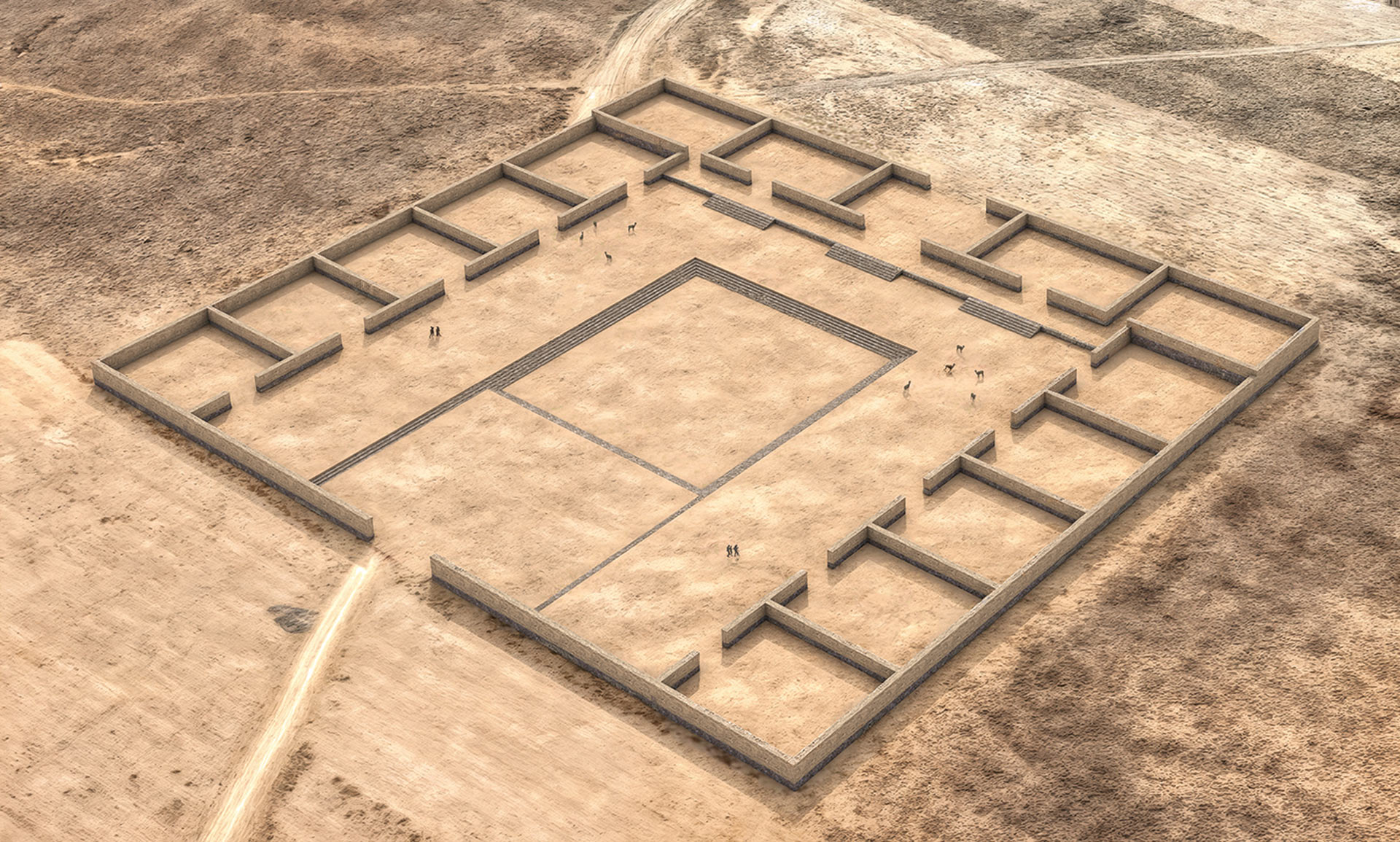
Isometric reconstruction of the Palaspata temple rendered with 3-m-tall walls. Image credit: Capriles et al., doi: 10.15184/aqy.2025.59.
In what is now modern-day Bolivia, an ancient civilization once thrived along the southern perimeter of Lake Titicaca, holding sway as one of the continent’s most influential societies.
This civilization, recognized as Tiwanaku, is widely regarded by the archaeological community as a foundational example of Andean civilization and a key predecessor to the Inca Empire. Its decline and eventual disappearance occurred approximately one millennium ago, a phenomenon that continues to intrigue researchers.
“A considerable amount remains unknown concerning the Tiwanaku civilization,” remarked Penn State archaeologist José Capriles.
“Their societal structure disintegrated around 1000 CE, and by the time the Incas extended their dominion across the Andes in the 15th century, it was largely in ruins.”
“During its zenith, it exhibited a highly structured societal framework, evidenced by the enduring remnants of architectural marvels such as pyramids, tiered temples, and monumental stone carvings. These structures are predominantly found in proximity to Lake Titicaca. While we acknowledge that Tiwanaku’s influence and dominion extended considerably farther, academics continue to debate the extent of its direct governance over these more remote territories.”
“The recently unearthed temple complex is situated roughly 215 kilometers south of the established Tiwanaku historical nucleus. It rests atop an elevation that was familiar to local Indigenous agriculturalists but had not been thoroughly investigated by scholars due to its nondescript location.”
“Nevertheless, the positioning of this site is, in reality, exceptionally strategic.”
During the era of Tiwanaku, this locale served as a vital nexus connecting three principal trade arteries that spanned three distinct ecological zones: the fertile highland regions surrounding Lake Titicaca to the north, the arid Altiplano, well-suited for llama husbandry, to the west, and the agriculturally rich eastern Andean valleys of Cochabamba to the east.
Consequently, the research team posited that this location must have played a critical role in facilitating inter-regional connectivity.
“People traversed, engaged in commerce, and erected significant structures in locations of importance throughout the arid mountainous terrain,” stated Dr. Capriles.
“Upon identifying an uncharted quadrangular land parcel, we employed various methodologies to visualize the area.”
“Given the subtle nature of the features, we integrated multiple satellite imagery datasets.”
“Furthermore, we conducted a series of flights utilizing unmanned aerial vehicles (UAVs) to capture enhanced imagery.”
“Through the application of photogrammetry, a technique employing photographs to generate a three-dimensional approximation, we obtained a more detailed representation of the structure and its surrounding topography.”
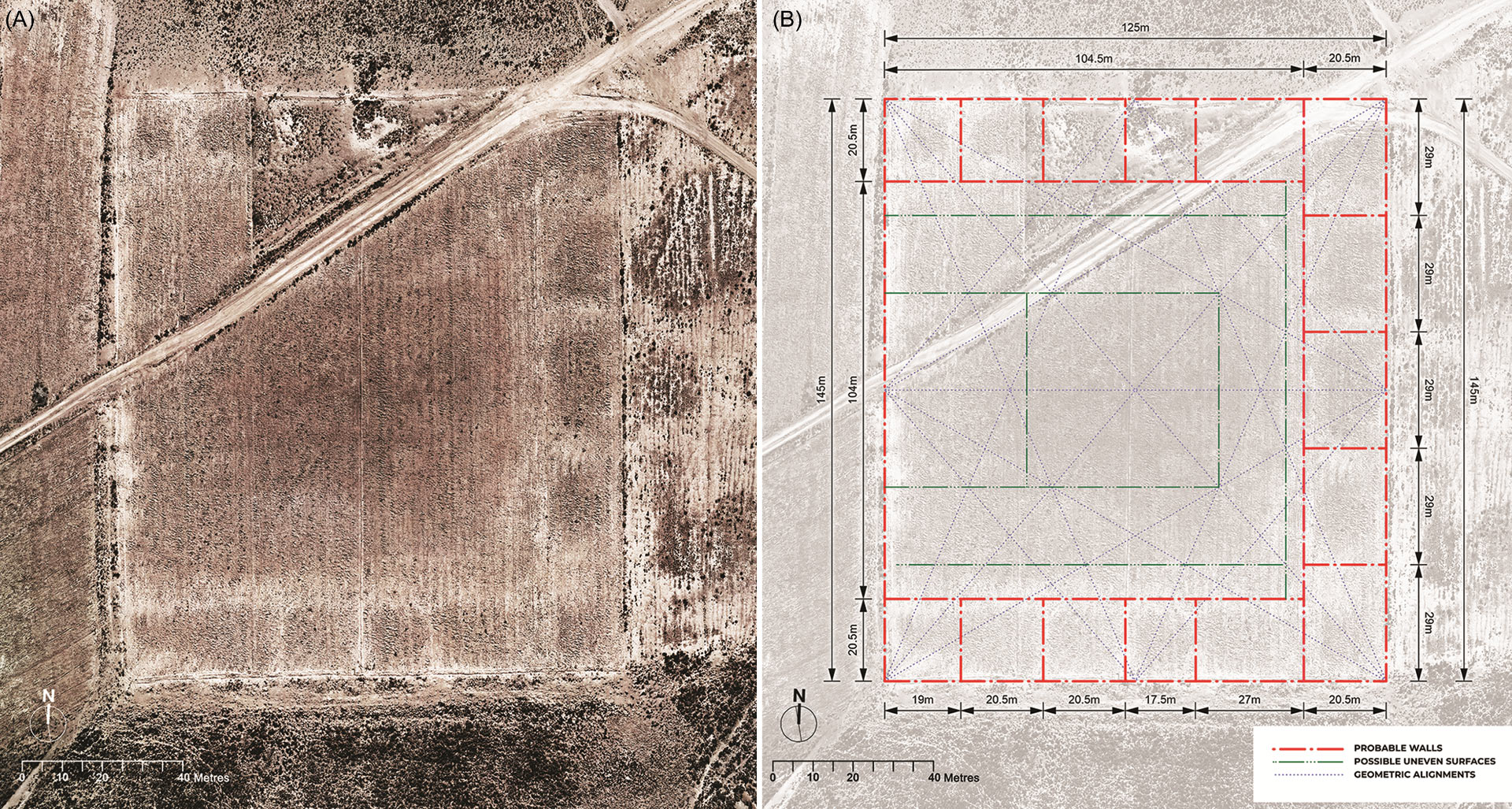
“Observed stone configurations revealed the presence of an ancient temple, identified by the local designation for the region as Palaspata.”
“The temple complex measures approximately 125 meters in length by 145 meters in width and encompasses 15 quadrangular courtyards arranged around a central rectangular inner courtyard.”
“Its architectural arrangement appears to be oriented to facilitate rituals aligned with the solar equinox, the precise moment when the Sun is positioned directly above the Earth’s equator.”
The Palaspata temple. Image credit: Capriles et al., doi: 10.15184/aqy.2025.59.
Leveraging the collected data, the scientific team generated a reconstruction to illustrate the potential appearance of the ancient Palaspata temple.
Numerous fragments of keru cups were discovered on the temple’s surface. These vessels were utilized for imbibing chicha, a traditional fermented maize beverage, during agricultural festivities and celebrations, suggesting the temple’s role as a central hub for commercial activities.
The observation that maize was not indigenous to the area but rather cultivated in the Cochabamba valleys, in contrast to the high-altitude temple site, underscores the temple’s critical function in facilitating access to diverse commodities, including foodstuffs, and fostering connections between disparate culinary traditions.
“The temple most likely served a religious purpose, as indicated by the designated areas for ritualistic activities and its architectural integration in mediating trade and the distribution of harvested goods,” stated Dr. Capriles.
“The majority of economic and political transactions would have necessitated mediation through divine channels, as this provided a universal framework conducive to cooperation among diverse individuals, with religion often serving as the common ground that united different groups.”
“The discovery proved to be a surprise even to the local populace,” noted Justo Ventura Guarayo, the mayor of the Caracollo municipality where the site is situated.
“The archaeological findings at Palaspata are significant as they illuminate a vital aspect of our local cultural legacy that had been entirely overlooked.”
The team’s research findings were disseminated today in the esteemed journal Antiquity.
_____
José M. Capriles et al. 2025. Gateway to the east: the Palaspata temple and the south-eastern expansion of the Tiwanaku state. Antiquity 99 (405): 831-849; doi: 10.15184/aqy.2025.59