This scenario perfectly sets the stage for a fictional apocalyptic narrative: an incident at a clandestine government facility focused on bioweapons research. Interestingly, an event with similarities, though not identical, recently transpired in Russia.
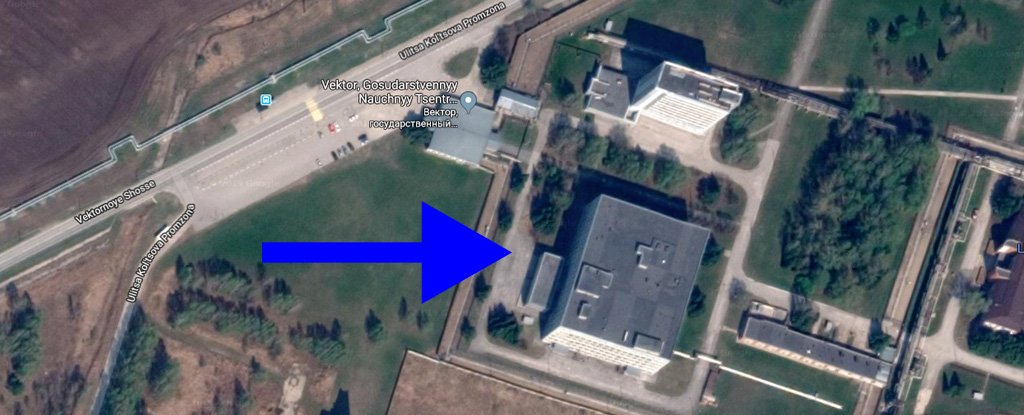
On Monday, a significant gas explosion occurred at the Vector State Research Center of Virology and Biotechnology, situated within the scientific enclave of Koltsovo. This town is located approximately 20 kilometers (12 miles) from Novosibirsk, which ranks as Russia’s third-largest metropolis.
This research institution is recognized globally as one of only two locations authorized to maintain stockpiles of the Variola virus, the causative agent of smallpox. The other such facility is operated by the Centers for Disease Control and Prevention (CDC) in Atlanta.
According to reports from Interfax, an independent Russian news agency, a gas explosion ignited a fire on the fifth floor of a Vector building on September 16th. The subsequent blaze was confined to an area of roughly 30 square meters (320 square feet), and one individual sustained injuries requiring hospitalization.
However, the explosion’s origin was unrelated to scientific operations. It took place in a sanitary and disinfection zone undergoing refurbishment. The mayor of Koltsovo, Nikolai Krasnikov, informed Interfax that the affected area was not in active use and contained no hazardous biological materials.
The accounts of this incident are consistent across various sources. The official news outlet for the Koltsovo science town and the research institute itself have corroborated the reports. A federal inquiry has been initiated to ascertain any potential violations of workplace safety regulations that might have contributed to the mishap.
Given this news reaching the English-speaking public, has there been widespread alarm?
Unquestionably. This is particularly true with sensationalized headlines like “explosion rocks research facility” and mistranslations that falsely claim “all glass in the building was broken.” In fact, Interfax’s original report (in Russian) indicated only that some windows within the building were damaged, without specifying the quantity.
Nevertheless, the ensuing confusion has fueled considerable public consternation on social media platforms, evidenced by trending hashtags such as ‘bioweapons’.
In reality, Vector, a preeminent research establishment in its domain, comprises several buildings and employs over 1,600 staff members engaged in a wide spectrum of bioresearch projects that extend far beyond mere smallpox containment.
The probability of the blast inadvertently releasing a global plague is exceedingly remote. Furthermore, if a hazardous viral sample were compromised in a fire, the infectious agents would likely be destroyed by the heat.
However, the threat of bioterrorism is not an abstract concern. Smallpox remains a formidable and highly contagious disease from historical records, yet it also stands as a triumph of modern medicine, being the very first illness successfully eradicated from the planet through vaccination.
Adding to the public’s apprehension is the recent memory of a mysterious explosion at a Russian weapons testing site just last month, which also generated considerable ambiguity regarding official statements.
Compounding this is Vector’s established reputation as a secretive, government-affiliated bioweapons research institution founded in 1974. The facility also houses samples of Ebola, avian flu, anthrax, and other dangerous pathogens. A concerning incident occurred in 2004 when a Vector employee succumbed to Ebola after accidentally self-injecting.
Nevertheless, the World Health Organization (WHO) permits Vector scientists to retain smallpox samples exclusively because they operate a biosafety level 4 (BSL-4) facility, the highest designation available. This collaboration with the WHO is subject to stringent regulations and biannual inspections.
Therefore, while the situation may appear alarming, it is highly improbable that this incident approached the catastrophic scale depicted by some interpretations. It is more likely that a comparatively minor gas explosion occurred, resulting in a small, contained fire that was rapidly extinguished, with no risk posed to the biohazardous materials housed within the high-containment facility.
Alternatively, one could speculate about the emergence of a horde of mutated virus-infected zombies shambling through the vicinity of the research center.
Should the gas explosion at Vector indeed precipitate a smallpox pandemic, I will consider it necessary to metaphorically “eat my words” by printing and consuming this article. However, by that point, it would likely be of minimal concern to anyone.