The journey into the cosmos included four mice undertaking roles as astronauts. The return of one, who subsequently became a mother, presents a crucial insight that could profoundly impact humanity’s long-term prospects beyond our home planet.
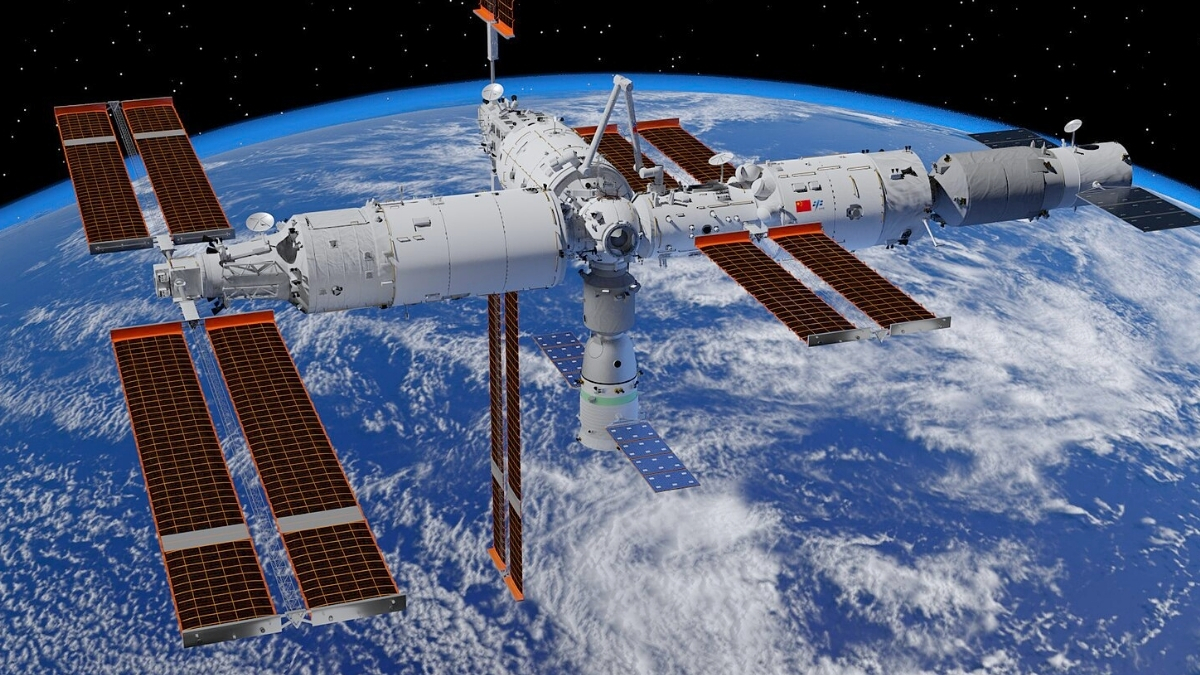
On October 31st, China’s Shenzhou-21 spacecraft embarked on its mission, carrying four laboratory mice, identified by their numbers 6, 98, 154, and 186, toward the nation’s orbital outpost situated approximately 400 kilometers (250 miles) above Earth’s surface.
During their two-week sojourn, these rodents experienced the unique environment of microgravity, alongside exposure to cosmic radiation and the peculiar conditions inherent to orbital living. Their safe return was recorded on November 14th. Subsequently, on December 10th, one of the female participants successfully delivered nine healthy offspring.
A prior investigation, documented in a published study, explored the fertility of sperm collected from mice that had previously resided in a space environment, utilizing it to inseminate female mice back on Earth.
In this most recent experimental endeavor, six of the resulting progeny have survived, a survival rate that researchers deem within the expected norms. The maternal mouse is exhibiting appropriate nurturing behaviors, while the pups are active and demonstrating normal developmental progress.

Dr. Wang Hongmei, a research scientist affiliated with the Institute of Zoology at the Chinese Academy of Sciences, underscored the importance of their findings, highlighting that a brief period of space travel did not impair the mice’s reproductive capabilities.
This scientific undertaking was not merely an exercise in sending rodents into space; their selection was strategic. Mice share significant genetic commonalities with humans, possess rapid reproductive cycles, and their physiological responses to stress often serve as reliable indicators of human biological reactions. Therefore, any fundamental detriment to mammalian reproduction caused by space would likely manifest in mice first.
However, the mission was not without its challenges. An unforeseen alteration in the return schedule for the Shenzhou-20 mission necessitated an extended stay for the mice, raising concerns about potential sustenance shortages.
The ground support team mobilized swiftly, evaluating emergency food provisions sourced from the astronauts’ own rations, which included compressed biscuits, corn, hazelnuts, and soy milk.
Following rigorous verification processes conducted on Earth, soy milk emerged as the most secure option for emergency sustenance. Water was supplied to the habitat via an external conduit, while an advanced AI monitoring system continuously tracked the mice’s movements, dietary habits, and sleep patterns to forecast resource depletion.
Throughout their time in orbit, the mice were maintained under meticulously controlled environmental parameters. Illumination was synchronized with an Earth-like circadian rhythm, with lights activated at 7 a.m. and extinguished at 7 p.m.
Their diet comprised nutritionally complete yet intentionally firm food items, designed to meet their natural requirement for dental wear. A directional ventilation system efficiently maintained habitat cleanliness by directing expelled hair and waste into designated collection receptacles.
Current research efforts are focused on closely observing these “space-born” pups, meticulously documenting their growth trajectories and identifying any physiological alterations that might suggest subtle residual effects from their mother’s exposure to the space environment. Furthermore, the offspring will undergo reproductive assessments to ascertain any multi-generational impacts.

The ultimate objective of this research extends beyond the rodent subjects. Prior to embarking on extended human expeditions to destinations such as Mars or the establishment of permanent lunar settlements, scientists must establish the efficacy of reproduction in space or following extraterrestrial exposure.
Are mammals capable of conception, gestation, and parturition under conditions of reduced gravity? Do cosmic rays inflict damage upon gametes that only becomes apparent in subsequent generations? While a single instance of a mouse giving birth does not provide definitive answers to all these complex questions, it represents a significant and encouraging initial step.
This content was originally disseminated by Universe Today. Access the original publication here.