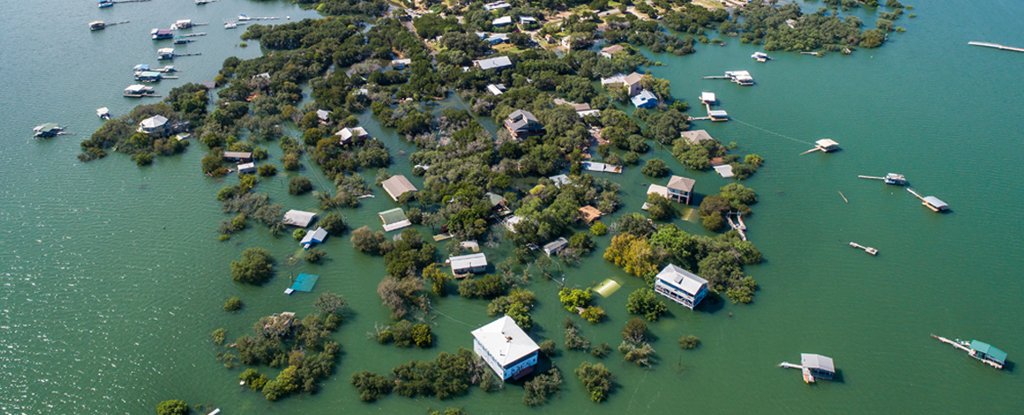
The escalating global climate crisis poses a significant existential threat to diminutive island nations, many of which are developing economies, potentially undermining their very capacity to function as sovereign entities.
In light of stagnating international environmental collaboration, it becomes imperative to scrutinize the ramifications of climate change for the statehood of vulnerable territories. This inquiry is particularly pertinent given that national sovereignty stands as the paramount tenet in the realm of international relations.
Any encroachment upon a nation’s sovereignty could precipitate unforeseen and far-reaching consequences for the framework of global governance.
Under the auspices of international law, a state is delineated by the Montevideo Convention, which stipulates four distinct prerequisites: a permanent populace, a demarcated territorial expanse, an established governing body, and the inherent capability to engage in diplomatic exchanges with other states. Currently, these foundational conditions are imperiled by the international community’s demonstrable reluctance to embrace robust environmental mitigation strategies.
Indeed, the Republic of Kiribati formally acknowledged in 2015 that the observable impacts of climate change are jeopardizing its continued existence as a distinct nation. In conjunction with nations such as the Maldives, the Marshall Islands, Tokelau, and Tuvalu, Kiribati finds itself exceptionally susceptible to the effects of climate change due to its geographical composition, being entirely comprised of low-lying coral atolls.
While the nation earnestly advocates for concerted international action to combat global warming, the relentless progression of rising sea levels, the degradation of coral ecosystems, and the intensification of natural calamities are progressively straining its operational efficacy.
The Pervasive Influence of Climate Change on National Entities
Nations situated on atolls are characterized by subterranean freshwater reservoirs that demonstrate a pronounced sensitivity to fluctuations in sea level and periods of drought, thereby exposing their populations to the specter of severe water scarcity. Furthermore, climate change is detrimentally impacting agricultural yields, contributing to alimentary deficiencies and necessitating internal population displacement.
Within the confines of small island environments, future migratory patterns will inevitably compel communities and individuals to traverse international borders. Such developments carry the potential to challenge a fundamental pillar of statehood as defined by the Montevideo Convention: the requirement of a permanent population.
The former President of Kiribati, Anote Tong, poignantly articulated, “our islands, our homes, may no longer be habitable – or indeed exist – within this century.”
This stark pronouncement underscores the jeopardy faced by the second criterion for statehood: the existence of territory. As the global community struggles to effectively address climate change, and nations begin to confront the realities of coastal erosion, scholarly discourse has increasingly turned towards exploring potential remedies.
Exploring Potential Solutions
Among the proposed mechanisms is the concept of a “government-in-exile”. This framework enables a governing body to operate independently of its geographical territory but necessitates the continued existence of a population.
Additionally, it mandates that another sovereign nation cede a portion of its land. Naturally, the prospect of a state voluntarily relinquishing territory for relocation purposes, or of a nation abandoning its homeland, appears highly improbable.
Consequently, this particular mechanism is unlikely to yield an effective resolution, particularly as climate change introduces complexities into the power dynamics that govern interstate relations.
Should a nation face complete submersion, its continued sovereignty in the eyes of the international community remains a matter of profound uncertainty. The United Nations suggests that it is improbable for a state to simply cease to exist, citing what it refers to as the “presumption of continuity.”
This inherent ambiguity regarding the persistence of statehood for vulnerable nations ought to serve as a potent catalyst, rousing the international community from its current inertia on these critical issues.
Regrettably, the established international principle of sovereignty operates as a double-edged sword. It grants historical polluters the unfettered discretion to respond to climate change through non-binding agreements, thereby facilitating the delay in adopting effective international treaties.
However, the escalating challenge of rising sea levels and the attendant threat to the statehood of Pacific nations should undoubtedly galvanize the concern of those who champion the principle of sovereignty.
A Frosty Political Atmosphere
For instance, proponents of the Republican party in the United States have consistently demonstrated a strong commitment to safeguarding American sovereignty, employing various rhetorical strategies and international postures. In September 2018, President Donald Trump issued a warning to the United Nations, stating his refusal to cede sovereignty to an “unelected bureaucracy,” a year after withdrawing the United States from the Paris Climate Agreement.
Trump asserted that “responsible nations must defend against threats to sovereignty” while simultaneously boasting about his country’s substantial exports of oil, natural gas, and what he termed “clean” coal. In his fervent promotion of fossil fuels and the preservation of US sovereignty against the perceived encroachment of global governance, Trump effectively relegated environmental concerns to a secondary position on the international agenda.
The safeguarding of American autonomy from international mandates was a central tenet of the Trump administration’s platform. Consequently, against the backdrop of accelerating environmental crises and a growing inclination towards isolationism, it appears highly improbable that he would champion the precarious sovereignty of Pacific island nations.
Nevertheless, it is essential to avoid placing sole blame on the United States for its perceived failure to uphold an immutable principle of international relations.
An Unfolding Uncertainty
The international political arena has, year after year, yielded environmental accords that are characterized by their non-binding nature and a conspicuous lack of ambition, doing little to curb greenhouse gas (GHG) emissions. The “polluter pays” principle, which advocates for the allocation of pollution-related costs in proportion to the degree of responsibility for their generation, has been proposed.
However, this directive has not precisely translated into tangible outcomes in international negotiations, as the question of accountability remains a persistent element in discussions between industrialized nations and developing countries.
The dire circumstances of the submerged islands are exacerbated by the international community’s inability to effectively confront climate change. In the absence of decisive action, cross-border climate-induced migrations are poised to accelerate. This will occur as resources diminish and territories are progressively eroded by rising sea levels, displacing populations from their ancestral homes and imperiling the very statehood of entire Pacific nations.
These nations are among the most negligible contributors to greenhouse gas emissions, yet they disproportionately bear the brunt of climate change’s devastating consequences. This disparity starkly illustrates the pervasive lack of solidarity and climate justice within the global community.
Unfortunately, the prevailing inertia in addressing climate change, compounded by the United States’ reluctance to engage in environmental discourse, may soon precipitate an unprecedented inquiry within the domain of international law: What is the appropriate course of action if a nation effectively disappears beneath the waves?
Sarah M. Munoz, Doctoral researcher in Political Science.