A recently circulating video on Facebook featured an excerpt from the BBC comedy quiz show QI. The segment posed the question of which items from a selection including avocados, almonds, melon, kiwi, and butternut squash are suitable for vegans. According to QI’s assessment, the answer was none of them.
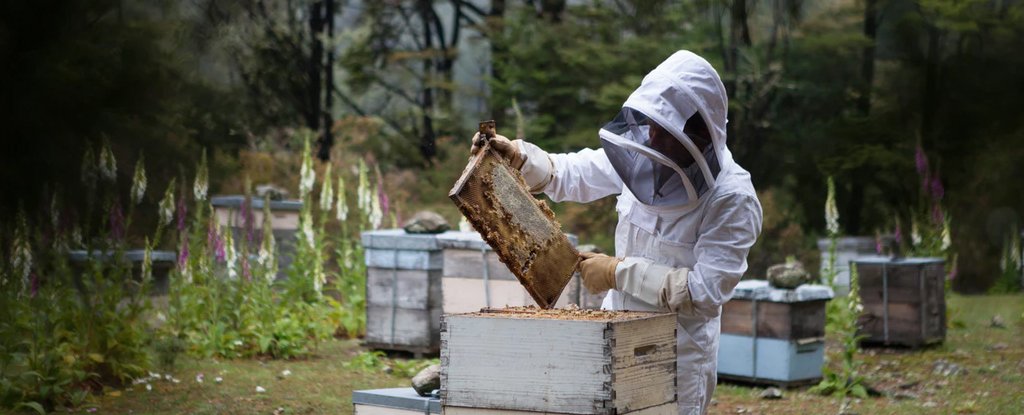
The commercial cultivation of these produce items, in certain global regions, frequently necessitates migratory beekeeping practices. In locales such as California, the indigenous bee population and other insect pollinators are insufficient to effectively fertilize the vast expanses of almond orchards.
Bee colonies are transported via large trucks between agricultural operations. These journeys might take them from almond groves in one part of the United States to avocado farms in another, and subsequently to sunflower fields to coincide with their summer blooming period.
Vegans abstain from animal-derived products. For committed vegans, this extends to avoiding honey due to the exploitation inherent in the honey industry. This stance logically suggests that vegans should also refrain from consuming produce, such as avocados, whose production relies on bee exploitation.
Is this interpretation accurate? Should vegans then forgo their beloved avocado toast?
Defending Avocados
The notion that avocados might not be “vegan-friendly” could be perceived as a reductio ad absurdum of the ethical vegan stance. Some critics might seize upon this point, labelling vegans who still consume avocados (or almonds and similar items) as hypocrites.
Conversely, such revelations could prompt others to abandon the pursuit of a strictly vegan diet due to perceived impossibilities, leading to a resigned embrace of less stringent dietary choices. Perhaps a call for foie gras might ensue…
However, a primary defense for vegans lies in the fact that this issue pertains specifically to certain produce cultivated on a large commercial scale and dependent on migratory beekeeping. In regions like the UK, this practice is reportedly still infrequent, based on available information.
Locally sourced butternut squash would very likely be acceptable (though one could never definitively rule out the possibility of a hive bee having pollinated a crop). Conversely, avocados and almonds (including most almond milk) originating from California could present an ethical quandary.
An alternative perspective hinges on differing views regarding the moral standing of insects. Commercial beekeeping can result in harm or mortality to bees. The transportation of bees for crop pollination appears to negatively impact their health and longevity.
Yet, some may question whether bees possess the capacity for suffering akin to sentient animals, while others might ponder their self-awareness or any inherent desire for continued existence.
If bees lack these attributes, certain philosophical viewpoints suggest that their demise would not constitute harm. However, other thinkers, such as Gary Francione, hold a dissenting opinion.
Ethical Rationale is Key
More significantly, the question of whether migratory beekeeping poses an ethical problem is contingent upon an individual’s foundational ethical rationale for adhering to veganism.
Some adherents adopt a non-consequentialist justification for their veganism, aiming to avoid morally objectionable actions through their dietary choices. This could be predicated on principles such as the Kantian imperative to refrain from employing sentient beings as mere instruments to an end.
Alternatively, they might subscribe to a rights-based framework, positing that animals, including bees, are rights-holders. Under this paradigm, any infringement of rights is considered ethically reprehensible, rendering the enslavement of bees impermissible.
Other vegans opt out of consuming meat or other animal products based on consequentialist reasoning, aspiring to minimize animal suffering and mortality. This ethical framework might also encounter difficulties with the practice of migratory beekeeping.
While the extent of suffering experienced by an individual bee may be minimal, this suffering is amplified by the sheer volume of insects potentially affected (estimated at 31 billion honeybees solely within the Californian almond orchards).
An individual who chooses to consume almonds or avocados is not acting in a manner that would maximally reduce animal suffering.
However, a distinct, and perhaps more pragmatic, ethical justification that might inform a vegan decision is the desire to curtail animal suffering and slaughter, alongside the environmental impact associated with food production.
Migratory beekeeping also contributes to negative ecological consequences, including the propagation of diseases and detrimental effects on native bee populations.
From this vantage point, dietary choices that reduce animal exploitation remain valuable even if some degree of exploitation persists. Ultimately, a line must be drawn somewhere.
When making decisions about our diet, we must strike a balance between the effort invested and the impact on our daily existence. This principle mirrors considerations regarding charitable donations, or the degree of effort expended to conserve water, energy, or reduce CO₂ emissions.
One ethical framework for resource allocation is often termed “sufficientarianism.” In essence, it proposes resource distribution that, while not necessarily perfectly equitable or universally maximizing happiness, ensures each individual possesses a fundamental minimum—sufficient resources.
In other ethical discussions, the concept of parenting often centers not on achieving perfect parenthood (an unattainable ideal for most), but on being a “good enough” parent.
Applying a similar “sufficientarian” approach to the ethics of animal product avoidance, the objective is not absolute or maximal veganism, but rather sufficient veganism. This involves making as feasible an effort as possible to mitigate harm to animals through dietary choices—a concept perhaps best described as a “vegantarian” diet.
For some, this might entail abstaining from Californian avocados, while others may find their personal ethical equilibrium at a different threshold. Furthermore, acknowledging and embracing these diverse interpretations can create a more inclusive and sustainable vegan lifestyle for a broader audience.
Someone pass me that avocado on toast, please.