A collaborative international scientific endeavor has achieved the sequencing of the genetic blueprint for yerba mate (Ilex paraguariensis), a crop of significant economic value cultivated for the production of mate, which ranks as the world’s third most consumed caffeine-infused beverage.

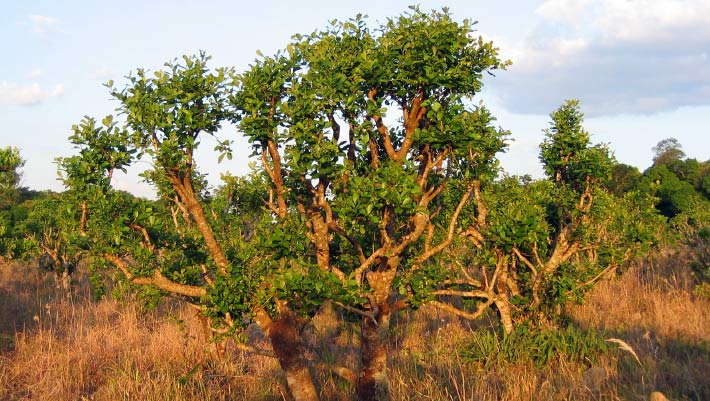
Vignale et al. have documented the initial draft genome sequence of yerba mate, presenting robust evidence identifying and characterizing the enzymes involved in caffeine synthesis. Credit for the image: Ilosuna / CC BY-SA 3.0.
Yerba mate is a tree species containing caffeine, indigenous to the subtropical rainforests of South America.
The desiccated foliage and small branches of this dioecious evergreen are utilized in the preparation of a traditional beverage known as mate, or chimarrão, which enjoys widespread global consumption.
An estimated 300,000 hectares are dedicated to the cultivation of this arboreal crop, with Argentina accounting for 80% of its global output.
The mate infusion has demonstrated a range of salutary effects in human subjects, functioning as an antioxidant, possessing antidiabetic properties, and acting as a central nervous system stimulant, among other benefits.
While its stimulating attributes are largely attributed to its caffeine concentration, comprehensive knowledge regarding the genetic and biochemical pathways through which yerba mate synthesizes this or any of its other vital metabolites remains limited.
“Our findings revealed that an ancestral precursor to yerba mate underwent a genome duplication event approximately 50 million years ago,” stated Dr. Federico Vignale, a researcher associated with the European Molecular Biology Laboratory.
“This ancient duplication may have played a pivotal role in the evolution of its metabolic complexity, facilitating the synthesis of a diverse array of bioactive compounds. These include terpenes, flavonoids, phenols, and xanthines, all recognized for their antioxidant, anti-diabetic, and nervous system stimulant characteristics.
“Among these constituents, my particular focus was directed towards caffeine.”
The research team ascertained that the yerba mate genome comprises a total length of 1.06 billion base pairs and encompasses a minimum of 53,390 genes encoding proteins.
Furthermore, they successfully identified the specific genes and the biochemical pathway responsible for the synthesis of caffeine within this species.
“Caffeine is biosynthesized by various distinct plant species, such as yerba mate and coffee, through comparable metabolic routes,” the researchers commented.
“However, we uncovered that the genes participating in these pathways evolved independently.”
“We gained a detailed understanding that the genes in question do not share a common ancestral origin but rather stem from separate evolutionary trajectories. Consequently, both yerba mate and coffee arrived at the capacity for caffeine biosynthesis by following convergent evolutionary paths,” explained Dr. Adrián Turjanski, a researcher affiliated with the University of Buenos Aires.
The parallel evolutionary trajectory of caffeine synthesis in yerba mate and coffee has led scientists to hypothesize that it serves a crucial function in plant survival, potentially acting as a defense mechanism.
“By deciphering the genome, one could gain the knowledge necessary to intervene and modify the plant’s characteristics,” Dr. Turjanski remarked.
“Proposals could include enhancing its concentration of specific compounds, for instance, developing a decaffeinated yerba mate, or creating varieties better suited to different environmental conditions, thereby expanding its cultivation range.”
The findings stemming from this research have been disseminated online in the scientific journal eLife.
_____
Federico A. Vignale et al. 2025. Yerba mate (Ilex paraguariensis) genome provides new insights into convergent evolution of caffeine biosynthesis. eLife 14: e104759; doi: 10.7554/eLife.104759