The quest for an effective Alzheimer’s disease therapy is evolving into a fiercely competitive and debated undertaking, marked by several significant controversies in recent years.
In July of 2022, a report in Science magazine brought to light concerns that a seminal 2006 research publication in the esteemed journal Nature, which posited a specific subtype of brain protein, beta-amyloid, as the primary driver of Alzheimer’s, might have relied on falsified experimental results.
Just twelve months prior, in June 2021, the U.S. Food and Drug Administration authorized the use of aducanumab, an antibody designed to target beta-amyloid, for Alzheimer’s treatment. This decision was made despite data supporting its efficacy being demonstrably incomplete and inconsistent.
A segment of the medical community maintains that aducanumab should never have received regulatory approval, while others argue it warrants a trial period.
Given that millions are in urgent need of a viable treatment, why do researchers appear to be struggling to find a cure for what is unequivocally one of humanity’s most pressing health challenges?
Breaking Free from the Beta-Amyloid Paradigm
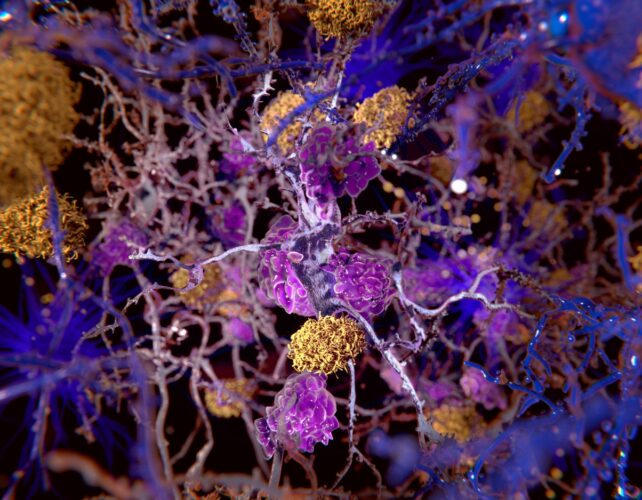
For a considerable duration, scientific efforts have been predominantly channeled into developing novel Alzheimer’s therapies by attempting to forestall the aggregation of brain-damaging clusters of a particular enigmatic protein known as beta-amyloid.
In essence, the scientific community may have inadvertently confined itself to a narrow intellectual framework, concentrating almost exclusively on this singular approach, while often overlooking or even dismissing alternative potential explanations.
Regrettably, this intense focus on scrutinizing abnormal protein aggregates has not yielded a clinically useful drug or treatment modality. Consequently, the necessity for a new intellectual perspective on Alzheimer’s, moving beyond the “clump-centric” view, is emerging as a paramount concern within neurological research.
My research group at the Krembil Brain Institute, an integral part of the University Health Network in Toronto, is formulating a novel conceptualization of Alzheimer’s disease.
Drawing upon our extensive research conducted over the past three decades, our current understanding shifts away from viewing Alzheimer’s primarily as a neurological disorder. Instead, we hypothesize that Alzheimer’s is fundamentally a condition affecting the immune system within the brain.
The immune system, present throughout the body, comprises a sophisticated network of cells and molecules that collaborate to facilitate tissue repair and defend against exogenous pathogens.
For instance, when an individual sustains an injury from a fall, the immune system orchestrates the healing process for the damaged tissues. Similarly, in response to viral or bacterial infections, the immune system actively combats these microbial threats.
These very same immunological mechanisms operate within the brain. In instances of cranial trauma, the brain’s innate immune system is mobilized to aid in recovery. Likewise, the presence of bacteria within the brain triggers a defensive response from the immune system.
Conceptualizing Alzheimer’s as an Autoimmune Disorder
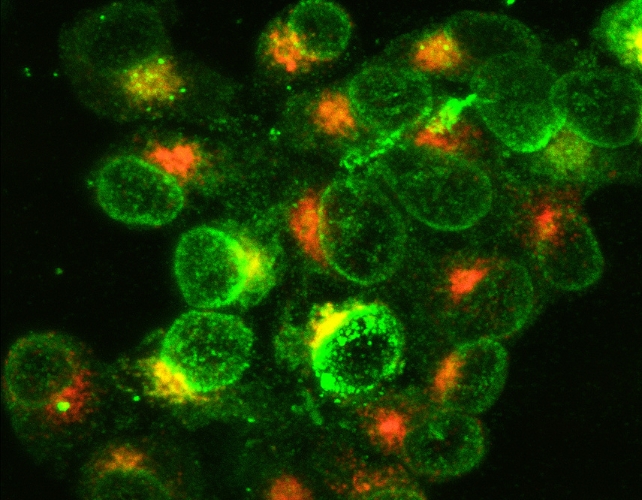
Our hypothesis posits that beta-amyloid is not an aberrant protein byproduct but rather a naturally occurring molecule integral to the brain’s immune defense mechanisms. Its presence is intended.
Upon experiencing brain injury or encountering bacterial invasion within the brain, beta-amyloid plays a crucial role in the brain’s comprehensive inflammatory response. This is precisely where the pathological process is believed to commence.
Due to significant structural resemblances between the lipid components of bacterial membranes and those of brain cells, beta-amyloid exhibits an inability to distinguish between invading bacteria and the host’s own neural cells. Consequently, it erroneously targets and damages the very brain cells it is meant to protect.
This leads to a persistent, progressive deterioration of neural cell function, ultimately manifesting as dementia – a direct consequence of the immune system’s failure to differentiate between bacterial invaders and native brain tissue.
When viewed as a misdirected assault by the brain’s own immune system against the organ it is tasked with safeguarding, Alzheimer’s disease can be appropriately characterized as an autoimmune pathology.
While various autoimmune conditions, such as rheumatoid arthritis, involve autoantibodies in their pathogenesis and may respond to steroid-based treatments, such therapeutic approaches are unlikely to be effective for Alzheimer’s disease.
The brain stands as a uniquely complex and sophisticated organ, widely recognized as the most intricate structure known in the universe.

Within our proposed model of Alzheimer’s, beta-amyloid contributes to the fortification and enhancement of our immune defenses. However, it concurrently plays a central role in the autoimmune cascade, which, according to our hypothesis, may precipitate the development of Alzheimer’s.
Although conventional therapies employed for autoimmune disorders may prove ineffective against Alzheimer’s, we hold a strong conviction that targeting alternative immune-regulatory pathways within the brain will pave the way for innovative and efficacious treatment strategies.
Emerging Etiological Hypotheses
Beyond this autoimmune perspective, a growing number of novel and diverse theories are gaining traction. For instance, some researchers propose that Alzheimer’s is intrinsically linked to a malfunction of mitochondria, the vital energy-generating organelles found within every neural cell.
Mitochondria are responsible for metabolizing inhaled oxygen and ingested glucose into the energy essential for cognitive functions such as memory and thought processes.
Other researchers suggest that the condition may be the ultimate consequence of a specific cerebral infection, with oral bacteria frequently implicated as potential causative agents. Furthermore, some scholars posit that the disease might originate from an improper regulation of trace metals within the brain, including but not limited to zinc, copper, or iron.
It is a cause for encouragement to witness the emergence of fresh perspectives on this long-standing ailment. Currently, dementia impacts over fifty million individuals globally, with a new diagnosis occurring every three seconds.
Frequently, individuals diagnosed with Alzheimer’s disease experience a profound loss of recognition, rendering them unable to identify their own children or even their spouses of many decades.
Alzheimer’s disease constitutes a significant public health crisis, demanding innovative conceptualizations and novel investigative avenues.

For the welfare of those affected by dementia and their families, and considering the substantial socioeconomic burden on our already strained healthcare systems grappling with the escalating costs and demands associated with dementia, a more profound understanding of Alzheimer’s, its underlying causes, and effective treatment strategies is imperative, alongside improved support for individuals and families navigating this condition.
Donald Weaver, Professor of Chemistry and Director of Krembil Research Institute, University Health Network, University of Toronto