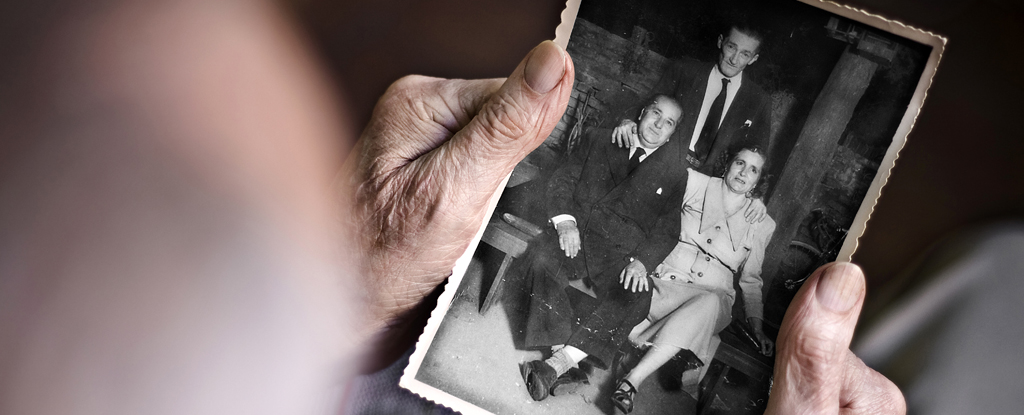
In the year 1853, my direct maternal ancestor, Charlotte, succumbed during childbirth while delivering her thirteenth offspring. This tragic event unfolded within a makeshift tent situated on the banks of the Yarra River, in an area now recognized as South Melbourne, but which was then a congested, sodden encampment known as Canvas Town. Tragically, the infant, William, did not survive long after his mother.
The rigorous investigation into Charlotte’s life story evoked profound sorrow over her fate and considerable indignation regarding the limited autonomy afforded to women during that era.
My personal experience is not unique; numerous individuals report encountering a spectrum of intense emotions, both adverse and beneficial, during ancestral research.
Across various platforms, including Facebook groups, published accounts, and televised programs like “Who Do You Think You Are?”, a wealth of amateur genealogists frequently uncover astonishing revelations about their forebears or even fundamental aspects of their own identity.
My recent investigations indicated that approximately two-thirds of family history enthusiasts have experienced significant negative emotional responses, such as grief or vexation, stemming from their genealogical pursuits.
Conversely, almost all participants reported experiencing powerful positive sentiments, including elation or pride.
Dedicated custodians of familial legacies
In 2019, Doreen Rosenthal and I conducted a survey involving 775 Australian amateur family historians to explore their underlying motivations for engaging in this pastime.
The participants ranged in age from 21 to 93 years, with the majority falling into older age brackets, and a median age of 63. A substantial proportion, 85 percent, were female. This demographic composition appears characteristic of hobbyist genealogists. Females frequently assume the role of “kin keepers”—individuals who maintain and nurture family connections—and often find they have more available time for such pursuits after raising their children and retiring from professional careers.
Respondents articulated the reasons behind their deep commitment to their hobby and its emotional impact. A notable percentage, 48 percent, indicated they “sometimes” encountered intense negative emotions as a consequence of their discoveries, while 15 percent reported experiencing these emotions “often.”
Five predominant themes emerged as triggers for negative emotional states.
1. Ancestors’ reprehensible conduct
The foremost and most prevalent source of emotional distress arose from the revelation of ancestral misconduct, whether through individual actions or by capitalizing on inequitable societal structures. Unearthing such forebears often left family historians feeling confronted, astounded, and at times, mortified.
Their sentiments were often expressed as follows:
[The most distressing discovery was] encountering a bigamist! His actions were appalling!! It was profoundly unsettling to realize that I carry a portion of his lineage!
And:
[It proved challenging to accept that] ancestors might have been involved in dubious practices or events. The difficulty lies in comprehending the historical context that enabled behaviors now deemed socially and legally reprehensible, actions for which I cannot feel pride.
2. Ancestors subjected to harsh treatment
Discovering instances where ancestors endured cruel treatment also proved to be a source of significant distress. This elicited feelings of disquiet, even profound sorrow, accompanied by an implicit sense of indignation at the injustice faced. Many individuals were deeply affected by the adversities their ancestors navigated.
One survey participant eloquently summarized this sentiment:
What is surprising is the depth of connection that can be forged with individuals who are no longer alive. I found myself deeply moved by the predicament of my paternal step great-great grandmother, who was confined to a mental institution from 1913 to 1948, without any form of review or visits, presumably to be conveniently removed from the family’s concerns.
3. Melancholy narratives
Feelings of sadness were frequently cited explicitly. Analogous to my own great-great grandmother’s demise during childbirth, sorrow was typically a reaction to the hardships and tragic circumstances faced by ancestors during more challenging historical periods.
Historically, women frequently did not survive childbirth, neonatal mortality rates were alarmingly high, and many succumbed to diseases that modern medicine has since eradicated. Poverty was pervasive, and the threat of warfare was a constant reality.
[It was difficult] unearthing the profound adversities encountered by my Irish ancestors upon their immigration to Australia, and the subsequent struggles and heartbreaking tales of survival that marked the lives of their descendants for three subsequent generations.
[It is distressing] to uncover particularly sorrowful and desperate periods in the lives of certain ancestors. For instance, a financially destitute widow who placed her child in an orphanage for three years, only for the child to perish from typhoid fever within two weeks of their return home.
A fourth category of emotional distress stemmed from the researcher’s perception of being deceived by other family members, through the concealment of secrets, the perpetuation of falsehoods, or the dismissal of their lived experiences.
This scenario is particularly prevalent for individuals who uncover revelations concerning their parentage—such as late-life discoveries of adoption, parental infidelity, or the existence of previously unknown siblings.
Such discoveries can undermine familial trust. The realization that family members may have deliberately misled them on such significant matters can lead to broader doubts about the veracity of other familial accounts.
As one female participant commented:
My mother’s half-sister refused to acknowledge her shared paternity with my mother. My maternal great-grandmother deliberately misrepresented my grandfather’s paternal parentage. This dishonesty extended to my maternal great-great grandmother as well. All these deceptions proved exceptionally upsetting.
5. Ethical quandaries
Finally, a number of respondents expressed uncertainty and perplexity when confronted with ethical dilemmas arising from information that could potentially cause considerable distress to living relatives. The question of whether to disclose such findings or maintain silence became a significant concern.
Withholding sensitive information of this nature imposes an emotional burden. Simultaneously, there is an accompanying sense of guilt and apprehension regarding the potential ramifications of its disclosure.
I was aware that an aunt had an illegitimate child prior to her marriage. Through DNA testing, I located her granddaughter. To this day, I have not informed this young woman of her true parentage. I do not believe it is my prerogative to reveal this, as she is entirely unaware of her father’s adoption.
A particularly distressing discovery was that my great aunt’s husband had committed a heinous murder. I have found myself unable to discuss this matter with the descendants of this couple.
Constructive outcomes from adverse emotions
Situating ancestral maladaptive behaviors or misfortunes within their historical and societal contexts can foster acceptance and forgiveness, thereby facilitating emotional healing and personal development.
Initial feelings of distress related to past injustices and tragic events are sometimes supplanted by profound admiration for the fortitude and resilience demonstrated by one’s forebears. This transformation can positively influence an individual’s sense of well-being and their capacity for resilience.
I processed my great-great grandmother’s narrative by committing it to writing and subsequently sharing it with members of my family. We collectively transformed our sorrow over her fate into an empowering family saga, emphasizing her courage and the strength exhibited by her surviving children.
Support can manifest simply through the act of disclosing these family histories to relatives, friends, and fellow genealogy enthusiasts. However, for certain individuals, engaging in private discussions with a counselor or therapist may prove beneficial, particularly if these discoveries have led to ruptures in family relationships or have undermined their sense of self.
It is incumbent upon counselors and psychologists to devise strategies that can assist clients who are experiencing distress due to their genealogical findings, and to encourage them to leverage this newfound knowledge for personal growth and a more nuanced understanding of family dynamics.
Should the purveyors of genealogical research services, particularly DNA testing companies, undertake the responsibility of informing their clientele about the potential for their products to induce emotional distress?
While “trigger warnings” might be considered excessive, these entities could feasibly provide curated lists of support resources for individuals who are experiencing upset or disorientation as a result of their findings.
As access to genealogical data continues to expand, with its inherent potential to challenge identities and unearth familial secrets, this is a matter warranting careful consideration.