For a considerable duration, speculative fiction authors have striven to ready us for hypothetical interactions with extraterrestrial life. Their narratives frequently feature certain prevalent themes.
These commonly include scenarios of conquest by an aggressive species, attempts at communication from a vastly advanced civilization to our less developed one, the arrival of altruistic beings to rescue us from self-inflicted peril, and the intrusive activities of extraterrestrial entities engaged in probing or experimentation.
However, such portrayals are deemed improbable for initial extraterrestrial encounters, according to emerging insights and scholarly investigation. This is not solely due to their potential lack of realism, but more critically, because of the underlying motivations that might drive another civilization to establish contact, and how these motivations would shape the detectable signals they employ to announce their presence.
A novel research publication, titled “The Eschatian Hypothesis,” authored by David Kipping, is slated for publication in the Monthly Notices of the Royal Astronomical Society.
Kipping enjoys significant recognition within astronomical communities, serving as the director of the Cool Worlds Lab at Columbia University. He also maintains a widely followed YouTube channel, Cool Worlds, which primarily explores the topic of exoplanets in wide orbital paths, while also delving into technosignatures and extraterrestrial intelligences (ETI).
In his latest paper, Kipping posits that the initial detection of an astrophysical phenomenon typically does not represent its general class.
Rather, our detection methodologies, with their inherent biases, lead us to first identify objects possessing substantial observational signatures. The annals of astronomical discovery provide numerous illustrations of this principle.
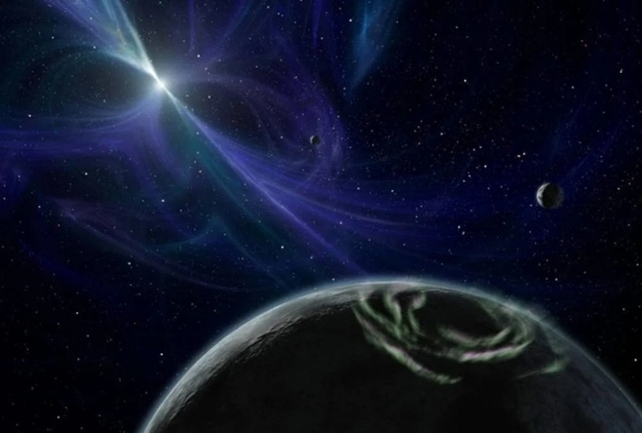
The history of exoplanet discovery serves as a pertinent example. The very first exoplanets identified in the early 1990s were found orbiting pulsars. However, subsequent research has revealed that these discoveries were not indicative of the general exoplanet population.
Within the NASA Exoplanet Archive, which catalogues over 6,000 exoplanets, fewer than ten have been identified orbiting pulsars. Their initial detectability stemmed from pulsars functioning as exceptionally precise cosmic timekeepers; any orbiting exoplanets caused noticeable disruptions to this precise timing. This phenomenon was unrelated to the actual prevalence of such planetary types.
This observational bias also extends to the stars visible to the unaided human eye.
Under favorable conditions, approximately 2,500 stars are discernible in the nocturnal sky. Roughly one-third of these are evolved giant stars. Yet, this proportion is not representative of the entire stellar population; rather, their exceedingly strong observational signatures make them conspicuous.
Our inherent bias towards detecting brighter objects causes these stars to stand out, while our closest stellar neighbor, a red dwarf – a highly abundant star type – remains unseen due to its faintness.
Kipping extrapolates this phenomenon to the context of initial extraterrestrial contact.
“If historical patterns are a reliable indicator, it is plausible that the initial indicators of extraterrestrial intelligence will similarly be highly atypical, ‘conspicuous’ examples within their broader categories,” he asserts.
Kipping draws an analogy to supernovae. These celestial events are exceptionally luminous and readily observed due to their catastrophic terminal phase.
“Motivated by this observation, we propose the Eschatian Hypothesis: that the first confirmed detection of an extraterrestrial technological civilization is most likely to be an anomalous instance, one characterized by unusual ‘loudness’ (i.e., producing an exceptionally strong technosignature), and potentially in a transient, unstable, or even terminal stage.”
The term ‘Eschatian’ is derived from ‘eschatology,’ a branch of theology concerned with death, judgment, and the ultimate destiny of humanity.
The potent signals posited by the Eschatian Hypothesis could conceivably be residual effects of a civilization in decline. Some researchers have speculated that human society might be approaching instability due to environmental changes, suggesting that the warming climate, its escalating carbon content, and other chemical pollutants could be perceived by ETIs as the discernible technosignature of an civilization in peril.
Alternatively, the signals envisioned by this hypothesis might represent a deliberate, unambiguous plea for assistance.
In a YouTube presentation, Kipping contemplates whether the renowned ‘Wow!’ signal of 1977 could have been an exceptionally strong call for aid from a civilization nearing its own eschaton.
The Eschatian Hypothesis carries significant implications for how we search for and interpret cosmic phenomena, particularly technosignatures. It suggests that we are predisposed to detect strong signals that are not representative of the ETI population as a whole, assuming such a uniform population exists.
“From a practical standpoint, the Eschatian Hypothesis indicates that wide-field, high-cadence surveys designed to detect generic transient events may offer our most promising avenue for identifying such conspicuous, short-lived civilizations,” Kipping explains.
Kipping notes that we are rapidly approaching a state where the cosmos is under continuous temporal observation. Observatories such as the Vera Rubin Observatory and the Sloan Digital Sky Survey maintain constant watch over the sky for dynamic changes.
This persistent surveillance is advantageous for detecting the atypical signals that are most likely to herald our first detection of an ETI.
“Rather than focusing on narrowly defined technosignatures, Eschatian search strategies would instead prioritize broad, anomalous transients – characterized by variations in flux, spectrum, or apparent motion – whose luminosity and temporal duration are difficult to reconcile with known astrophysical phenomena,” Kipping elaborates.
“Consequently, agnostic anomaly detection initiatives would represent a recommended course of action,” he concludes.
There exist numerous reasons why humanity’s initial encounter with another civilization will likely not manifest as colossal invasion fleets dominating our cityscapes, benevolent advanced beings arriving to our salvation, or curious alien probing entities from some obscure cosmic corner. These are fanciful concepts from science fiction, designed to captivate with exaggerated dramatic flair. (Though they are undeniably entertaining, aren’t they?)
Instead, it is more probable that our first indication will be an exceptionally potent, highly atypical signal originating from a distant part of the cosmos.
“The historical trajectory of astronomical discoveries demonstrates that many of the most readily detectable phenomena, particularly those marking initial discoveries, are not typical members of their broader categories but rather rare, extreme instances possessing disproportionately significant observational signatures,” Kipping states.
This content was originally disseminated by Universe Today. Access the original publication.