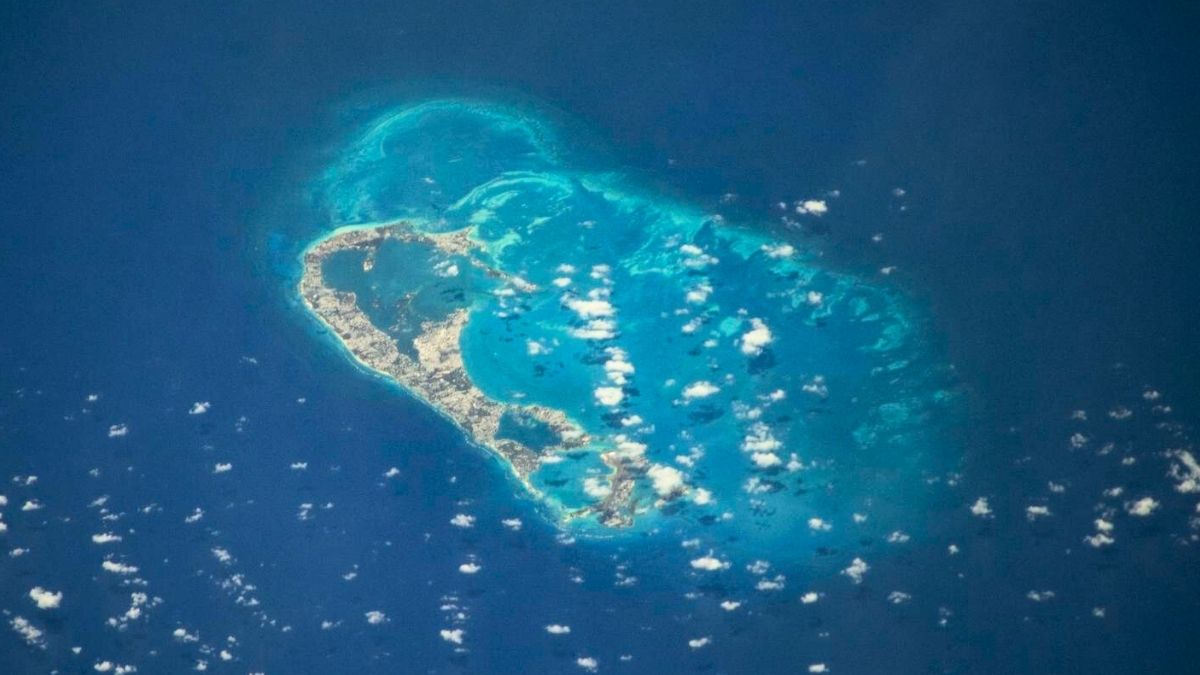
The islands of Bermuda present a geological enigma. This is not due to the infamous Bermuda Triangle in its vicinity, but rather because they are situated atop an abnormally thickened section of the Earth’s crust, a formation that conventional geological models would not predict.
A novel explanation has now been proposed by two seismologists, William Frazer of Carnegie Science and Jeffrey Park from Yale University.
Geoscientists have long been fascinated by Bermuda’s geological composition: the archipelago consists of 181 islands, which are the exposed portions of a shallow mantle feature generated by volcanic activity approximately 33 million years ago.
Typically, volcanic island chains, such as those in Hawaii, are characterized by a progression of volcanoes of sequential ages, evidence of ongoing volcanic processes, and a deep-seated mantle plume.
This plume is the usual mechanism responsible for the seafloor’s ‘swell’. This geological term describes an elevated, bulging mound on the seafloor, typically formed by the upwelling of hot, buoyant material from beneath the Earth’s surface, akin to a subcutaneous lesion developing.
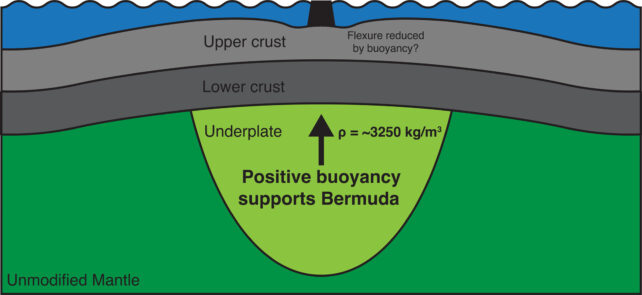
While Bermuda exhibits a significant swell, a discernible mantle plume is absent. Considering the lack of evidence for volcanic activity in millions of years, this elevated landmass (and the islands it supports) should have long since subsided beneath the ocean. However, this has not occurred.
Frazer and Park conducted an analysis of seismic wave recordings generated by earthquakes as they traversed the Earth’s mantle beneath Bermuda. The speed at which these vibrations propagate varies with material density; they travel more rapidly through denser substances and are slowed by less dense ones. Consequently, the resulting waveforms provide insights into the subsurface composition.
Their investigation revealed evidence of a layer of rock, approximately 20 kilometers (12 miles) in thickness, characterized by relatively low density. This layer appears to be fulfilling the role typically assumed by a rising mantle plume: using its buoyancy to elevate the crust and create the swell that sustains the archipelago just above the clear waters.
“We have identified features associated with a layer of rock, approximately 20 kilometers thick, situated beneath the oceanic crust, which has not been previously documented,” the researchers state in their publication.
“This substantial layer underlying the crust was likely deposited when Bermuda was volcanically active 30 to 35 million years ago and could be responsible for supporting the bathymetric swell.”
This phenomenon, referred to as ‘underplating,’ represents one potential interpretation of the seismic data. Nevertheless, it may be the very factor preventing Bermuda’s submersion into the Atlantic Ocean, at least until global sea levels experience further increases.