The Arctic Ocean’s currents are currently experiencing their highest temperatures in 125,000 years, and this warming trend is persistent. Consequently, projections indicate that over two-thirds of polar bear populations may face extinction by 2050, with complete eradication anticipated by the close of the current century.
However, our recent investigation, conducted by myself and my colleagues, has revealed that climate shifts are inducing alterations within the polar bear genome, potentially enhancing their capacity to acclimatize to more temperate environments.
Provided these polar bears can secure adequate sustenance and locate suitable mates for reproduction, this suggests a potential for species survival amidst these evolving environmental adversities.
We have identified a significant correlation between escalating temperatures in southeastern Greenland and discernible modifications in polar bear genetic material.
Deoxyribonucleic acid (DNA), the fundamental blueprint within each cell, dictates an organism’s growth and development. Through intricate cellular mechanisms known as transcription and translation, DNA is replicated to produce RNA (molecules reflecting gene expression) and can subsequently lead to the synthesis of proteins, as well as copies of transposons (TEs). These TEs, often referred to as “jumping genes,” are mobile genetic elements capable of relocating within the genome and impacting the functionality of other genes.
In the course of our recent research, we observed substantial disparities in temperatures recorded in the northeastern sector compared to the southeastern regions of Greenland.
Our research team leveraged publicly accessible polar bear genetic data, originating from a research initiative at the University of Washington, USA, to substantiate our findings. This dataset was compiled from blood samples meticulously collected from polar bears residing in both northern and southeastern Greenland.
Our work built upon the foundational University of Washington study, which previously ascertained that the polar bear population in southeastern Greenland exhibited distinct genetic characteristics compared to its northeastern counterpart. The study indicated that bears from the southeast had migrated from the north and subsequently became geographically and genetically isolated approximately 200 years ago, as reported.
Researchers from the University of Washington had previously extracted RNA from polar bear blood specimens and subjected it to sequencing. We utilized this RNA sequencing data to examine RNA expression levels—the presence of molecules that function as biological messengers, indicating which genes are actively engaged—in relation to climatic conditions.
This approach provided us with a comprehensive overview of gene activity, including the behavior of TEs. Ambient temperatures in Greenland have been meticulously documented and recorded by the Danish Meteorological Institute. Consequently, we correlated this climate data with the RNA expression data to investigate how environmental shifts might be influencing the biological makeup of polar bears.
Does Temperature Fluctuation Impact Polar Bears?
Our analysis revealed that temperatures in northeastern Greenland were consistently colder and showed less variability, whereas temperatures in the southeastern regions exhibited greater fluctuation and were significantly warmer.
The accompanying graphic illustrates our findings alongside the temperature variations across Greenland, highlighting the warmer and more volatile conditions prevalent in the southeast. These factors present considerable obstacles and transformations to the habitats occupied by polar bears in these areas.

In southeastern Greenland, the margin of the ice sheet, representing the periphery of the ice mass and encompassing 80% of Greenland’s land area, is undergoing rapid retreat. This phenomenon is precipitating extensive ice and habitat degradation.
The diminution of sea ice poses a significant challenge for polar bears, as it curtails the availability of crucial hunting platforms required for seal capture, thereby leading to isolation and food shortages. Northeastern Greenland comprises an expansive, level Arctic tundra, whereas southeastern Greenland is characterized by forest tundra, a transitional ecological zone situated between coniferous forests and the Arctic tundra. The climate in the southeast is marked by frequent precipitation, strong winds, and dramatic coastal mountain topography.
Mechanisms of Climate-Induced Genetic Alteration in Polar Bears
Over extended periods, DNA sequences undergo gradual modifications and evolutionary changes; however, environmental stressors, such as a warming climate, can substantially accelerate this process.
Transposable elements, or TEs, function analogously to puzzle pieces that can reconfigure themselves, occasionally facilitating an organism’s adaptation to novel environments. Within the polar bear genome, approximately 38.1% is composed of TEs. TEs exist in numerous distinct families, each exhibiting slightly varied behavioral patterns; however, their fundamental characteristic is their mobile nature as fragments capable of reinserting themselves randomly anywhere within the genome.
In the human genome, 45% consists of TEs, while in plant genomes, this proportion can exceed 70%. Small regulatory molecules known as piwi-interacting RNAs (piRNAs) play a role in suppressing the activity of TEs.
Notwithstanding these regulatory mechanisms, when an environmental stressor proves excessively potent, these protective piRNAs may be unable to counteract the disruptive incursions of TEs. Our research findings indicate that the warmer climate characteristic of southeastern Greenland triggered a widespread mobilization of these TEs throughout the polar bear genome, thereby altering its sequence.
We further observed that these TE sequences appeared to be more recent and more prevalent in the southeastern bears. Over 1,500 of these elements were found to be “upregulated,” suggesting recent genetic modifications that may confer an advantage in adapting to rising ambient temperatures.
Certain of these mobile genetic elements exhibit overlap with genes implicated in stress responses and metabolic processes, offering a potential insight into their role in mitigating the effects of climate change. Through the examination of these mobile genetic elements, we have elucidated how the polar bear genome adapts and responds, on a shorter timescale, to environmental pressures and elevated temperatures.
Our research has identified that specific genes associated with heat stress, aging, and metabolism are demonstrating altered activity patterns within the southeastern polar bear population. This indicates a potential adaptive response to their warmer environmental conditions.
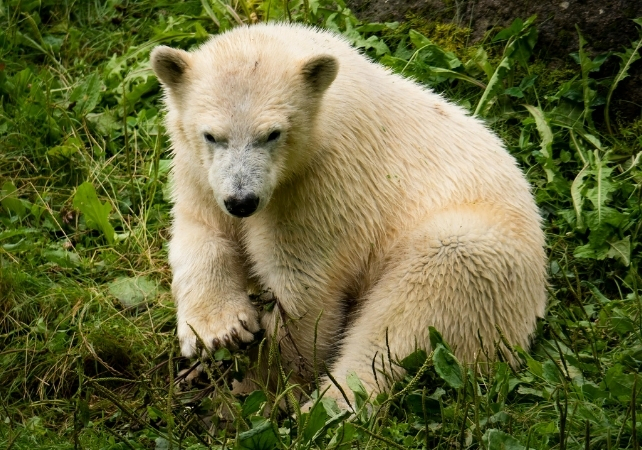
Moreover, we detected active transposable elements within genomic regions involved in pathways related to fat metabolism—a crucial factor when food resources are limited. This suggests that polar bears in southeastern regions may be gradually adapting to subsist on the more fibrous, plant-based diets available in these warmer locales. In contrast, northern polar bear populations primarily consume energy-rich seals.
In essence, global climate change is fundamentally altering polar bear habitats, instigating genetic adaptations. Southeastern polar bear populations appear to be evolving to thrive in these transformed terrestrial and dietary landscapes. Subsequent investigations could encompass additional polar bear populations inhabiting ecologically challenging environments.
A profound understanding of these genetic transformations provides researchers with valuable insights into the potential survival strategies of polar bears in a warming planet and allows for the identification of populations most vulnerable to these changes.–>