

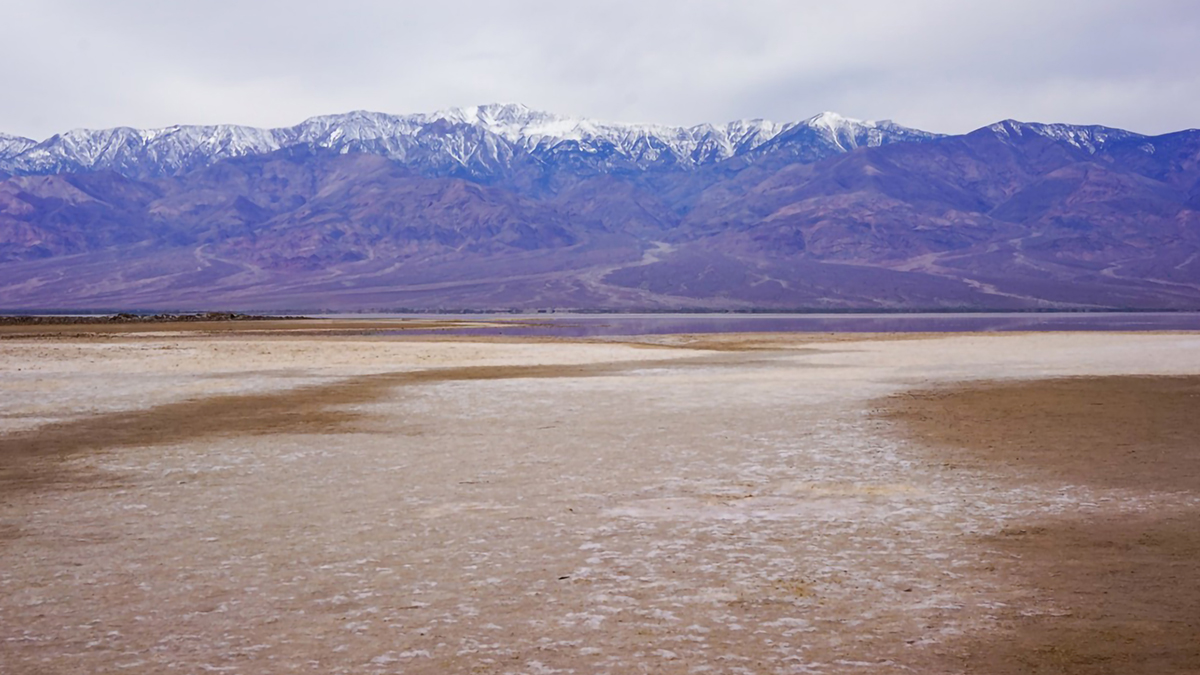
While Death Valley, a segment of the Mojave Desert spanning California and Nevada, is typically recognized for its extreme thermal conditions, recent weeks have witnessed a deviation, with precipitation records being shattered rather than heat indexes.
The United States National Park Service (NPS) has documented extraordinary rainfall within Death Valley National Park. The intensity and persistence of this downpour have been so significant that it has facilitated the reformation of an ancient lake.
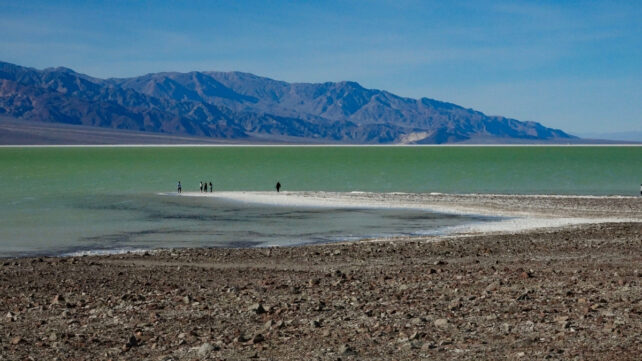
Situated in Badwater Basin, which holds the distinction of being the lowest elevation point in North America, Lake Manly, at some junctures in its dynamic geological history, may have achieved a depth exceeding 300 meters (approximately 1,000 feet). However, for over 10,000 years, since the conclusion of the last Ice Age and its subsequent receding influence on the topography, it has not been observed in a stable, enduring form.
In consequence of the record-setting precipitation, the lake’s presence has been re-established, albeit in a limited capacity. Current water levels, as indicated by the NPS, “would not rise above the tops of your shoes” in most areas. Consequently, aquatic recreational activities, such as boat excursions, are not anticipated in the foreseeable future.
Following periods of substantial rainfall, this lake has undergone partial reformation on multiple occasions throughout recorded history. It notably reappeared briefly and shallowly subsequent to the passage of Hurricane Hilary through the region in 2023.
According to available records, Death Valley has experienced its most arid autumn (encompassing September through November) to date, accumulating 2.41 inches (6.12 centimeters) of rainfall. Furthermore, the region has registered its wettest November on record, receiving 1.76 inches of precipitation, surpassing the prior benchmark of 1.7 inches.
While these figures may seem modest when contrasted with other locales, it is imperative to consider that the average annual precipitation in Death Valley, an environment characterized by exceptional aridity, is less than 2 inches. This recent influx signifies a marked and intense surge in aqueous activity. The receipt of nearly a year’s worth of rainfall within a single month is inherently noteworthy.
This unusual meteorological phenomenon has prompted speculation regarding the prospects for the spring wildflower displays in Death Valley National Park. While precipitation is a vital contributor to plant proliferation, it constitutes only one among a multitude of influencing factors. The NPS currently indicates that the ultimate impact on the forthcoming bloom remains uncertain.
Park authorities are issuing advisories to prospective visitors, informing them that numerous roadways, both paved and unpaved, are currently inaccessible due to accumulated storm debris. As is customary, individuals planning a visit are strongly encouraged to consult the most current information available on the official governmental portal.
While the NPS has not provided specific details concerning the underlying causes of this aberrant weather system, it is widely acknowledged that the pressures exerted by global climate change are contributing to the breaking of records worldwide. Extreme weather events are projected to occur with greater frequency, extended duration, and heightened severity as the planet continues to warm.
This occurrence also serves as a poignant reminder that the geological formations and landscapes we observe have undergone extensive transformation over geological epochs spanning billions of years. Even an environment as parched and seemingly barren as Death Valley has demonstrably evolved through millennia.
Lake Manly reached its peak prominence between 128,000 and 186,000 years ago. During this period, it would have covered an expansive area of nearly 100 miles (161 kilometers) of terrain, replenished by meltwater from glaciers and inflows from rivers originating in the Sierra Nevada mountain range.



.jpg)