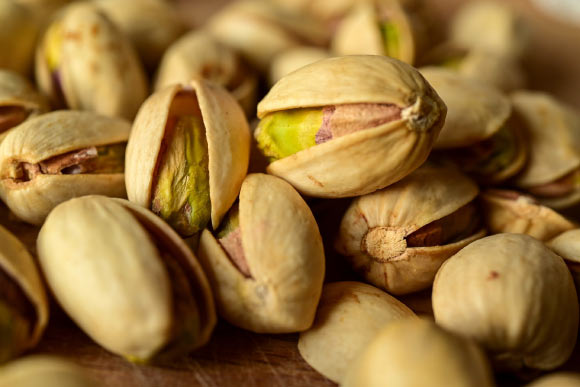
Incorporating pistachios into one’s diet, recognized as a readily absorbed source of the xanthophyll lutein, has demonstrated efficacy in enhancing macular pigment optical density (MPOD) among healthy adults, according to recent research stemming from Tufts University and Tufts Medical Center.

Lutein and zeaxanthin, classified as dietary xanthophylls, belong to the carotenoid family. They are most frequently encountered in produce, with dark leafy greens being particularly abundant sources.
These specific compounds possess the ability to traverse the blood-brain barrier and selectively concentrate within the macular region of the human retina, where they are designated as macular pigment.
Pistachios stand out as the sole nut species to contain substantial quantities of either lutein or zeaxanthin; however, unlike eggs, they offer lutein exclusively.
Nevertheless, in a manner analogous to eggs, pistachios contribute dietary fat, predominantly in the form of mono- and polyunsaturated fatty acids, which could facilitate a high degree of lutein bioavailability.
“Our conclusions suggest that pistachios not only serve as a nutrient-dense snack alternative but may also confer considerable advantages for the health of the eyes,” stated Dr. Tammy Scott, a neuropsychologist engaged in research and clinical practice at Tufts University.
“This aspect is particularly pertinent as individuals advance in age, facing an elevated susceptibility to visual impairments.”
The outcomes of a randomized controlled trial indicated that the daily inclusion of 2 ounces (57 grams) of pistachios over a 12-week period, as an adjunct to a typical diet, led to a statistically significant augmentation in MPOD among participants who were otherwise healthy and fell within the middle-aged to older adult demographic, in contrast to those adhering solely to their usual dietary habits.
Furthermore, it was observed that the consumption of pistachios nearly doubled the participants’ average daily intake of lutein and significantly elevated its concentration in their plasma.
“By simply integrating a modest portion of pistachios into your daily regimen, you can enhance your uptake of lutein, a nutrient indispensable for safeguarding ocular well-being,” Dr. Scott remarked.
“The presence of healthy fats in pistachios suggests that lutein derived from them might be more readily absorbed by the body.”
“An approximate intake of 1.6 mg of lutein was provided by pistachios, a quantity sufficient to double the typical daily consumption of lutein, which belongs to a category of plant pigments known as xanthophylls, among adults in the United States.”
In addition to promoting ocular health, the lutein found in pistachios may also contribute positively to cognitive function.
“Lutein can cross the blood-brain barrier, where it may play a role in mitigating oxidative stress and inflammatory processes,” explained Dr. Elizabeth Johnson, a researcher affiliated with Tufts University.
“Similar to its accumulation in the eye, lutein selectively concentrates in the brain and could be instrumental in decelerating cognitive decline.”
“Research indicates a correlation between elevated lutein levels and enhanced cognitive performance, encompassing aspects such as memory recall and processing speed, thereby positioning pistachios as a valuable dietary component for supporting overall healthy aging.”
This particular investigation was formally published on October 17, 2024, in the esteemed Journal of Nutrition.
_____
Tammy M. Scott et al. Pistachio consumption increases Macular Pigment Optical Density in healthy adults: a randomized controlled trial. Journal of Nutrition, published online October 17, 2024; doi: 10.1016/j.tjnut.2024.10.022