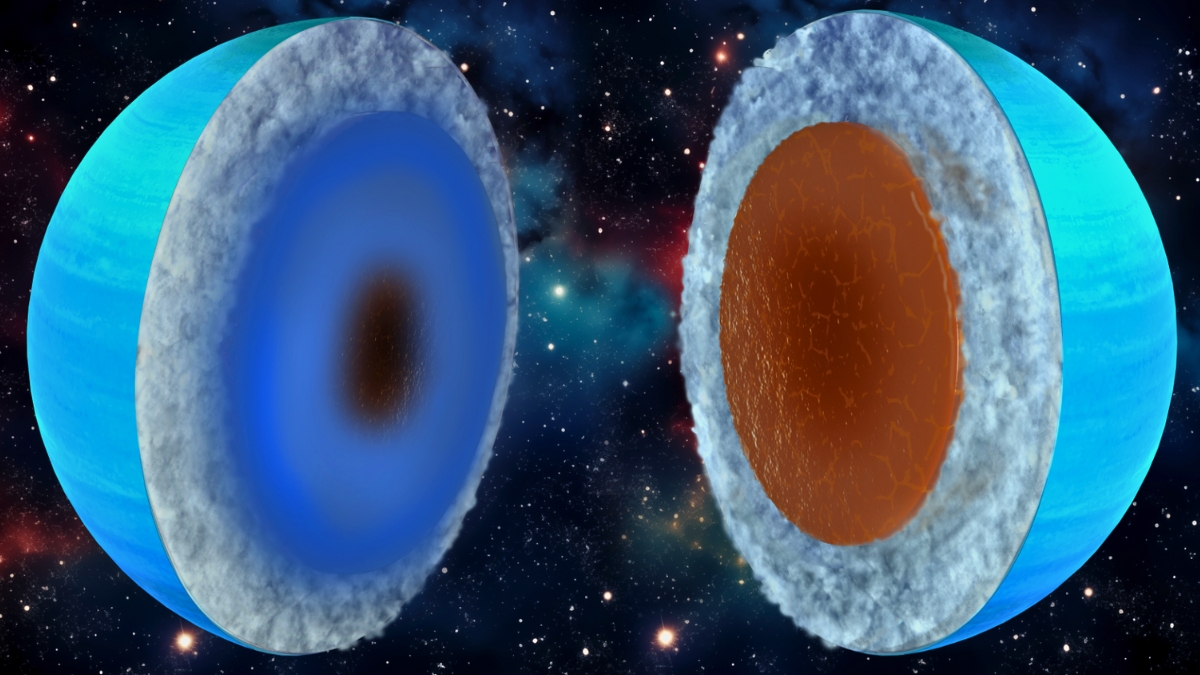
While technically classified as gas giants, Uranus and Neptune are commonly designated as “ice giants” owing to their constituent makeup.
This nomenclature stems from the higher prevalence of methane, water, and other volatile compounds in these celestial bodies when contrasted with their more massive counterparts, Jupiter and Saturn.
Under the specific pressure regimes prevailing within these planets, these elements transition to a solid state, effectively forming what are termed ‘ices.’
However, groundbreaking research emerging from the University of Zurich (UZH) and the National Centre of Competence in Research (NCCR) PlanetS is prompting a re-evaluation of our current understanding of these planetary interiors.
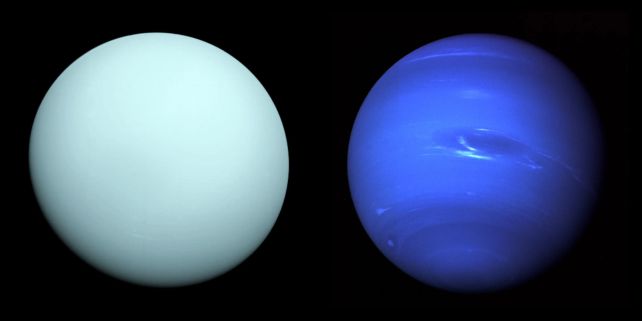
Furthermore, their findings suggest that convective processes, wherein material circulates (analogous to Earth’s tectonic activity), might be operative within their interiors, rather than a state of static equilibrium.
These potential dynamics, the researchers posit, could offer resolutions to some of the more enigmatic attributes associated with the “ice giants.”
Historically, planetary scientists have delineated the Solar System’s planets into three principal categories, predicated on their material composition, which correlates with their orbital distance from the Sun.
This categorization encompasses the inner Solar System’s rocky, or terrestrial, planets—Mercury, Venus, Earth, and Mars—followed by the celestial bodies situated beyond the so-called ‘Frost Line,’ a region where volatile substances like water solidify.
This outer expanse includes the gas giants (Jupiter and Saturn) and the ice giants (Uranus and Neptune).
The aforementioned new study, spearheaded by PhD Student Luca Morf and Professor Ravit Helled from UZH and the NCCR PlanetS, introduces a challenge to this established paradigm.
Among all the planets in our Solar System, Uranus and Neptune remain the least comprehensively understood.
This knowledge gap can be attributed to the fact that these planets have been visited by only a single exploratory mission, the Voyager 2 probe, which conducted close flybys in 1986 and 1989, respectively.
Morf and Helled devised an innovative methodology for simulating the internal structures of Uranus and Neptune, extending their analysis to compositions that diverge from the traditional water-rich model.
Their approach involved the generation of random density profiles, followed by computations of the resultant gravitational fields of these hypothetical planets.
Subsequently, this process was iterated to yield outcomes that align with the established observational data for Uranus and Neptune.
“The designation of ‘ice giant’ is an oversimplification, given that Uranus and Neptune are still poorly understood,” Morf conveyed in a UZH press release.
“Models grounded in physics were excessively reliant on assumptions, while empirical models were too rudimentary.
We synthesized both approaches to construct interior models that are both ‘agnostic,’ or unbiased, and yet demonstrably physically consistent.”
Their findings indicated that the most accurate representation of their internal composition transcends simple ice (primarily water) and could, in fact, be predominantly composed of rocky materials.
These conclusions resonate with observations from the Hubble Space Telescope and the New Horizons mission, which suggest Pluto’s composition comprises approximately 70% rock and metals, with 30% water by mass.
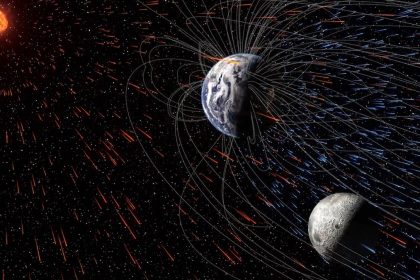
The research also proposes potential explanations for the peculiar magnetic fields of Uranus and Neptune, which are characterized by more than two poles.
“This is a concept we initially put forth nearly 15 years ago, and we now possess the computational framework to substantiate it,” Helled stated.
“Our models incorporate layers of ‘ionic water,’ which give rise to magnetic dynamos in locations that elucidate the observed non-dipolar magnetic fields.
We also determined that Uranus’s magnetic field emanates from a deeper origin than Neptune’s.”
Naturally, inherent uncertainties persist within this model, underscoring the imperative for future missions to conduct further investigations into the “ice giants.”
In the interim, these novel findings introduce new theoretical scenarios and challenge long-held assumptions regarding the internal makeup of giant planets.
They may also provide valuable direction for subsequent materials science studies focused on planetary conditions and the behavior of matter under extreme environmental pressures.
“Both Uranus and Neptune could potentially be classified as rock giants or ice giants, contingent upon the specific model assumptions,” Helled remarked.
“Current data are insufficient to definitively differentiate between these possibilities, thus necessitating dedicated missions to Uranus and Neptune to unveil their true nature.”
This content was originally produced by Universe Today. The original publication is available for review.