
While a definitive cure for Huntington’s disease (HD) has remained elusive, recent scientific endeavors are instilling renewed optimism.
HD is characterized as a degenerative, inherited neurological disorder impacting motor function, cognitive abilities, and emotional regulation. The typical diagnosis of HD occurs when individuals exhibit pronounced motor impairments, generally between the ages of 30 and 50, with a subsequent life expectancy of approximately 15 to 20 years.
The worldwide incidence of HD is roughly five cases per 100,000 individuals. Although its prevalence is lower than that of Alzheimer’s disease, HD manifests at a considerably earlier life stage, often during peak working and family-raising years.
Regrettably, no cure currently exists. However, a pair of recent scientific publications, authored by our team and other researchers, indicate that this predicament may soon change.
The underlying pathology of HD remained a puzzle for a considerable period following its initial identification in the 19th century. Nevertheless, in 1993, investigators discerned that HD stems from aberrant repetitions of three DNA nucleotide bases (cytosine, adenine, and guanine) within the Huntingtin (HTT) gene, leading to the synthesis of a malformed huntingtin protein.

This gene typically features a segment where the CAG triplet is reiterated. In healthy individuals, this repetition count remains below 35. Conversely, repeat lengths exceeding 39 are indicative of HD. A greater number of repeats generally correlates with an earlier symptom onset.
Beyond the inherited CAG repeat length, this sequence exhibits a propensity for continuous expansion within specific cellular populations throughout an individual’s lifespan, a phenomenon termed somatic expansion.
At the time of its discovery in 1993, this breakthrough generated considerable enthusiasm. Foremost, it enabled the identification of family members at risk of developing the disease, given a family history.
Clinicians working in HD treatment centers during that era harbored profound concerns regarding the resultant ethical and psychological implications, underscoring the substantial need for specialized counseling, for instance.
Secondly, it was optimistically, albeit somewhat inaccurately, anticipated that a therapeutic intervention would be rapidly developed.
Numerous investigations have examined individuals carrying the HD gene expansion up to 15 years prior to symptom manifestation, with some studies extending as far back as 25 years before onset. Even preceding the emergence of motor disturbances, alterations in cognitive function, mood, and brain structure have been documented.
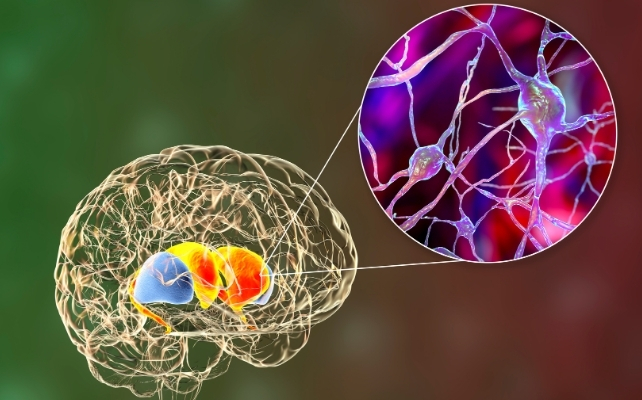
Specifically, these neurobiological changes initiate within a brain region known as the striatum, which plays a crucial role in motor control. Within this area, specific neuronal populations (termed GABAergic medium spiny neurons) undergo degeneration. As HD progresses, the pathological process extends to other cerebral regions, including the cortex, vital for cognition, and white matter, responsible for inter-regional neural communication.
Advancements on the Horizon
Only recently have clinical researchers Sarah Tabrizi and Edward Wild at University College London reported encouraging findings pertinent to HD treatment.
Although the research awaits formal peer review and publication, preliminary findings have been disseminated via a press notice from uniQure, a US-based biotechnology firm.
In this clinical investigation, a gene therapy known as AMT-130, designed to attenuate the production of the detrimental mutant huntingtin protein, was administered to 29 individuals diagnosed with HD, aged between 25 and 65. The outcomes demonstrated a deceleration in cognitive deterioration as measured by standard neuropsychological assessments, particularly in metrics related to processing speed and reading comprehension.
Most notably from a clinical perspective, levels of neurofilament light, a general biomarker for neurodegeneration, in cerebrospinal fluid, were observed to decrease following a three-year follow-up period, even falling below their initial baseline values.
This suggests that the therapeutic intervention may offer protective effects for neural cells against damage, rather than merely alleviating symptoms. The aspiration is that future advancements will enable the provision of safe and efficacious treatments at earlier disease stages.
It is anticipated that individuals carrying the HD gene expansion will experience improvements in cognitive and emotional functioning, coupled with a reduction in motor symptomatology, thereby enhancing their quality of life and potentially extending their longevity.
This prospect served as a catalyst for our recent research, a collaborative undertaking between UCL and the University of Cambridge, for the HD- Young Adult Study. This study enrolled 131 participants: 64 individuals with the HD gene expansion and 67 controls, assessed significantly prior to anticipated disease onset, approximately 24 years in advance.
The study amassed comprehensive data pertaining to participants’ cognitive states, emotional well-being, and behavioral patterns, in conjunction with neuroimaging scans and analyses of biological fluids that offer insights into neural cell health.
During this preliminary phase, we observed some elevation in neurodegeneration markers accompanied by minimal discernible impacts on brain volume and cognitive capacity.
Given the early disruption of striatal neural circuits in HD, our objective was to ascertain whether cognitive flexibility – the capacity to fluidly transition between different approaches and perspectives, a function reliant on these circuits – was affected at this very incipient stage in individuals with the HD gene expansion.
Indeed, we detected a subtle early impairment in cognitive flexibility, which was corroborated by modifications in the connectivity of these neural pathways. This cohort also underwent follow-up assessments approximately 4.5 years later, at which point alterations in numerous measured parameters became more pronounced.
Crucially, in conjunction with the University of Glasgow, we demonstrated that somatic expansion, the ongoing amplification of the CAG sequence within specific cells over an individual’s lifetime, can yield vital diagnostic information.
This research marked the first instance of demonstrating in living human subjects that the rate of somatic expansion directly correlates with the pace of disease progression. This finding may elucidate why individuals with identical inherited CAG repeat lengths in the Huntingtin gene can experience disparate onset timings for the disease.
While cognitive deficits were evident at this juncture, they were localized to a specific cognitive domain. Our findings reveal early, persistent deficits in sustained attention among individuals with expanded CAG sequences, which are associated with alterations in neural circuits within the inferior frontal gyrus (implicated in attention regulation), occurring well before motor symptoms emerge.
Intriguingly, this particular brain region has also been implicated in the attentional difficulties experienced by individuals with ADHD, as identified in our prior research. This observation suggests that the observed disruption in sustained attention in HD may represent a neurodevelopmental phenomenon rather than a neurodegenerative process at this early disease stage.
These discoveries indicate the existence of a therapeutic window, potentially spanning decades before overt motor symptoms manifest, during which individuals with the HD gene expansion maintain normal functioning despite the presence of detectable subtle early neurodegenerative indicators.
The identification of these early disease markers is paramount for future clinical trials to accurately assess treatment efficacy and the preservation of quality of life.
Furthermore, as pharmaceutical agents that impede disease progression, rather than merely ameliorate symptoms, receive regulatory approval for HD, they could be implemented proactively to enhance well-being and daily living.
We anticipate that the recent rapid advancements in understanding and treating HD will yield significant benefits for patients in the foreseeable future.