A significant archaeological find has been reported by Egypt’s Ministry of Tourism and Antiquities, detailing the unearthing of a 10,000-year-old site adorned with rock art in the Sinai Peninsula. This discovery was announced on Thursday.
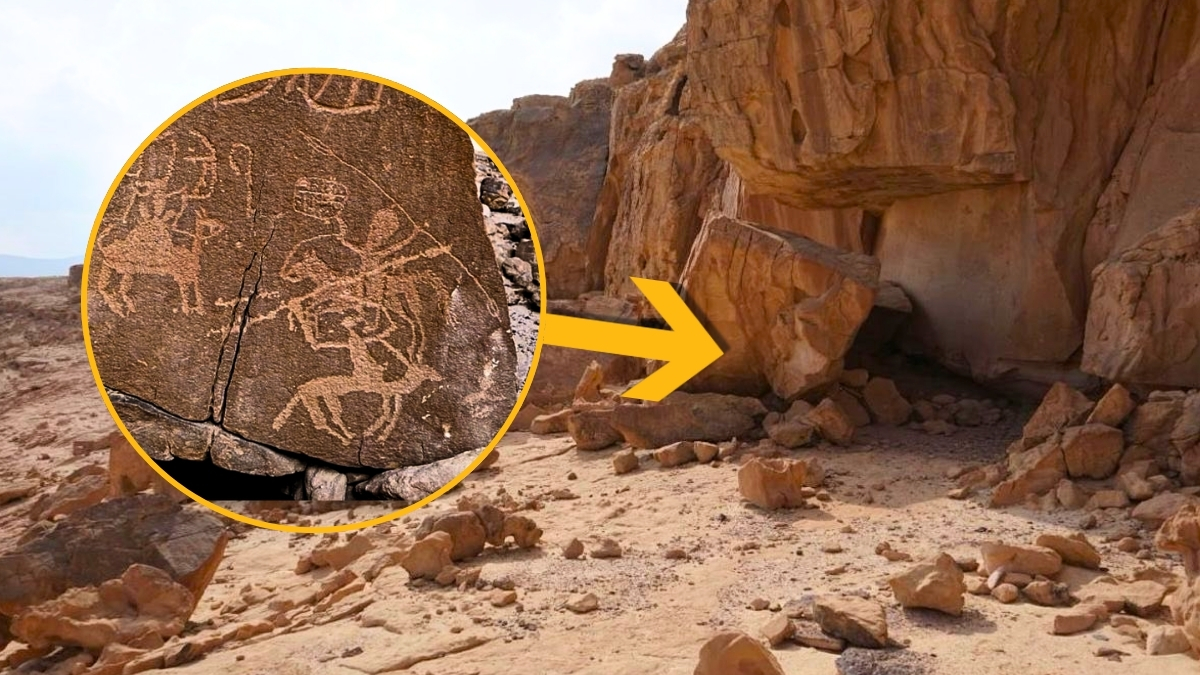
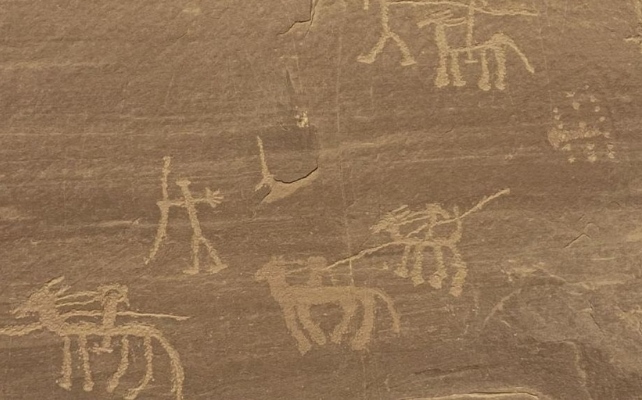
Situated on the Umm Irak Plateau, this previously undocumented location features a remarkable rock formation extending 100 meters in length. Its diverse engravings serve as a chronicle, illustrating the progression of human creative expression from antiquity through to the Islamic period.
A statement from the ministry highlighted that the Supreme Council of Antiquities has brought to light what is considered “one of the most important new archaeological sites, possessing exceptional historical and artistic merit.”
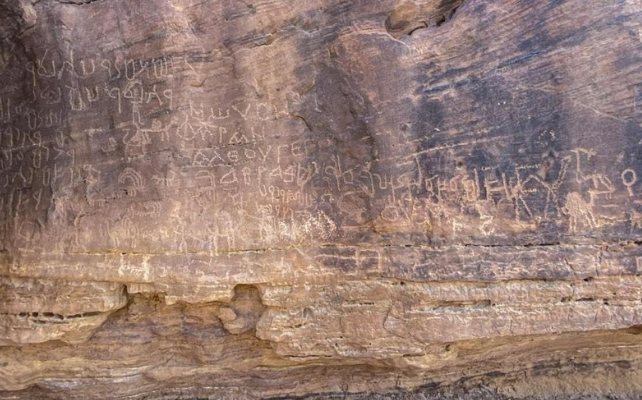
The secretary general of the council, Hisham El-Leithy, characterized the site as an “open-air natural museum” due to its chronological richness.
The natural rock shelter’s overhead expanse is decorated with a multitude of drawings rendered in red pigment, depicting various animals and symbolic forms, alongside inscriptions in both Arabic and the ancient Nabataean script.
The ministry further elaborated that certain engravings “offer insights into the daily lives and economic pursuits of early human societies.”
Within the shelter, evidence such as animal excrement, rudimentary stone partitions, and remnants of hearths corroborates its prolonged use as a place of refuge.
Tourism and Antiquities Minister Sherif Fathi remarked that these findings “provide further substantiation of the succession of civilizations that have occupied this vital region of Egypt throughout the ages.”
He lauded the discovery as a “significant contribution to the inventory of Egyptian antiquities.”
The location is situated in the southern part of the Sinai Peninsula, an area currently the focus of an extensive megaproject by Cairo aimed at boosting mass tourism to Saint Catherine. This mountain town is recognized as a UNESCO World Heritage site and is home to Bedouin communities who express concerns regarding the preservation of their ancestral lands.