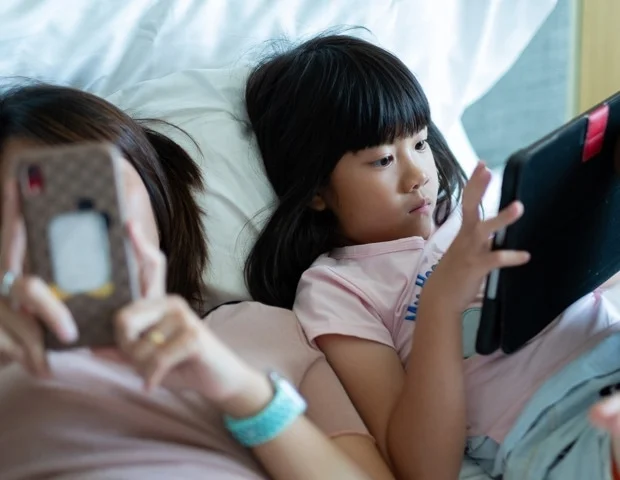
An extensive examination of tens of thousands of individuals aged 18 to 24 in the United States has revealed that over half of college students experience feelings of loneliness. Notably, a strong correlation was observed between elevated social media engagement and heightened perceptions of isolation.
According to a newly published, peer-reviewed article in the *Journal of American College Health*, dedicating as little as 16 hours weekly, or approximately two hours daily, to social media platforms was found to be associated with a greater propensity for loneliness.
The researchers involved in this investigation have put forth recommendations that academic establishments should undertake initiatives to apprise students of the ramifications of social media consumption and advocate for the establishment of personal time constraints.
Dr. Madelyn Hill, who is now an assistant professor at Ohio University and spearheaded this research during her doctoral studies at the University of Cincinnati’s School of Human Services in the spring of 2025, elaborated: “It is well-established that individuals grappling with loneliness have an increased susceptibility to developing depression. Furthermore, we are aware that loneliness can contribute to a shortened lifespan.
“The period of young adulthood is characterized by significant transitions, encompassing the departure from home for the first time, the commencement of higher education, and the cultivation of new social ties. Consequently, it is imperative that colleges and universities exert maximum effort to facilitate the formation of genuine connections among their student body.”
Prior scholarly inquiries have identified platforms such as Instagram, Facebook, and Snapchat as favored social media destinations for young adults.
Other research indicates that excessive utilization of social media can impinge upon the time available for in-person social interactions. However, the findings from investigations exploring whether this leads to increased loneliness have been inconsistent.
To address this ambiguity, Dr. Hill and her collaborators conducted an analysis of data gathered from 64,988 participants aged 18 to 24, who were enrolled across more than 120 higher education institutions and had responded to a nationwide survey.
The assessment of loneliness involved querying participants about the frequency with which they experienced feelings of exclusion, a lack of companionship, or a sense of isolation.
The study yielded the following significant findings:
- A substantial 54% of the surveyed students reported experiencing loneliness, a figure consistent with other recent research originating from the U.S.
- Female students and Black students were disproportionately represented among those who indicated feelings of loneliness.
- Individuals pursuing hybrid academic programs appeared to experience less loneliness compared to those engaged in full-time, in-person studies, possibly due to the continued maintenance of connections with existing friends.
- Membership in fraternities and sororities correlated with a lower incidence of loneliness, potentially attributable to more numerous opportunities for social events and gatherings.
- Students residing at home reported greater feelings of loneliness than those with on-campus accommodation.
The students were also interrogated regarding their typical weekly engagement with social media platforms.
Approximately 13% of the participants were identified as engaging in excessive social media use, defined as at least 16 hours per week. A dose-response relationship was observed, wherein increased usage correlated with a higher likelihood of experiencing loneliness.
- Individuals reporting 16 to 20 hours of weekly social media use exhibited a 19% greater probability of experiencing loneliness compared to those who abstained entirely from such platforms.
- Usage levels of 21 to 25 hours and 26 to 30 hours per week were associated with a 23% and 34% elevated risk of loneliness, respectively.
- The most frequent social media users, dedicating at least 30 hours weekly to these platforms, demonstrated a 38% higher likelihood of reporting feelings of loneliness.
The authors of the study acknowledge the challenge in definitively establishing causality, recognizing that it remains uncertain whether excessive social media engagement precipitates loneliness or if loneliness drives increased social media consumption. They posit that a reciprocal relationship likely exists. Some students may find themselves becoming lonely due to reduced opportunities for face-to-face interactions, while others might discover a vital source of support through online communities.
Furthermore, the research team noted that some participants might have provided inaccurate estimations of their time spent online.
Notwithstanding these caveats, the researchers maintain that addressing and reducing excessive social media use holds the potential to mitigate prevalent levels of loneliness.
Dr. Ashley L. Merianos, a senior author of the paper affiliated with the University of Cincinnati, emphasized the critical implications of these findings: “These outcomes underscore the pervasive nature of loneliness among college students and highlight how the extensive use of social media may be supplanting the meaningful interpersonal connections essential for safeguarding their mental well-being. A fundamental public health strategy to confront this epidemic of loneliness involves fortifying social bonds and assisting students in cultivating supportive relationships with their peers in offline settings.”
Dr. Hill, whose research specialty involves understanding and enhancing health-related behaviors such as social media use among children and young adults, concluded: “Educational institutions ought to inform college students about the potential adverse consequences of excessive social media engagement, including the exacerbation of loneliness.
“Empowering students to comprehend how overindulgence in social media can impact their overall well-being might prompt some to re-evaluate their usage patterns. Subsequently, they may elect to reduce their screen time or implement personal time restrictions.
“Additionally, institutions should endeavor to encourage student participation in social activities organized on campus.”
Hill, M. J., and colleagues. (2026). Exploration of excessive social media use with loneliness among U.S. College students. Journal of American College Health. DOI: 10.1080/07448481.2025.2573108. https://www.tandfonline.com/doi/full/10.1080/07448481.2025.2573108