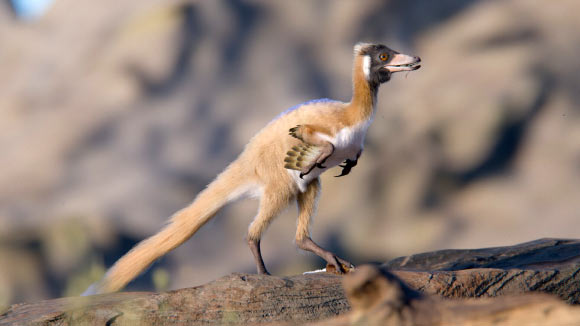
The discovery of a remarkably intact skeletal specimen of the alvarezsauroid dinosaur species Alnashetri cerropoliciensis from Patagonia, Argentina, alongside two alvarezsauroid individuals unearthed in the Northern Hemisphere, offers profound insights into the evolutionary trajectory and global dispersal of this once-enigmatic theropod lineage prior to continental fragmentation, thereby challenging long-standing hypotheses regarding their origins.
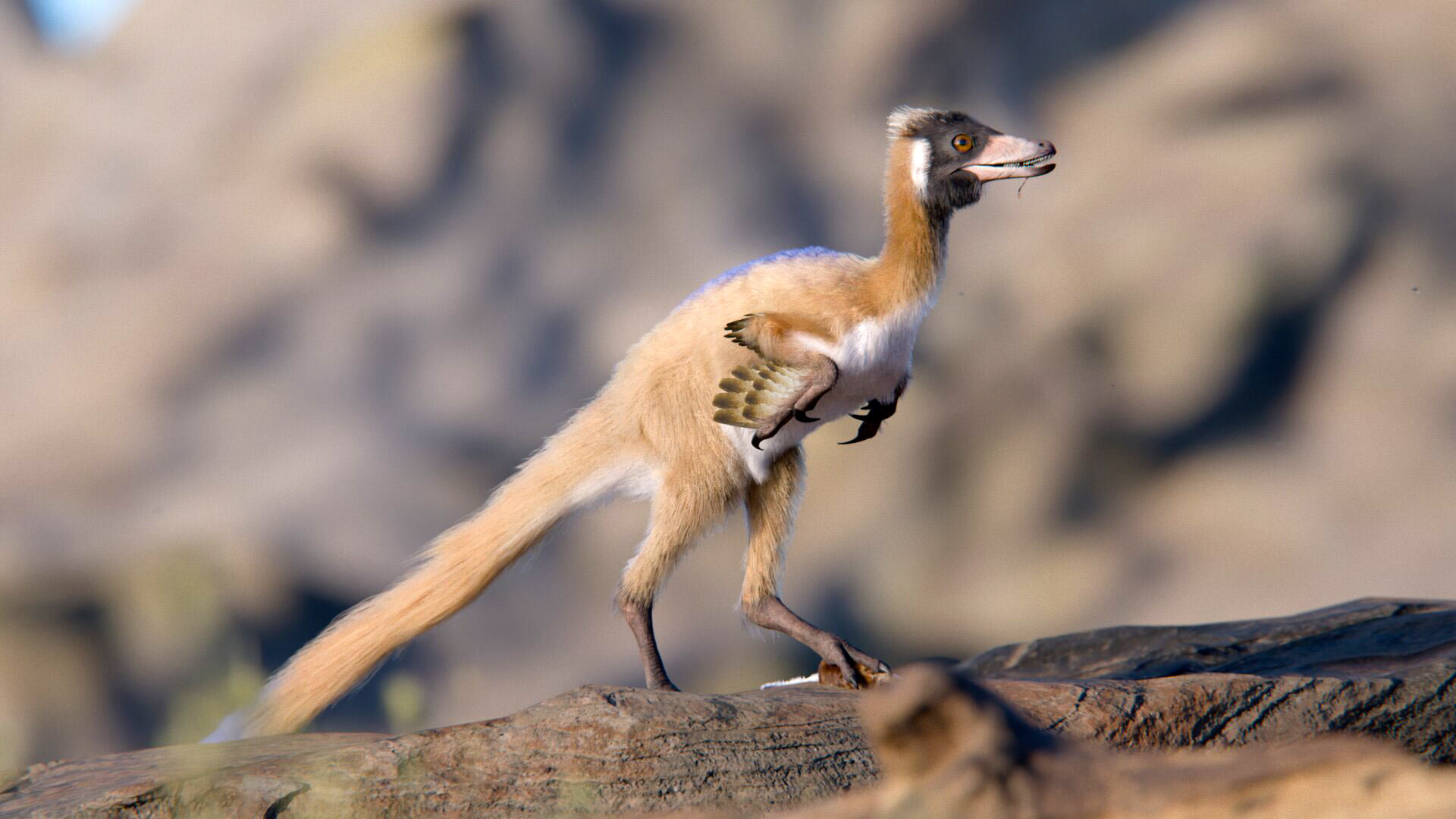
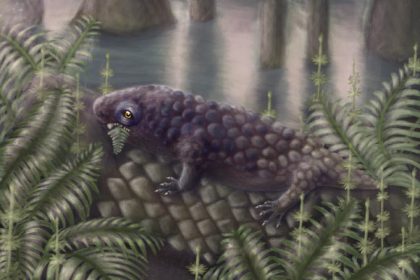
Alnashetri cerropoliciensis. Image credit: Gabriel Díaz Yantén, Universidad Nacional de Río Negro.
Alnashetri cerropoliciensis inhabited the region now known as Argentina during the Cenomanian age of the Late Cretaceous epoch, approximately 90 million years ago.
Initially characterized in 2012 based on incomplete fossil records, this species is classified within a group of avian-like dinosaurs referred to as the Alvarezsauroidea.
These diminutive dinosaurs are distinguished by their minute dentition and abbreviated forelimbs that terminate in a singular, prominent thumb claw.
“Alvarezsauroids represent an obscure branch of predominantly small-bodied theropod dinosaurs whose fossil evidence is primarily concentrated in Jurassic to Cretaceous strata of Asia and South America,” noted Peter Makovicky, a paleontologist at the University of Minnesota Twin Cities, in conjunction with his research associates.
“Late Cretaceous alvarezsauroids exhibit specialized forelimbs adapted for fossorial activities, possess diminutive, supernumerary teeth, and display heightened sensory capabilities, leading to their interpretation as myrmecophagous, meaning they subsisted chiefly on ants.”
“It is posited that they underwent evolutionary miniaturization linked to their specific dietary niche.”
The recently unearthed, nearly complete skeleton of Alnashetri cerropoliciensis was discovered within the La Buitrera paleontological site, situated in the Río Negro province of northern Patagonia.
Histological examination of the specimen substantiated that the individual had attained adulthood, with an estimated age of at least four years.
Its body mass was less than 0.9 kg (2 lbs), rendering it one of the smallest known dinosaur species from South America.
Contrasting with its more recent kin, Alnashetri cerropoliciensis featured elongated arms and comparatively larger teeth.
According to the paleontological team, this finding indicates that certain alvarezsauroids achieved diminutive stature considerably earlier than the development of these specialized appendages, previously assumed to be adaptations for an ant-centric diet.
Through the identification of previously documented alvarezsauroid fossils housed in museum collections across North America and Europe, the researchers further established that these dinosaurs emerged at a much earlier juncture, during a period when terrestrial landmasses remained consolidated as the supercontinent Pangea.
Their geographic distribution is attributed to the rifting of Earth’s tectonic plates, rather than arduous transoceanic migratory journeys.
“Our biogeographical analyses suggest an ancestral distribution of Alvarezsauroidea across Pangea, with vicariance playing a dominant role in the early evolutionary history of the clade,” the scientists concluded.
Their research publication was issued today in the esteemed journal Nature.
_____
P.J. Makovicky et al. Argentine fossil rewrites evolutionary history of a baffling dinosaur clade. Nature, published online February 25, 2026; doi: 10.1038/s41586-026-10194-3