
The thought of being cornered by one’s garrulous neighbor detailing their rigorous fitness regimen is a common source of apprehension. However, recent scholarly investigation suggests that our aversion to such prolonged discourse may be considerably overstated.
Across a series of carefully designed experimental scenarios, pairs of individuals engaged in discussions centered on a variety of pre-selected subjects. Prior to each interaction, participants were solicited to estimate the degree of interest or tedium they anticipated from the conversation. Subsequently, they provided feedback on their actual level of enjoyment derived from the exchange.
Remarkably, it appears individuals may harbor a greater degree of engagement with their colleagues’ personal anecdotes, such as narratives about their pets, than they initially surmise. Consistently, participants reported experiencing heightened enjoyment from these interactions than they had predicted, even when the subject matter was initially deemed uninspired.
Furthermore, there was a notable inclination among participants to readily agree to further conversations with the same interlocutor on identical topics in the future.
“Our inclination is to presume that if a topic presents itself as unengaging, the resultant dialogue will likewise be monotonous,” explains Elizabeth Trinh, a social scientist at the University of Michigan and a co-principal investigator of this research. “However, this assumption is not corroborated by individuals’ lived experiences.”
In an extensive study encompassing 1,800 participants, Trinh and her associates, affiliated with Cornell University in the United States and the INSEAD business school in France, conducted nine distinct iterations of a foundational experiment. This approach was implemented to meticulously examine a range of variables.
In the initial phase, participants were tasked with rating their level of interest across ten diverse subjects, encompassing sports, cinema, social media, artificial intelligence, music, travel, historical events, ecological sustainability, literature, and physical conditioning. Subsequently, individuals were paired for brief, 5-minute conversations, with one participant having indicated a high interest in the chosen topic and the other having expressed low interest.
The concordance between anticipated and actual conversational enjoyment was systematically documented for each participant; assessments were made both before and after the discourse, respectively.
As would be expected, individuals who possessed a pre-existing interest in a particular subject derived enjoyment from discussing it, aligning with their prior expectations. However, intriguingly, those who had no prior affinity for the subject matter still reported a positive experience and indicated a willingness to re-engage in conversation on the same theme.
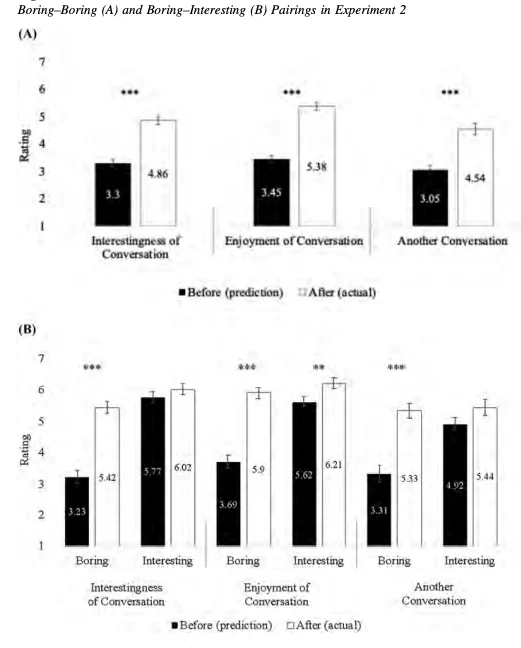
One might question whether participants circumvented the designated topic by steering the conversation toward subjects of personal interest, thereby elevating their perception of enjoyment. To investigate this hypothesis, a subsequent experimental variation mandated that certain participant pairs strictly adhere to the assigned topic, while others were afforded the latitude to digress as they saw fit.
Even under these varying conversational freedoms, the preponderance of participants consistently underestimated the degree of enjoyment they would experience, regardless of whether they were permitted to deviate from the subject matter.
Could the enhanced enjoyment stem from conversing with familiar acquaintances rather than strangers? This possibility was also explored, and the effect persisted robustly across additional experimental sets, whether participants had prior acquaintance or were meeting for the first time.
“We were both taken aback and enthused by the pronounced consistency of this phenomenon,” observes Trinh. “Individuals invariably anticipated that discussions on ostensibly uninteresting subjects would yield less engagement than they ultimately did.”
In a further experiment, participants were presented with either a textual transcript or a video recording of a conversation centered on a topic they had previously categorized as uninteresting. This mediated exposure proved to be precisely as unengaging as they had anticipated.
The researchers posit that the fundamental act of engaging in dialogue with another human being is inherently enjoyable, transcending the specific subject being discussed.
Despite our ingrained assumptions that we would prefer not to deliberate on the intricacies of the stock market or delve into the nuances of gaming strategies, evading such interactions might inadvertently lead us to forgo potentially enriching experiences.
“By foregoing brief exchanges with a colleague at the coffee station, a neighbor encountered in an elevator, or an unfamiliar individual at a social gathering, we risk missing out on subtle opportunities for human connection,” states Trinh.
“Even a fleeting dialogue about commonplace matters can yield a greater reward than we might initially suppose.”
This research has been formally published in the Journal of Personality and Social Psychology.