A comprehensive analysis of environmental DNA (eDNA) recovered from ocean waters exceeding 4 kilometers in depth off the coast of Nyinggulu (Ningaloo) in Western Australia has brought to light a remarkable 226 distinct species spanning 11 principal animal phyla. This discovery includes organisms previously undocumented in the region, such as the colossal giant squid, alongside species potentially new to scientific classification.
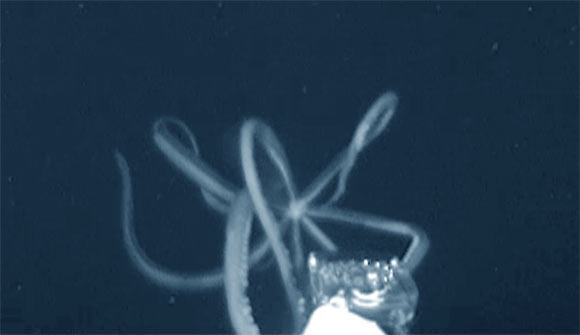
A giant squid, at least 10-12 feet in length, approaches the Medusa’s e-jelly lure before realizing the e-jelly is not food and retreating. Image credit: Edie Widder & Nathan Robinson.
“Our findings underscore the profound lack of comprehension regarding Australia’s abyssal marine environments,” stated Dr. Georgia Nester, who undertook this pioneering research as an integral component of her doctoral dissertation at Curtin University, and is presently affiliated with the University of Western Australia.
Dr. Nester, in collaboration with her peers aboard the research vessel R/V Falkor, operated by the Schmidt Ocean Institute, meticulously investigated the deep-sea geological formations of the Cape Range and Cloates submarine canyons, situated approximately 1,200 kilometers north of Perth. An extensive collection of over 1,000 specimens was procured from depths reaching up to 4,510 meters.
By leveraging eDNA technology, the researchers were able to precisely catalogue the inhabitants of these profound aqueous realms without the necessity for direct visual observation or physical capture.
Among the most significant revelations were genetic traces pertaining to the giant squid (Architeuthis dux), identified in samples from both the Cape Range and Cloates Canyons across six separate assessments. Furthermore, evidence of deep-diving cetaceans, including the pygmy sperm whale (Kogia breviceps) and Cuvier’s beaked whale (Ziphius cavirostris), was also ascertained.
“Prior to this study, only two other instances of giant squid presence had been documented in Western Australia, with no sightings or specimen recovery for over a quarter of a century,” commented Dr. Lisa Kirkendale, a senior researcher at the Western Australian Museum.
“This constitutes the inaugural detection of a giant squid off the Western Australian coastline through eDNA methodologies, and it represents the northernmost geographical record of Architeuthis dux within the eastern expanse of the Indian Ocean.”
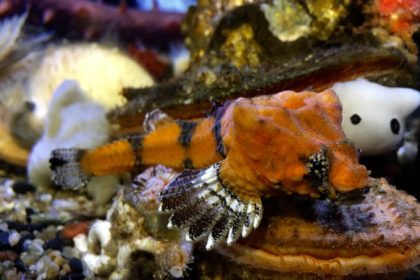
Collectively, the research team identified a total of 226 species, categorized across 11 major animal classifications. This diverse assemblage encompassed rare abyssal ichthyofauna, cnidarians, echinoderms, cephalopods, marine mammals, and various other marine organisms.
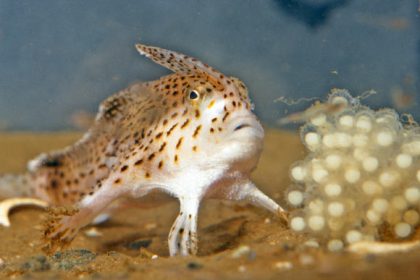
A considerable number of species were detected that had not been previously catalogued within the waters of Western Australia. Notable among these were the sleeper shark (Somniosus sp.), the enigmatic faceless cusk eel (Typhlonus nasus), and the slender snaggletooth (Rhadinesthes decimus).
“While the confirmation of a giant squid’s presence is undeniably captivating, it represents merely one facet of a much grander ecological mosaic,” Dr. Nester remarked.
“Our investigations revealed a substantial quantity of species that do not precisely align with existing scientific records. Although this does not definitively confirm them as novel discoveries, it strongly indicates an extensive reservoir of deep-sea biodiversity that we are only beginning to comprehend.”
“The application of eDNA holds the potential to revolutionize scientific approaches to the exploration and preservation of the deep oceanic environment,” added Dr. Zoe Richards, a research fellow at Curtin University.
“Deep-sea ecosystems, characterized by their vastness, remoteness, and the considerable expense associated with their study, nevertheless face escalating threats from climatic shifts, fishing activities, and resource exploitation.”
“eDNA provides a scalable and non-intrusive methodology for establishing foundational knowledge concerning the life forms present, which is indispensable for effective management and conservation strategies.”
“Effective stewardship is contingent upon awareness of existence. The sheer volume of identified species, including formidable megafauna, unequivocally demonstrates our limited understanding of the marine inhabitants of the Indian Ocean.”
The comprehensive findings generated by the team have been published in the esteemed journal Environmental DNA, accessible via the following link: results.
_____
Georgia M. Nester et al. 2026. Environmental DNA Reveals Diverse and Depth-Stratified Biodiversity in East Indian Ocean Submarine Canyons. Environmental DNA 8 (2): e70261; doi: 10.1002/edn3.70261