Contemplate a term whose visual form mirrors its actual definition.
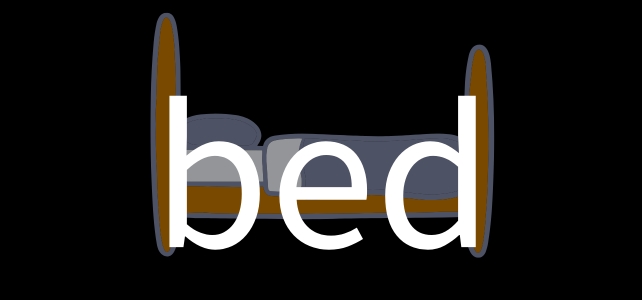
For instance, the term bed bears a resemblance to its meaning, with its vertical strokes potentially evoking the posts of a bed frame. Similarly, loop presents a distinctly curvilinear appearance.
Some words possess a more understated connection – consider blizzard, where the characteristically jagged typography might suggest a sense of disarray.
This phenomenon is termed “iconicity,” and its research has traditionally concentrated on the auditory aspects of language. For example, the vocalization meow is an imitation of a feline’s cry. The word teeny sounds diminutive.
My recent investigation delved into iconicity within the visual presentation of English words, marking a novel exploration in this domain.
My findings indicated that individuals processed words with greater speed and precision when their physical appearance corresponded to their semantic content.
The origins of English characters lie in visual representations.
The alphabetic system we employ today (a Latin script derived from the Roman alphabet) originated as pictorial symbols. These characters are believed to have evolved from Egyptian hieroglyphs.
One prevailing theory posits that these hieroglyphic symbols were adopted by speakers of a North Semitic language, approximately between 1800 and 1600 BCE, leading to the development of the “Proto-Sinaitic” script.
This script utilized symbols to represent the initial sound of the depicted object, a principle known as acrophony. For instance, our letter M is thought to derive from a symbol for water, specifically from the first sound of the word mayim.
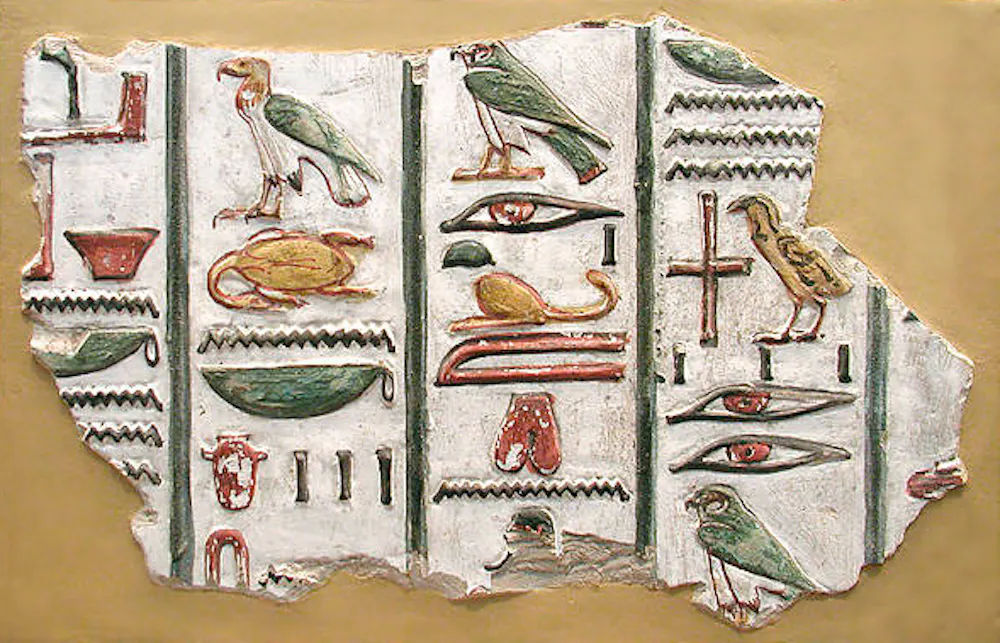
The evolution of these characters has been so extensive that their ancient origins are no longer pertinent to contemporary English comprehension.
However, there is some empirical support suggesting a link between the graphical forms of letters and the phonic qualities they represent. For example, one study compiled letters corresponding to the /i/ sound (as in ‘bee’) and the /u/ sound (as in ‘boo’) from 56 diverse languages and solicited participants’ predictions regarding their correct assignment.
It was observed that participants could indeed distinguish between them at a rate exceeding random chance.
Nevertheless, this investigation did not align with my specific research objectives. Instead of examining a connection between letter shapes and spoken sounds, my focus was on whether those shapes exhibit a relationship with the meanings of words.

Consider terms like bubble, hoop, or wiggle. Within this research framework, participants were tasked with evaluating over 3,000 words on a scale of one to seven, based on the degree to which the graphic form of their letters seemed to align with their definitions.
This methodology is a standard practice in the field of psycholinguistics.
Researchers frequently request participants to assess words along a particular dimension – for instance, conceptual concreteness or positivity – and subsequently leverage these assessments to elucidate how individuals process word meanings.
A primary observation from this study is the notable concordance among participants’ evaluations, comparable to the consistency found in prior assessments of other linguistic attributes.
The words receiving the highest ratings included expressions such as bubble, look, wiggle, hoop, puppy, and bed.
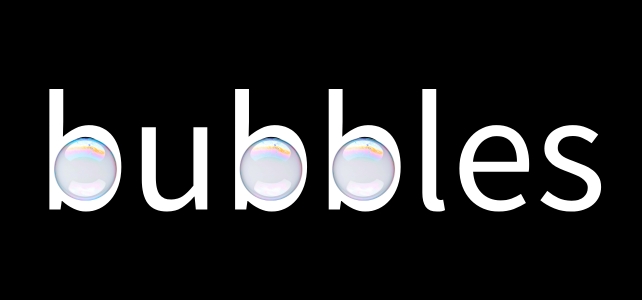
It is straightforward to hypothesize reasons for these elevated ratings. The word puppy appears to incorporate elements resembling limbs and a tail. The dual ‘g’ characters within wiggle lend a sense of undulation.
However, can we definitively ascertain the precise cognitive processes employed by participants in their evaluations? Insights can be gleaned by examining the characteristics of words that garner higher scores.
Thematic elements such as rounded or pointed letterforms: Words that achieved elevated ratings typically denoted tangible entities. This observation is logical if participants were indeed perceiving a visual correspondence between the word’s form and its referent.
To elaborate, when a word describing a circular object incorporated round characters (such as O, G, and C), it received a higher rating. Conversely, words denoting sharp or pointed entities were rated more favorably if they featured angular letters (like W, Z, and X). Furthermore, terms signifying small items tended to obtain higher scores when they comprised fewer alphabetical characters.
Collectively, these findings suggest that the ratings accurately reflect a visual resonance between a word’s orthography and its semantic meaning.
While these results are compelling, the pertinent question remains: do they have tangible implications?
To address this, I utilized three established datasets containing data on the rapidity with which individuals can process individual lexical items.
These datasets are derived from studies where, for instance, participants were presented with sequences of letters (such as spoon or flarg) and instructed to identify them as either authentic words or fabricated sequences as expeditiously as possible.
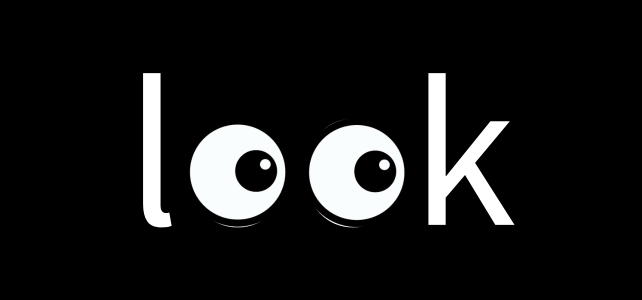
Across all three datasets, it was observed that individuals exhibited enhanced speed and accuracy in processing words whose visual presentation mirrored their definitions.
This effect persisted even after controlling for various factors, including lexical frequency, word length, and the degree of visualizability of a word’s meaning.
Moreover, these iconically structured words tended to be acquired at an earlier developmental stage.
There is a growing recognition that language encompasses more than just words and their associated meanings. It involves a complex interplay of elements such as vocal intonation, gestural communication, and visual attention.
We can now incorporate an additional subtle influential factor: the graphical attributes of written characters.