A groundbreaking genealogical investigation demonstrates how the intricate analysis of DNA interwoven across centuries can effectively preserve narratives of historical migrations and ancestral origins, rescuing them from permanent obscurity.
The genesis of this particular historical account echoes a familiar narrative: a contingent of pioneering colonists embarked from England in the early seventeenth century, seeking liberation of conscience in a territory that would ultimately be christened the United States of America.
In this instance, the vessel was not the renowned Mayflower, but rather two ships, the Ark and the Dove, which made landfall in Maryland in the year 1634.
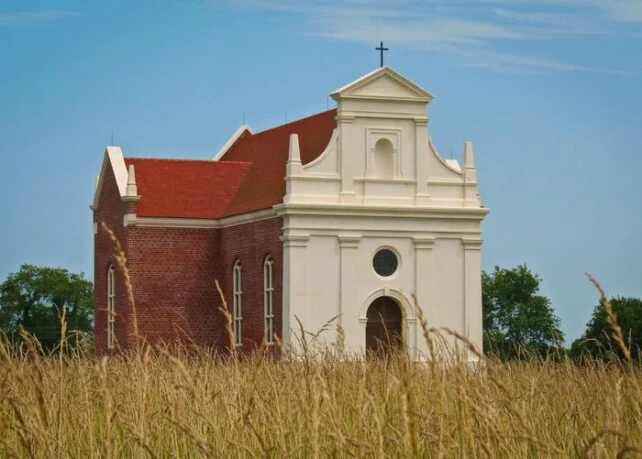
The voyagers disembarked upon a peninsula where the Potomac River converges with the Chesapeake Bay, subsequently establishing St. Mary’s City, the nascent settlement of Maryland.
Through a sophisticated identity-by-descent (IBD) evaluation, details concerning some of their migratory patterns, affiliations, and lineage have now been elucidated.
This study was undertaken by a consortium of researchers hailing from the 23andMe Research Institute, Harvard University, and the Smithsonian Institution, working in concert with Historic St. Mary’s City, an institution dedicated to preserving the legacy of one of the earliest enduring English settlements in the United States.
The IBD genealogical methodology operates by comparing inherited DNA segments from common ancestors, thereby enabling the identification of long-deceased historical figures by establishing connections to their extant descendants.
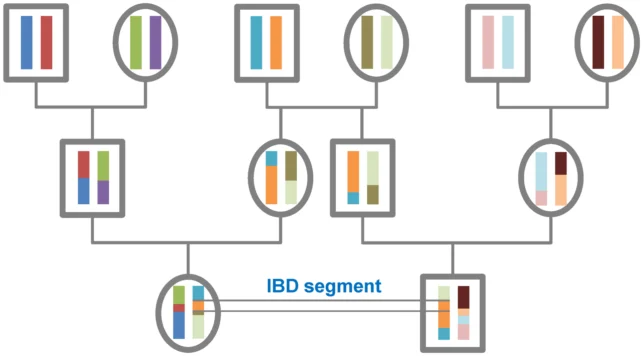
According to the findings presented by the researchers, this investigation marks a pioneering instance where scientists have successfully integrated contemporary genealogical techniques with ancient DNA analysis to ascribe identities to some of the earliest European settlers in the U.S.
The research team meticulously collected genomic data from 49 individuals interred within the Chapel Field cemetery in St. Mary’s City, subsequently juxtaposing this data with that of 11.5 million consenting participants enrolled in 23andMe’s contemporary research database.
An astonishing ancestral linkage was revealed: upwards of 1.3 million participants in the 23andMe research cohort exhibited shared DNA with at least one of the individuals interred at Chapel Field.
The genetic affiliations extended most prominently to regions in western England and Wales, while concurrently substantiating the origin of some of these initial settlers from Ireland.
Further revelations from the researchers uncovered a substantial ancestral connection between the individuals from St. Mary’s and current residents of Louisville, Kentucky.
This linkage is attributed to a less commonly discussed migratory event subsequent to the Revolutionary War, wherein Catholic families relocated from Maryland southward, once again seeking to circumvent anti-Catholic prejudices and capitalize on economic prospects.
The genomic analysis also offers indications of which colonists may have arrived as indentured laborers. This inference is drawn from two adult males of Irish descent who succumbed at a young age, displayed markers of strenuous physical exertion and compromised health, and were not interred in coffins.
Moreover, the research team successfully identified the identities of three entirely unknown individuals from their burial sites, by synthesizing their genetic profiles with those of 23andMe research participants exhibiting the most pronounced genetic affinities to St. Mary’s.
With the incorporation of supplementary information, such as congruent familial genealogies, the researchers were able to confirm the remains of Thomas Greene – the second governor of Maryland – alongside his initial spouse, Anne, and their son, Leonard.
“This represents a landmark achievement, as it is the inaugural instance where ancient DNA has been instrumental in identifying individuals whose identities were previously unknown, without any preconception of their potential standing,” explains Éadaoin Harney, a population geneticist affiliated with the 23andMe Research Institute and the study’s principal author.
“It is a remarkable coincidence that one of these individuals turned out to be a figure of considerable significance in colonial Maryland.”
Although a portion of the research dates back to 2016, this comprehensive work has been officially disseminated at a juncture perfectly aligned to provide a period of profound reflection, coinciding with the United States’ 250th anniversary – an occasion also referred to as the Semiquincentennial or Bisesquicentennial, depending on linguistic preference.
In summation, the field of genealogical science has demonstrated a remarkable capacity to trace the lineage of America’s formerly obscured founding colonists.
Comparable investigative approaches hold the potential to illuminate clandestine migratory routes and ancestral histories in other global locales. This could be further enhanced if future inquiries incorporate mitochondrial or Y chromosome data to delve into intact paternal lines.
Furthermore, this research exemplifies a collaborative endeavor that is both diverse in its composition and focused in its objectives, mirroring the foundational origins of the United States itself.
“The community of descendants has been a staunch proponent of this research from its inception, and this genetic investigation allows us to forge a direct link between our archaeological discoveries and the living individuals who embody that enduring legacy today,” states Henry Miller, an archaeologist at Historic St. Mary’s City and a co-author of the study.
“Its significance is immense as we contemplate the establishment of our nation.”