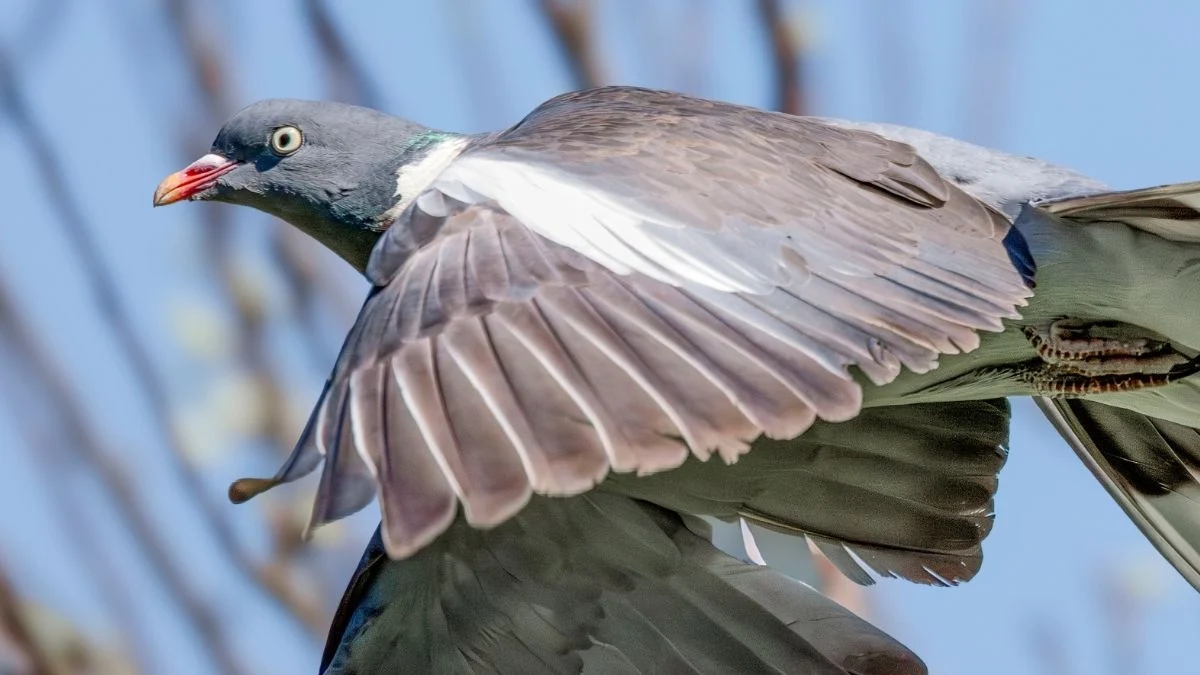
Long preceding the advent of digital messaging platforms, pigeons were highly valued and selectively bred for their remarkable innate ability to traverse substantial distances and return to their origin, often with a communiqué secured to a leg.
The profound significance of ‘pigeon post’ within the fabric of human civilization is strikingly evident as far back as 1350 BCE, a testament to their presence depicted in the artistic expressions of ancient Egypt.
For extended periods, these avian creatures served as our predominantly dependable method of long-range correspondence.
Prior to the innovation of the telegraph, homing pigeons (Columba livia domestica) were entrusted with transporting a multitude of critical commercial agreements, heartfelt epistles, and pivotal military dispatches that ultimately shaped the trajectory of human history.
Yet, despite our protracted reliance on these intelligent birds, the precise mechanisms underpinning their exceptional navigational accuracy, and the specific anatomical location of their sophisticated internal compass, remain largely enigmatic.
For many years, scientific inquiry has posited that pigeons, akin to various other avian and animal species, might utilize the Earth’s magnetic field as a navigational aid.
Currently, a collaborative research initiative involving the University of Bonn and the Max Planck Institute of Animal Behavior (MPIAB) in Germany has yielded compelling empirical support for this hypothesis.
“What might appear as an intuitive ‘gut feeling’ in avian navigation could, in reality, possess a tangible biophysical foundation,” explains Martin Wikelski, a distinguished biologist and director at MPI-AB, who also served as a senior author on the publication.
The navigational apparatus of the homing pigeon appears to be situated within its liver, a region characterized by a substantial concentration of iron.
“We had prior indicators suggesting that the liver and spleen exhibit magnetic characteristics, stemming from their role in the catabolism of red blood cells, which leads to the accretion of significant iron reserves within the organism,” observes Clivia Lisowski, an immunologist affiliated with the University of Bonn.
More specifically, the research team hypothesized that iron-rich macrophages – a specialized subset of leukocytes – within the liver were instrumental in the birds’ navigational processes.
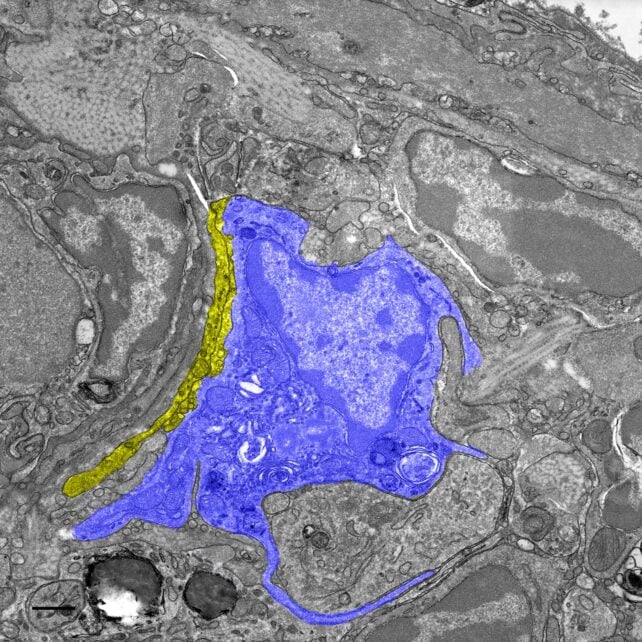
What is particularly intriguing is that these macrophages possess a quantum characteristic known as superparamagnetism, which may function as a navigational ‘needle’ in a remarkably literal capacity.
The pigeons are equipped with the necessary cellular mechanisms to interpret this internal compass: through meticulous microscopic examination of pigeon liver tissue, the researchers identified nerve fibers capable of relaying signals originating from the macrophages directly to the avian brain.
While the sun typically provides a clear directional reference for pigeons, these internal, quantum-driven liver compasses are theorized to be particularly vital during periods of overcast weather, according to the researchers’ hypotheses.
To validate this theory, the research group conducted an experiment involving 34 homing pigeons, transporting them 19 kilometers (12 miles) away from their home base at MPIAB, to assess their homing efficacy under persistently cloudy conditions.
The day preceding their aerial departure, 18 of the pigeons were administered an injection of clodronate, a pharmacological agent designed to deplete macrophages. This intervention effectively disrupted the neural conduit between these immune cells in the pigeons’ livers and the neurons responsible for transmitting signals to the brain.
Pigeons that did not receive the clodronate treatment successfully returned to their origin within 70 minutes of their release.
Conversely, those whose connection to their quantum liver compass was severed experienced a dramatically different outcome.
They became thoroughly disoriented.
“The entirety of the clodronate-treated cohort failed to return on the same day amidst persistent overcast conditions, exhibiting instead a pattern of random spatial orientation,” the authors reported in their findings.
However, once atmospheric conditions improved and the sun reappeared, the clodronate-treated pigeons navigated back to their homes without incident, indicating that their flight capabilities, motivational drives, and overall physiological health remained unimpaired.
A subsequent replication of this experimental protocol on a clear, sunny day revealed that pigeons treated with clodronate encountered no difficulties in finding their way home, strongly suggesting that the internal compass residing in their liver may indeed play its most critical role when solar cues are absent.
Numerous species exhibit the remarkable ability to navigate extensive geographical ranges without recourse to external navigational charts: this includes sharks navigating the abyssal depths of the ocean; migratory avian species undertaking transcontinental journeys; nocturnal chiropterans; and subterranean talpids.
Further lines of inquiry may uncover whether these creatures, too, are guided by quantum-driven immune cells that possess a direct neural connection to their central nervous system.
“The phenomenon of animal navigation stands as one of nature’s most compelling mysteries,” states Wikelski.
“If immune cells are implicated in avian directional sensing, it would necessitate a fundamental revision of our conceptual framework regarding navigation.”