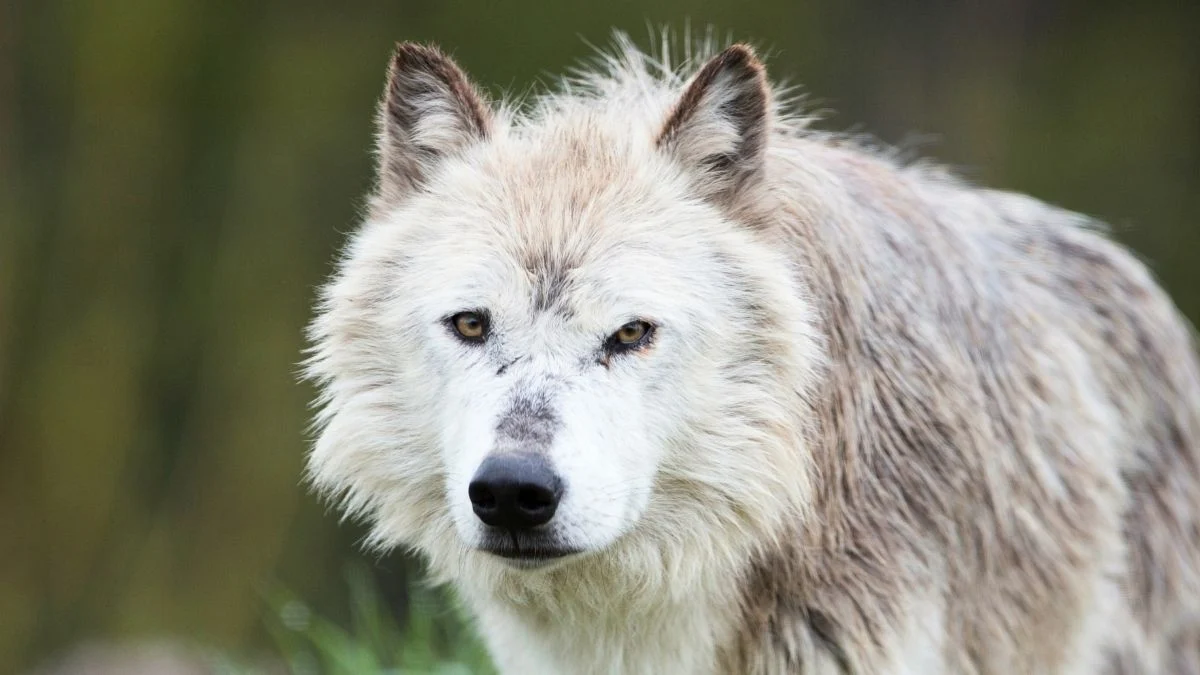
Educators globally frequently introduce the intricate concept of ‘trophic cascades‘ to their pupils, often employing an illustrative case study drawn from Yellowstone National Park in the United States.
The narrative typically commences with the absence of wolves and culminates in the deterioration of the woodland ecosystem.
Subsequent reintroduction of these apex predators has been widely lauded as a pivotal success in facilitating the forest’s resurgence.
However, a collective of biologists and geographers posits that this assertion may have been exaggerated.
Let us commence from the initial stages of this ecological saga.
During the 1920s, gray wolves (Canis lupus) were systematically eliminated from Yellowstone National Park as a consequence of government-sanctioned eradication programs.
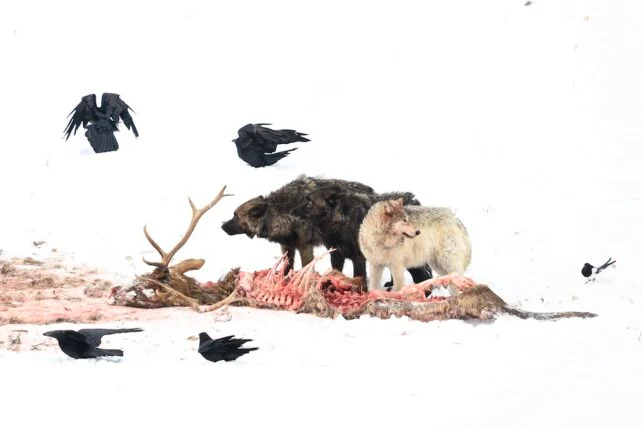
Among the primary prey for these wolves are wild elk (Cervus canadensis), which, as herbivores, consume aspen and cottonwood saplings and disturb the exposed soil with their hooves.
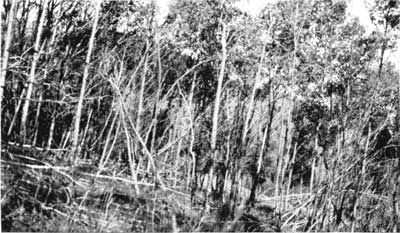
When natural predators effectively regulated elk populations, the damage inflicted by their grazing and trampling was contained. Yet, in the absence of predation, the elk population proliferated, and their voracious appetite for young trees led to extensive overgrazing.
The verdant canopy of quaking aspen trees (Populus tremuloides) that once characterized Yellowstone began to recede as the mature specimens reached the end of their natural lifespans.
Crucially, without the regeneration of new mature trees to succeed them, the park’s landscape underwent a profound transformation.
Fauna dependent on mature aspen stands, such as beavers and birds that nest in tree cavities, found their habitats decimated. The ecological balance was evidently fracturing in the absence of wolves.
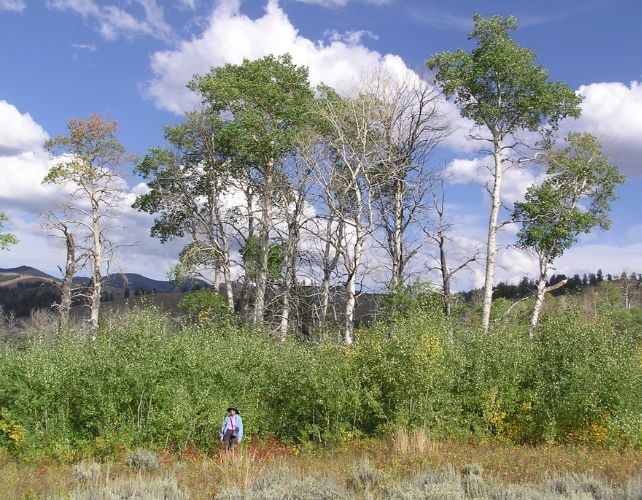
Following decades of advocacy, a contingent of gray wolves originating from Jasper National Park in Canada was reintroduced to the park in 1995, with the aspiration that their presence would revitalize the forest to its former splendor.
In July 2025, a scientific cadre, spearheaded by Oregon State University ecologist Luke Painter, declared that the reintroduction of gray wolves had precipitated a notably robust trophic cascade, exhibiting a greater magnitude than observed in comparable ecological contexts.
This assertion was predicated on fieldwork involving the measurement of aspen stands and their vertical growth, under the assumption that trees exceeding a certain height were relatively secure from herbivore browsing for long-term survival.
However, an independent research group, led by wildlife ecologist Daniel MacNulty of Utah State University, has recently challenged this research. Their rebuttal has been published in the same esteemed journal, Forest Ecology and Management, as the original findings.
Initial critiques were articulated in a correspondence to the editor of a different scientific publication in November 2025; the current submission represents a comprehensive peer-reviewed paper addressing the matter.
“Painter and colleagues aver that the resurgence of apex predators in Yellowstone National Park has instigated a pronounced trophic cascade relative to other environments, citing a remarkable 152-fold increase in aspen sapling density and extensive regeneration of new trees,” MacNulty and his team state.
“We demonstrate that these conclusions substantially overstate the cascade’s intensity due to critical methodological and interpretative deficiencies.”
While such critiques might seem contentious, they are, in fact, indicative of a healthy scientific process—a dynamic exchange that fosters the advancement and refinement of knowledge as new evidence emerges or existing data is re-examined.
MacNulty’s group highlights that the foundational density of trees within the dataset utilized by Painter’s team was inaccurately computed. Consequently, the reported 152-fold augmentation in aspen sapling density, observed between 1998 and 2021, is more accurately a 17.5-fold increase.
Additional issues were identified with the data analysis. For example, the researchers claim that treating measurements from identical tree stands as independent samples led to a considerable inflation of the observed effect size.
Furthermore, they observe that Painter’s team’s reliance on mean-based statistical measures resulted in a disproportionate influence from a small subset of plots on the findings. The presence of just one or two mature trees within a plot, they argue, does not substantiate widespread tree recruitment as was reported.
“Lastly, their presumptions that stems measuring two meters or more have successfully evaded browsing, and that diminished browsing is the sole driver of vertical growth, are contravened by longitudinal data,” which indicates significant browsing occurring above these heights, MacNulty and colleagues assert.
The researchers are careful to emphasize that their critique does not diminish the ecological significance of large predators; rather, it underscores the paramount importance of scientific rigor when investigating a phenomenon as complex as an ecosystem.
“The impact of predators in Yellowstone is indeed tangible, but it is contingent on specific environmental factors—and profound claims necessitate robust empirical validation,” MacNulty remarked in a prior press release.
Undeniably, the reintroduction of wolves has played a role in Yellowstone’s ongoing forest restoration efforts; the impact appears to be less substantial than initially proposed by Painter’s team and, by extension, the broader reporting.
“The available evidence substantiates the occurrence of a trophic cascade within Yellowstone, though not to the extreme degree of intensity that has been claimed,” MacNulty and his research associates conclude in their most recent communication.
“An accurate appraisal of the trophic cascade’s strength in Yellowstone is indispensable to ensure that this iconic natural system continues to serve as a reliable source for ecological understanding and practical restoration methodologies.”