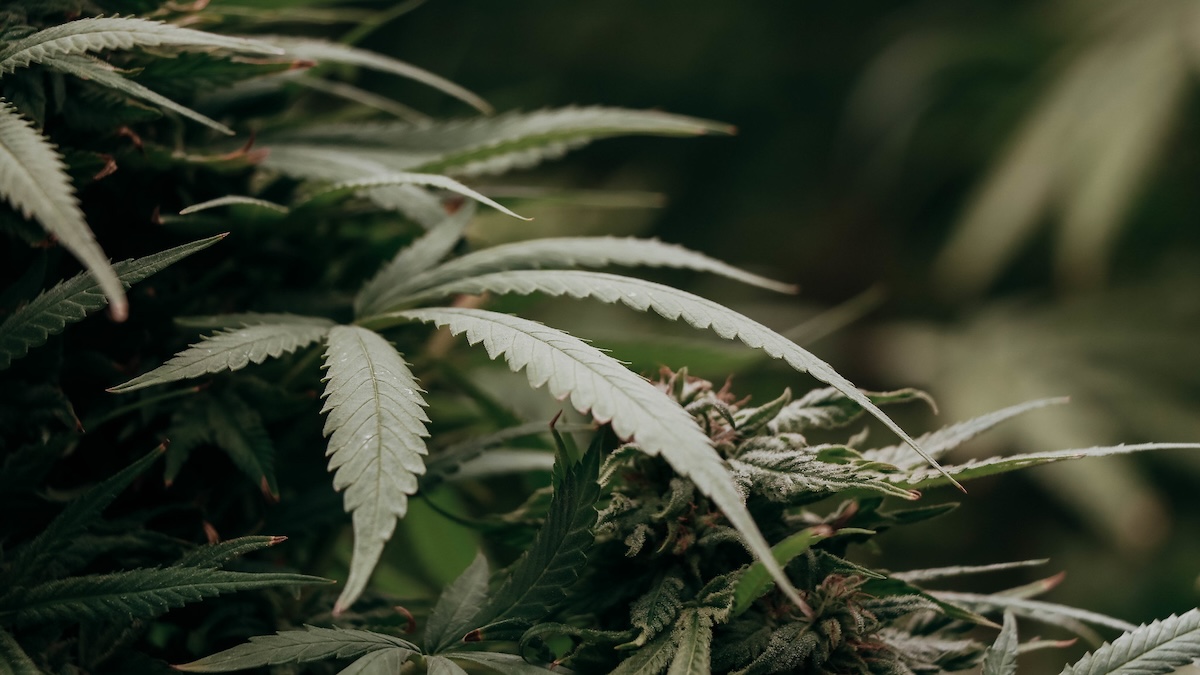
The cannabis plant is a remarkably versatile botanical entity, housing a vast array of chemical compounds within its floral and foliar structures. Many of these constituents were originally developed over eons to serve as defenses against pests and pathogens, though humanity has, in more recent epochs, discovered a multitude of additional applications.
A recent investigation delves into the profound history of cannabis to illuminate the evolutionary genesis of some of its most renowned bioactive molecules, including tetrahydrocannabinol (THC), cannabidiol (CBD), and cannabichromene (CBC).
Employing a sophisticated methodology known as ancestral sequence reconstruction (ASR), scientists affiliated with Wageningen University & Research in the Netherlands have elucidated the characteristics of long-vanished enzymes that were responsible for synthesizing these compounds in an ancient precursor to cannabis. Furthermore, they successfully ‘revived’ these archaic enzymes to meticulously examine their functional mechanisms.
Beyond their significant contributions to our understanding of evolutionary processes, these research findings also possess tangible practical implications.
“These ancestral enzymes exhibit a superior degree of robustness and adaptability compared to their modern counterparts,” observes Robin van Velzen, a specialist in biosystematics. “This inherent versatility renders them exceptionally promising foundational elements for novel applications within the realms of biotechnology and pharmaceutical development.”
Humanity has been cultivating cannabis since antiquity, utilizing it for sustenance, textiles, medicinal purposes, and recreational enjoyment. Current scientific knowledge acknowledges the plant’s capacity to produce hundreds of distinct cannabinoids, terpenes, flavonoids, and other phytochemicals, some of which possess singular therapeutic or psychoactive attributes.

The core focus of this study is on a specific class of enzymes designated as cannabinoid oxidocyclases. These enzymes are instrumental in the conversion of cannabigerolic acid (CBGA) into a spectrum of other cannabinoids, each endowed with distinct bioactive properties. Consequently, they exert a profound influence on the therapeutic efficacy inherent in cannabis.
Notwithstanding the undeniable importance of cannabinoid oxidocyclases, a comprehensive understanding of their historical trajectory and operational principles remains elusive. In an effort to bridge this knowledge gap, the authors embarked on a retrospective investigation to gain deeper insights into these enzymes by tracing their lineage and reconstructing their extinct ancestral forms.
In contemporary cannabis varieties, the synthesis of THC, CBD, and CBC is facilitated by three separate enzymatic entities, each exclusively dedicated to producing a single cannabinoid. However, the study’s proponents suggest that biochemical processes may have operated differently in bygone eras.
“By reviving and characterizing three ancestral cannabinoid oxidocyclases, we empirically evaluated the hypothesis that the metabolic pathway for CBGA originated within a relatively recent progenitor of the cannabis lineage,” the researchers state.
Leveraging comparative DNA sequences from extant plant species, ASR enables scientists to reconstruct an ancestral gene by creating a multiple sequence alignment. This process makes the resurrection of ancient proteins feasible.
Through the application of this innovative approach, the research team successfully recreated extinct cannabis enzymes as they existed millions of years ago, predating the advent of modern cannabis cultivars and indeed, modern human civilization.
The shared ancestor of contemporary cannabinoid oxidocyclases possessed the apparent capability to generate multiple distinct cannabinoid types concurrently. Enzymes with a specialized function for a singular compound emerged at a later evolutionary stage, a development linked to gene duplication events that occurred as cannabis diversified.
These findings strongly indicate that the capacity to metabolize CBGA did indeed emerge in a recent cannabis ancestor. Furthermore, it suggests that early cannabinoid oxidocyclases functioned as “promiscuous” enzymes, producing precursors for a variety of cannabinoids rather than exhibiting the highly specific, singular-product focus observed in their modern descendants.
The investigation also “validates that the acquisition of cannabinoid oxidocyclase activity arose independently” within the cannabis family and in distantly related plants capable of cannabinoid synthesis, such as rhododendrons, the researchers report.
In comparative analyses, the reconstructed ancestral enzymes proved more amenable to production within microbial hosts, such as yeast cells, than their contemporary counterparts. This observation holds particular significance given the escalating interest in biotechnological methodologies for cannabinoid generation as an alternative to traditional botanical cultivation.
“What was once considered evolutionarily ‘incomplete’ has proven to be remarkably advantageous,” comments van Velzen.
For instance, CBC is a cannabinoid recognized for its anti-inflammatory and analgesic properties. However, contemporary cannabis plants exhibit limited production of this compound.
Intriguingly, one of the ancient enzymes reconstituted in this novel study represents an “evolutionary intermediate” that demonstrates exceptional proficiency in CBC synthesis.
“Currently, no naturally occurring cannabis plant exhibits a high concentration of CBC,” van Velzen notes. “Therefore, the introduction of this specific enzyme into a cannabis plant could pave the way for the development of groundbreaking medicinal varieties.”