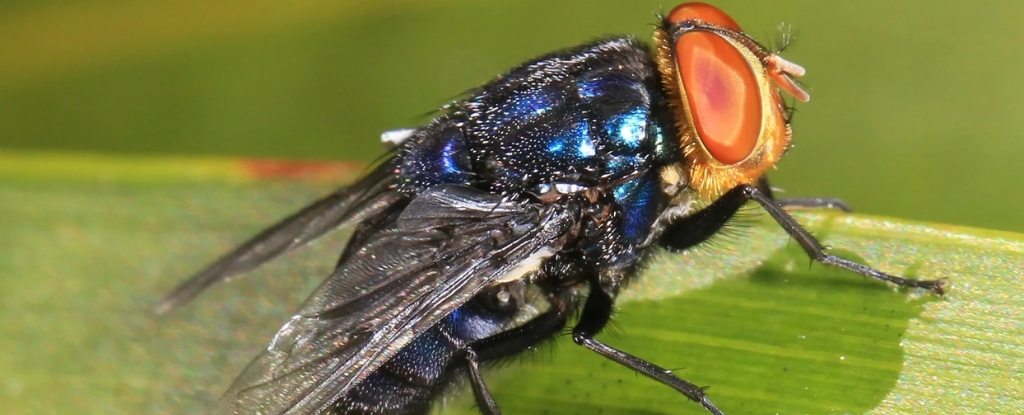
A predatory, flesh-devouring insect species is re-emerging across North and Central America. The potential ramifications for the livestock sector are considerable, yet this parasite exhibits no host specificity, readily infesting a broad spectrum of creatures, including humans and their domestic animals.
The “New World screwworm” (Cochliomyia hominivorax), which had previously been successfully eliminated from these geographic zones, is now making a resurgence. The pertinent questions are: what factors are driving its return, and what mitigation strategies can be implemented?
While many fly species perform vital ecological roles, such as facilitating pollination and the biodegradation of inert organic materials, certain lineages have evolved predatory behaviors, subsisting on live organisms.
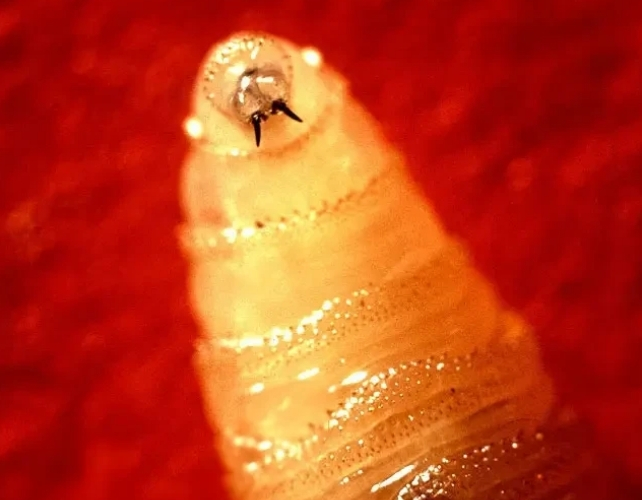
The female New World screwworm fly is biologically predisposed to seek out the olfactory cues emanating from any open wound to deposit its ova. Upon hatching, the larval stage, commonly referred to as maggots, aggressively consumes living tissue, inflicting intense distress upon their unfortunate host and potentially leading to mortality if left untreated.
Projections from cattle ranchers in Texas during the 1960s indicated an annual treatment requirement for approximately one million affected animals.
From the 1960s through the 1990s, a concerted effort involving scientists and governmental bodies was undertaken to leverage the fly’s own biological characteristics for its downfall. Through the judicious application of the sterile insect technique (SIT), the New World screwworm was eradicated from the United States and Mexico.
The reproductive biology of the female screwworm dictates a singular mating event prior to oviposition, whereas males exhibit promiscuous mating patterns. During the eradication initiative, vast quantities of sterilized male insects were disseminated via aerial deployment, thereby preventing any female that copulated with them from producing fertile offspring.
In conjunction with targeted chemical interventions on cattle and favorable climatic conditions, screwworm populations were successfully eliminated from the United States by 1982. The campaign to eradicate the pest reportedly incurred an expenditure of US$750 million (£555 million), facilitating a substantial expansion of cattle production.
For numerous decades, a dedicated facility situated in Panama has been consistently releasing millions of sterile flies, serving as a critical prophylactic measure to impede the southward progression of the New World screwworm into more northerly territories.
However, since 2022, and following a prolonged period of successful eradication, the New World screwworm has again begun to advance northward, traversing several Central American nations. Infestation cases in Panama escalated dramatically in 2023, and by November 2024, the fly had penetrated into Mexican territory.
Scholars have posited several theoretical explanations for this renewed dissemination. These include the inadvertent transport of flies accompanying livestock movements, elevated ambient temperatures that foster enhanced fly development and survival rates, and the potential for female flies to adapt their reproductive behaviors to circumvent mating with sterile males.
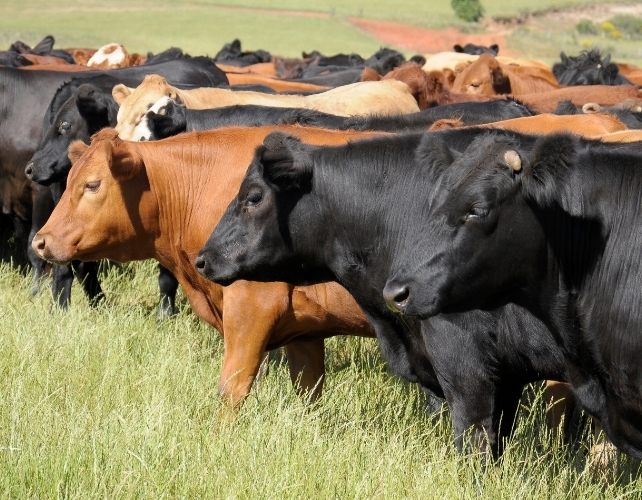
Currently, an estimated 17 million head of cattle in Central America are at risk, but the situation could become more dire. Mexico possesses approximately double the cattle population of Central America, and the invasion continues its westward trajectory towards the United States. In the US, an estimated 14 million cattle would face potential threat in Texas and Florida alone.
Human populations are also vulnerable, with at least eight documented instances of human infestation by these flies in Mexico since April.
Prohibition on Live Animal Shipments
In response, the United States has enacted a temporary moratorium on the importation of live animals originating from Mexico. Furthermore, governmental agencies in the United States, various Central American nations, and Mexico are engaged in collaborative efforts to augment surveillance protocols and intensify sterile insect releases to achieve eradication.
Currently, a facility in Panama is dedicated to the mass production and safe irradiation of sterile screwworm pupae (juvenile stages) at a rate exceeding 100 million individuals per week.
This initiative is jointly financed by the United States Department of Agriculture (USDA) and Panama’s Ministry of Agricultural Development. Nevertheless, a comprehensive eradication strategy may necessitate a production volume several times greater than the current output.
For illustrative purposes, the sterile fly production for eradication efforts in Mexico during the 1980s reportedly surpassed 500 million flies weekly. To address this capacity deficit, the USDA is prioritizing fly releases in key Mexican locales and has initiated an investment of US$21 million to retrofit a fruit fly production facility in Metapa, Mexico, enabling it to produce an additional 60 to 100 million sterile screwworms per week.
The entire process of insect propagation, sterilization, and subsequent release is protracted, and a perceptible decline in wild screwworm populations will not be instantaneous. Historical precedent underscores the critical importance of integrating interventions, including the judicious use of antiparasitic veterinary pharmaceuticals, to deter flies and manage existing infestations as they manifest.
Moreover, rigorous surveillance programs conducted by trained professionals are indispensable. This presents a significant challenge, as a considerable segment of the veterinary, technical, and agricultural workforce lacks firsthand experience with screwworm infestations.
Finally, the escalating trend of global climate warming suggests that the favorable cool weather conditions that aided previous eradication efforts may no longer be a reliable factor. Further research is imperative to ascertain the precise impact of these climatic shifts on the efficacy of current eradication strategies.